

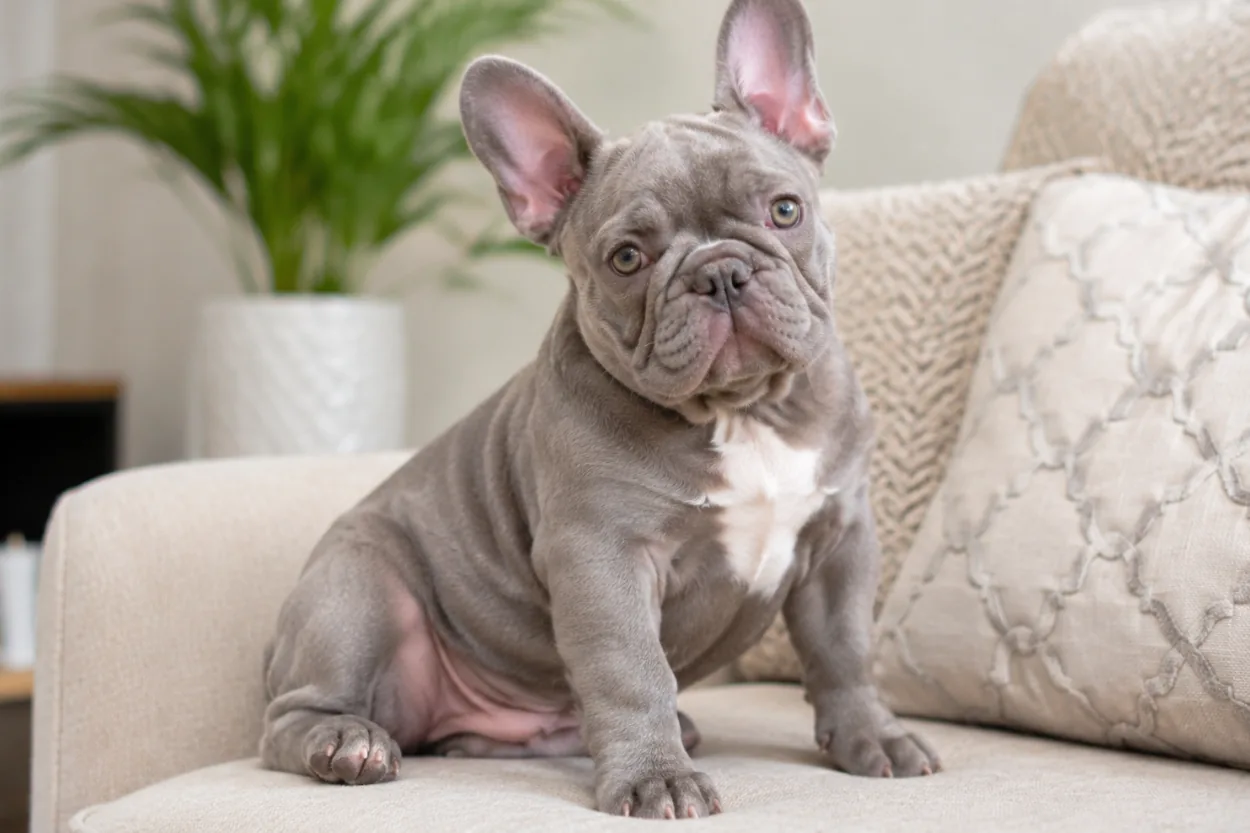
French bulldogs come in a rainbow of colors, and some of the rarest are lilac and Isabella. These pale, silvery-tan coats are popular and often expensive. If you are considering an Isabella French bulldog, it helps to understand the genetics behind the color and the health questions every buyer should ask.
This guide covers what makes a lilac or Isabella Frenchie, how to tell them apart and what to know before buying.
What Is an Isabella French Bulldog?
An Isabella French bulldog has a pale, light silver to soft fawn-gray coat, often with light-colored eyes and a pinkish or light gray nose and paw pads. The color comes from a specific combination of genes that dilute and change black pigment.
What Is a Lilac French Bulldog?
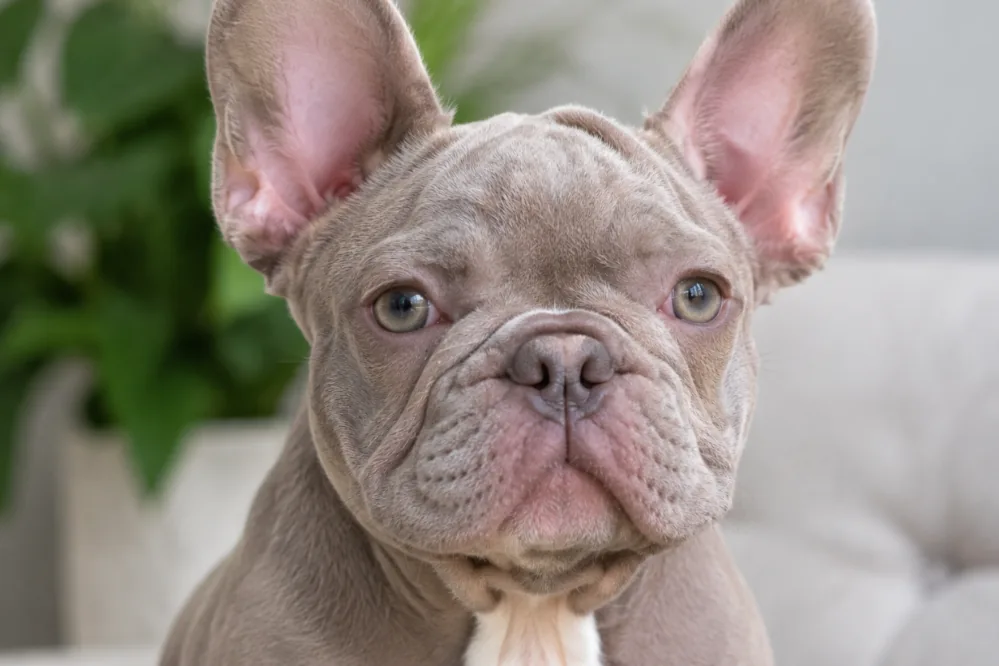
A lilac French bulldog has a coat with a purple-gray or silvery tint, usually darker than Isabella. Lilac dogs often have light eyes and a pinkish-gray nose.
Isabella or Lilac French Bulldog: How They Differ
Both colors come from combining recessive color genes:
- The dilute gene (d): Lightens black pigment to blue (gray).
- The cocoa gene (co): A brown gene identified in French bulldogs (previously called “non-testable chocolate”) that turns black pigment a dark chocolate brown. Researchers do not yet know whether it occurs in other breeds.
- Testable chocolate (b): A separate brown gene found in many dog breeds.
In French bulldog color terms, a dog with two copies of the dilute gene and two copies of cocoa is usually called lilac. Breeders usually use Isabella for a dog with two copies of the dilute gene and two copies of testable chocolate (b), which gives an even lighter, more washed-out tone. When cocoa is also present, some breeders call the result “new shade Isabella.” These are breeder color names rather than official genetic categories, and researchers are still studying how cocoa and testable chocolate interact.
| Feature | Lilac French Bulldog | Isabella French Bulldog |
|---|---|---|
| Coat tone | Purple-gray, silvery | Very pale silver-fawn |
| Genes | Two dilute + two cocoa copies | Two dilute + two cocoa + two testable chocolate copies |
| Eyes | Often light | Often light |
| Nose and pads | Pinkish-gray | Light pink or gray |
| Rarity | Uncommon | Usually rarer |
Genetic testing is the only reliable way to confirm a color.
Are Lilac and Isabella Colors Recognized?
Major kennel club breed standards accept a limited set of French bulldog colors, mainly brindle, fawn and white combinations. Lilac, Isabella, blue and other dilute colors are generally considered non-standard. That does not change the dog’s personality, but it matters if you care about showing.
Health Concerns With Rare-Colored Frenchies
Color Dilution Alopecia
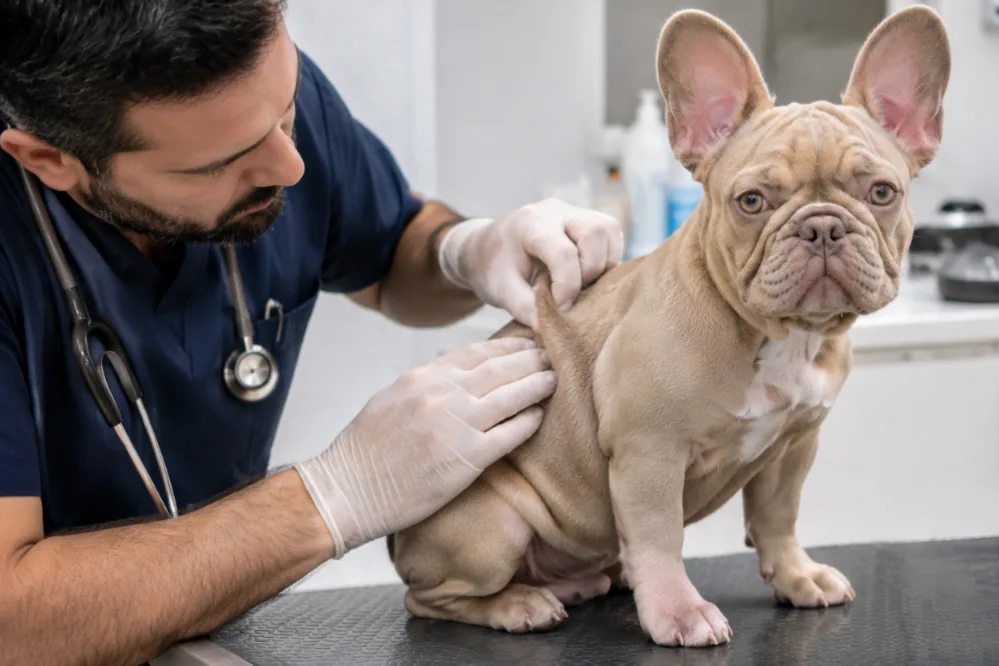
Some dogs with dilute coat colors can develop color dilution alopecia (CDA), a condition that causes thinning hair, dry skin and patchy hair loss. Not every dilute dog develops it, but it is worth discussing with breeders and your vet.
Skin Sensitivity
Light-coated dogs with pink skin can be more prone to sunburn. Limit strong midday sun.
Breeding Priorities
Because rare colors sell for high prices, some breeders focus on color rather than health. This can mean less attention to the breed’s existing health concerns, such as breathing problems and spinal issues. Read more in our teacup French bulldog guide.
Isabella French Bulldog Guide: Questions to Ask a Breeder
- Can I see DNA color test results for the puppy and parents?
- What health testing have the parents had? (For example, airway assessments, spine checks and hip or knee evaluations.)
- Have any dogs in your lines had skin or hair-loss problems?
- Can I meet the mother and see where the puppies are raised?
- What is your policy if a health issue appears later?
A responsible breeder will be open about health and will not focus only on color.
Caring for an Isabella or Lilac Frenchie
- Skin care: Use a gentle shampoo and check the coat for thinning or dryness.
- Sun protection: Limit long exposure to strong sun.
- Diet: Feed a complete and balanced diet; ask your vet whether omega-3s would help skin and coat.
- Breathing: Keep your dog cool and use a harness, as with any Frenchie.
- Play: Offer safe French bulldog toys for low-impact play.
Isabella French Bulldog Price and Value
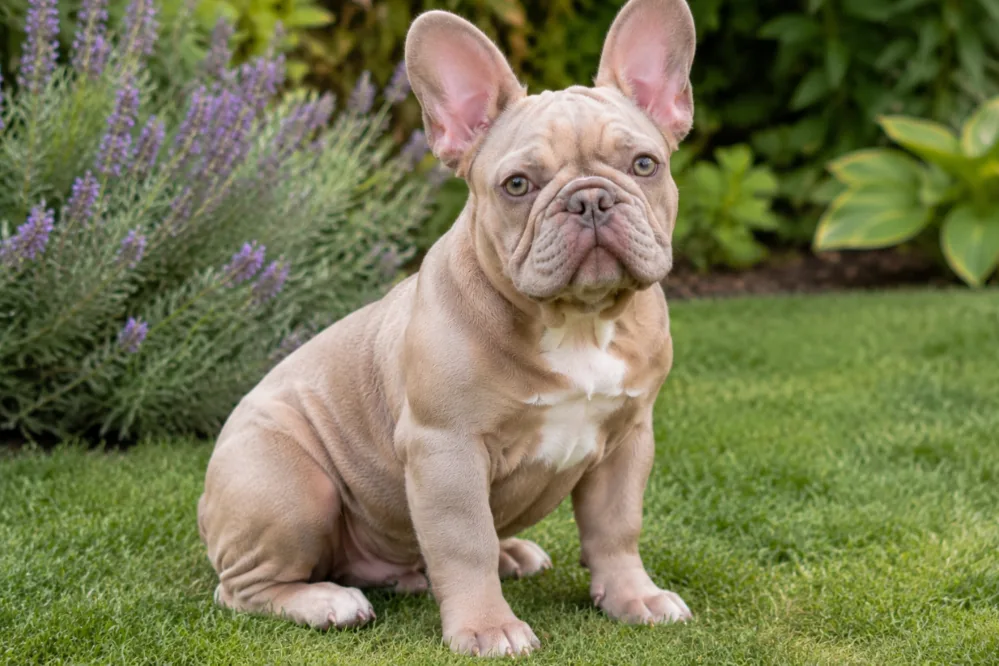
Isabella and lilac Frenchies often sell for much higher prices than standard colors because of demand and rarity. A higher price does not mean a healthier or better-tempered dog.
What You Should Pay For
When comparing breeders, look for value in:
- Health testing of parents
- Good socialization and early handling
- Vet checks and vaccinations
- Clear contracts and ongoing breeder support
What Not to Pay Extra For
Be cautious of sellers who charge more for extreme features, such as very small size or very flat faces. These can increase health risks.
Adoption Options
French bulldog rescues sometimes have dogs in rare colors, including dilute shades. Adoption can be a good way to find an Isabella French bulldog or lilac Frenchie while giving a dog a second chance.
Note: This article is for general information only and is not a substitute for advice from a qualified veterinarian. If your pet seems unwell or you are unsure, please contact your vet.
Helpful Resources
More guides from Pet Guide Nest:
Trusted outside sources:
Frequently Asked Questions
What is the difference between a lilac and an Isabella French bulldog?
Both are dilute colors. Lilac has a purple-gray tone, while Isabella is usually paler and more silver-fawn because it also carries two copies of testable chocolate.
Are Isabella French bulldogs rare?
Yes. Isabella is generally one of the rarer French bulldog colors, which is why prices are often high.
Do Isabella French bulldogs have health problems?
Color alone does not determine health, but dilute colors can be linked to color dilution alopecia. Choose a breeder who health-tests parents.
Can kennel clubs register Isabella French bulldogs?
Policies vary. Major breed standards generally treat dilute colors such as lilac and Isabella as non-standard for showing.
Final Thoughts
An Isabella French bulldog or lilac Frenchie is undeniably beautiful, but color should never come before health. Understand the genetics, ask breeders for DNA color and health tests, and watch for skin issues linked to dilute coats. Choose a well-bred puppy, and you will have a striking companion with the best chance of a healthy life.

Maren Ashcroft
Maren Ashcroft writes the care guides at Pet Guide Nest. She has grown up around dogs, cats, and rabbits and loves learning about the more unusual pets too. She turns vet and animal welfare research into simple, practical advice for everyday pet owners.