


Rabbits may seem silent, but they communicate all the time. Rabbit sounds are often soft, and they mix them with body language to show joy, fear, annoyance or pain. Learning to read these signals helps you build trust and spot problems early.
Common Rabbit Sounds and What They Mean
| Sound | What it usually means |
|---|---|
| Thumping | Alarm or warning; sometimes annoyance |
| Honking or oinking | Excitement, courtship or wanting attention |
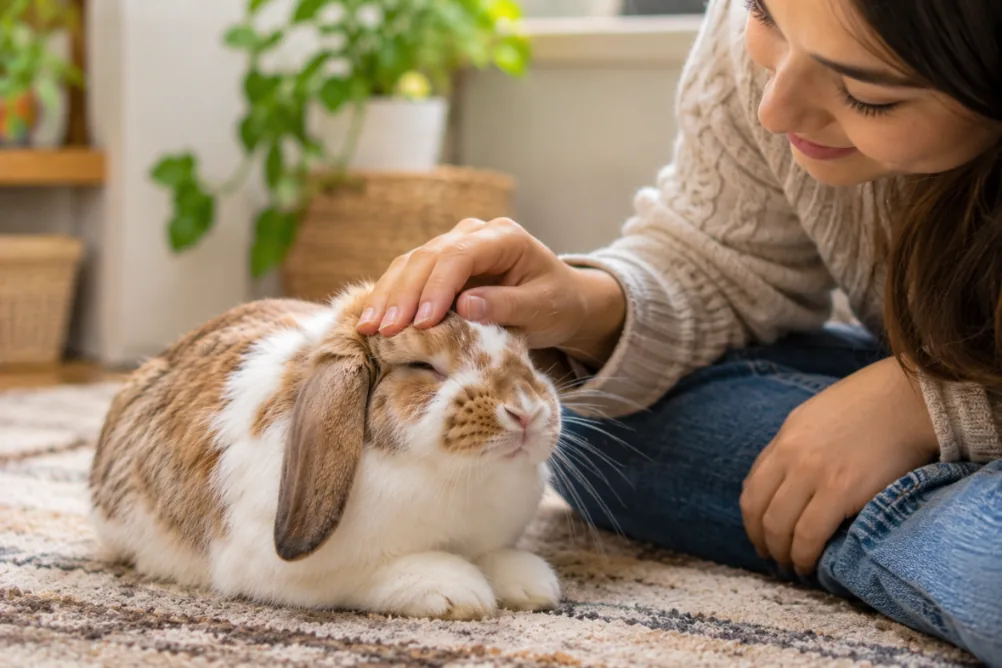
| Soft teeth purring | Contentment, often while being petted |
| Loud teeth grinding | Pain or discomfort; contact a vet |
| Grunting | Annoyance; “leave me alone” |
| Growling | Feeling threatened or territorial |
| Hissing | Anger or defensiveness |
| Clucking | Often heard while eating |
| Whimpering | Unhappy, for example when picked up |
| Screaming | Extreme fear or pain; an emergency |

Why Do Rabbits Thump?
Thumping is when a rabbit strikes the ground hard with its back legs. In the wild, this warns other rabbits of danger. Pet rabbits may thump when they hear a strange noise, smell a predator such as a cat or dog, or feel startled at night.
What to do when your rabbit thumps
- Check for loud noises, new smells or other pets nearby.
- Speak softly and give your rabbit a safe hiding place.
- If thumping happens often, look for stressors in the room.
- Some rabbits also thump when they are annoyed, for example when put back in their pen.
Purring vs Teeth Grinding
A gentle, soft clicking of the teeth, often called purring, usually means a rabbit is relaxed, especially during petting. Loud, harsh grinding while hunched and still often signals pain. If your rabbit is grinding its teeth and not eating, call a rabbit-savvy vet.

Happy Rabbit Body Language
- Binky: a joyful leap in the air with a twist of the body or head.
- Flop: suddenly falling onto its side to rest, a sign of feeling very safe.
- Circling your feet: often excitement or courtship, sometimes with honking.
- Nose nudges: asking for attention or petting.
- Loafing: sitting with paws tucked under, relaxed but alert.
Signs of a Stressed or Unhappy Rabbit
- Ears pressed flat and body pressed low
- Hiding more than usual
- Lunging, boxing or biting
- Hunched posture with half-closed eyes, which can also mean pain
How to Build Trust With Your Rabbit
Sit at your rabbit’s level, let it come to you and offer gentle strokes on the forehead and cheeks. Most rabbits dislike being picked up, so keep lifting to a minimum and always support the back and hind legs.
Rabbit Ear Positions and What They Mean
| Ear position | Likely meaning |
|---|---|
| Both ears up and forward | Alert and curious |
| Ears turning separately | Listening to different sounds |
| Ears relaxed and slightly back | Calm and content |
| Ears flat against the back, body tense | Fear or anger |
Lop-eared rabbits cannot raise their ears, so watch their body posture, eyes and tail instead.
Note: This article is general information. If your rabbit shows signs of pain, stops eating or stops producing droppings, contact a vet promptly.
Helpful Resources
More guides from Pet Guide Nest:
Trusted outside sources:
Frequently Asked Questions
Why does my rabbit thump at night?
Rabbits are most active at dawn and dusk and may thump at night if they hear unfamiliar noises, smell other animals or feel startled.
What does it mean when a rabbit honks?
Honking or oinking usually means excitement, courtship or a request for attention, often while circling your feet.
Do rabbits purr?
Yes. Rabbits make a soft teeth-clicking sound, often called purring, when they are relaxed and content.
What is a bunny binky?
A binky is a happy jump in the air with a twist, a sign that a rabbit feels joyful and safe.
Final Thoughts
Once you learn rabbit sounds and body language, your bunny’s thumps, honks and binkies start to make sense. Watch, listen and respond calmly, and you will build a stronger bond with your rabbit.

Maren Ashcroft
Maren Ashcroft writes the care guides at Pet Guide Nest. She has grown up around dogs, cats, and rabbits and loves learning about the more unusual pets too. She turns vet and animal welfare research into simple, practical advice for everyday pet owners.