
Seeing your rabbit suddenly hold its head to one side, roll or lose its balance is frightening. Rabbit head tilt, also called wry neck or torticollis, is a sign of a problem affecting balance. It needs prompt veterinary care, but many rabbits recover well or learn to live comfortably with a mild tilt.
This guide explains the causes, symptoms, treatment and how to care for your rabbit at home during recovery.
If your rabbit has a sudden head tilt, contact your vet the same day. Early treatment gives the best chance of recovery.
What Is Rabbit Head Tilt?
Head tilt is not a disease on its own. It is a symptom of a problem with the vestibular system, the part of the body that controls balance. This system involves the inner ear and parts of the brain.
Rabbit Head Tilt Causes
The most common causes include:
Encephalitozoon cuniculi (E. cuniculi)
E. cuniculi is a microscopic parasite that many rabbits carry without symptoms. In some rabbits it causes inflammation that affects the brain or nervous system, leading to head tilt.
Inner or Middle Ear Infection
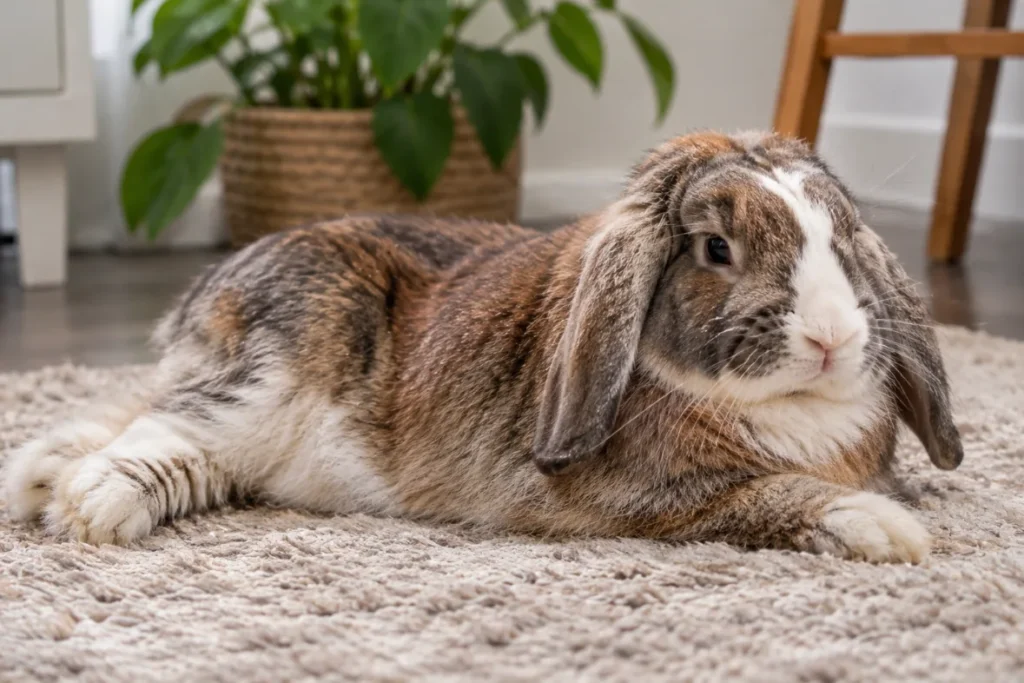
Bacterial infections of the inner or middle ear are another common cause. Rabbits with lop ears may be more prone to ear problems.
Other Causes
- Injury to the head
- Stroke or other brain problems (less common)
- Tumors (rare)
- Some toxins
Your vet will try to find the most likely cause, since treatment depends on it.
Rabbit Head Tilt Symptoms
- The head held at an angle
- Loss of balance, leaning, circling or falling over
- Rolling, especially when startled
- Rapid side-to-side eye movements (nystagmus)
- Reduced appetite or difficulty eating
- Ear scratching, head shaking or discharge (with ear infections)
- Weakness in the back legs (sometimes with E. cuniculi)
How Vets Diagnose Head Tilt
Your vet may:
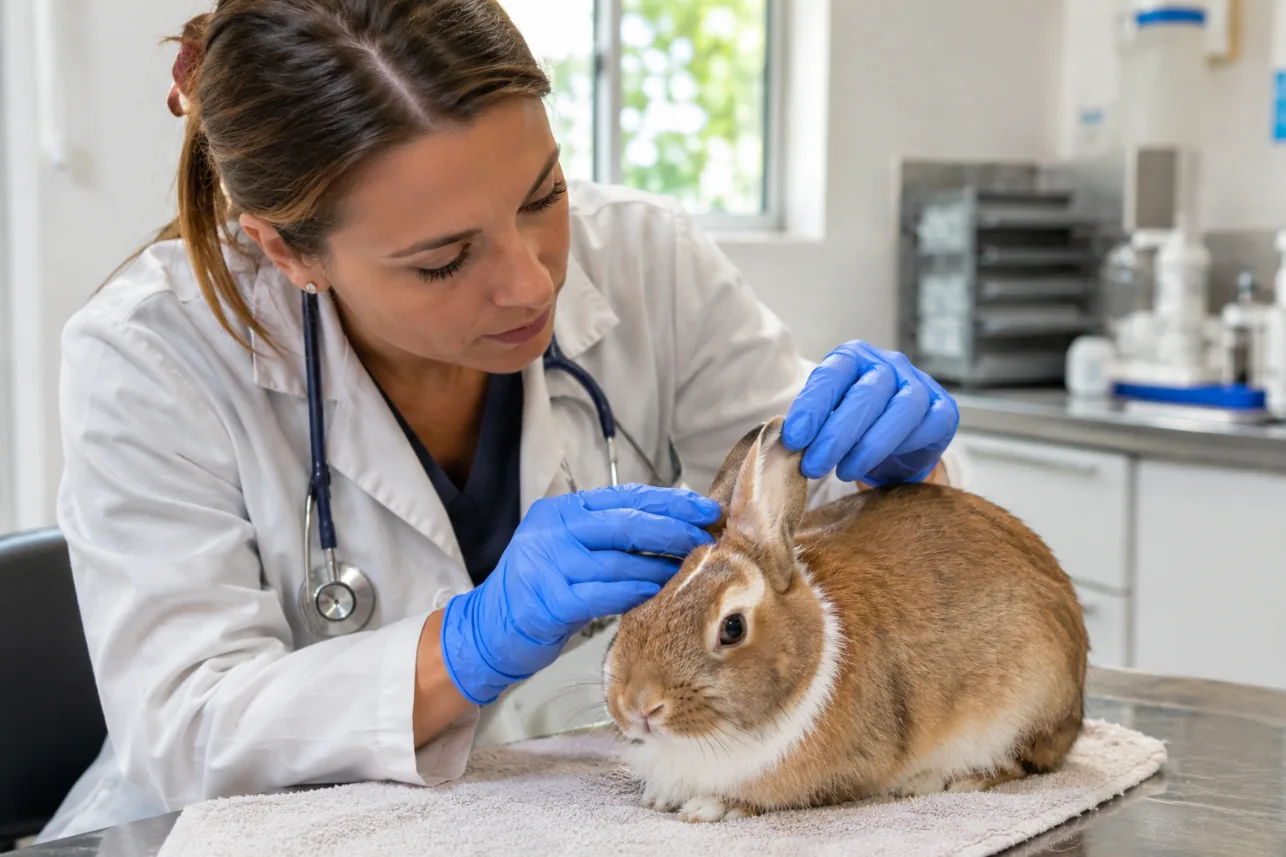
- Do a full physical and neurological exam
- Examine the ears
- Suggest blood tests for E. cuniculi
- Recommend X-rays or advanced imaging such as CT to check the ears and skull
Rabbit Head Tilt Treatment
Treatment depends on the cause, and your vet will choose the right medication and dose. Options may include:
| Cause | Possible treatment from your vet |
|---|---|
| E. cuniculi | Anti-parasitic medication, sometimes with anti-inflammatory drugs |
| Ear infection | Antibiotics; some cases need ear surgery |
| Nausea and dizziness | Medication to reduce vertigo and help your rabbit eat |
| Pain | Pain relief prescribed for rabbits |
| Not eating | Assisted feeding and gut-support medication |
Never give your rabbit medication meant for people or other pets without your vet’s advice.
Caring for Your Rabbit at Home
Good home care is a big part of rabbit head tilt recovery.
Make the Enclosure Safe
- Use a smaller, padded space so your rabbit cannot fall or roll far.
- Line the floor with thick towels, fleece or soft bedding.
- Remove ramps, shelves and anything they could fall from.
Help Them Eat and Drink
Rabbits must keep eating to keep their gut working. If your rabbit eats less, the gut can slow down dangerously, a condition called GI stasis.
- Place hay, greens and water within easy reach.
- Use a heavy bowl, or try a bowl held at a comfortable angle.
- Your vet may supply a recovery food to syringe-feed.
Keep Them Clean and Calm
Rabbits with head tilt may struggle to groom. Gently clean soiled fur and check under the tail daily. Keep the area quiet and dimly lit to reduce stress.
Support Their Balance
Some rabbits feel more secure leaning against a rolled towel or the side of a box. Handle them gently and close to the floor.
Rabbit Head Tilt Recovery
Recovery varies. Some rabbits improve within days or weeks, while others keep a permanent tilt. Many rabbits with a lasting tilt adapt well and enjoy a good quality of life with a few changes to their home.
Signs of improvement include eating normally, rolling less, moving more confidently and resuming normal behavior.
Living With a Permanent Rabbit Head Tilt
Some rabbits keep a lasting tilt after treatment. Many still enjoy eating, exploring and spending time with their owners. Keep their space on one level, use non-slip flooring and place food and water where they can reach them easily. A bonded companion rabbit can also be a great comfort, as long as the companion is gentle.

Preventing Head Tilt
- Book regular checkups with a rabbit-savvy vet.
- Check ears regularly, especially in lop-eared rabbits.
- Keep the enclosure clean.
- Ask your vet about E. cuniculi screening or preventive treatment, especially when introducing new rabbits.
- Feed a healthy diet with plenty of hay. Learn more in our guide on whether rabbits can eat cabbage.
Note: This article is for general information only and is not a substitute for advice from a qualified veterinarian. If your pet seems unwell or you are unsure, please contact your vet.
Helpful Resources
More guides from Pet Guide Nest:
- Most Popular Rabbit Breeds
- Preparing for Baby Rabbits
- How Long Do Chinchillas Live?
- Rabbit Sounds and Body Language
Trusted outside sources:
Frequently Asked Questions
Is rabbit head tilt an emergency?
Yes. A sudden head tilt should be seen by a vet the same day, especially if your rabbit is rolling or not eating.
Can rabbits recover from head tilt?
Many rabbits improve with treatment. Some keep a slight tilt but adapt well and live happy lives.
Is E. cuniculi contagious to other rabbits?
It can spread between rabbits through urine. Talk to your vet about testing or treating other rabbits in the household.
How can I help my rabbit eat with head tilt?
Keep food and water within easy reach, offer favorite greens and ask your vet about recovery food and syringe feeding.
Final Thoughts
Rabbit head tilt is a symptom of a balance problem, often caused by E. cuniculi or an ear infection. Seek vet care quickly, follow the treatment plan and make your rabbit’s home soft, safe and easy to move around. With patience and support, many rabbits recover well or adapt to a comfortable new normal.

Maren Ashcroft
Maren Ashcroft writes the care guides at Pet Guide Nest. She has grown up around dogs, cats, and rabbits and loves learning about the more unusual pets too. She turns vet and animal welfare research into simple, practical advice for everyday pet owners.