

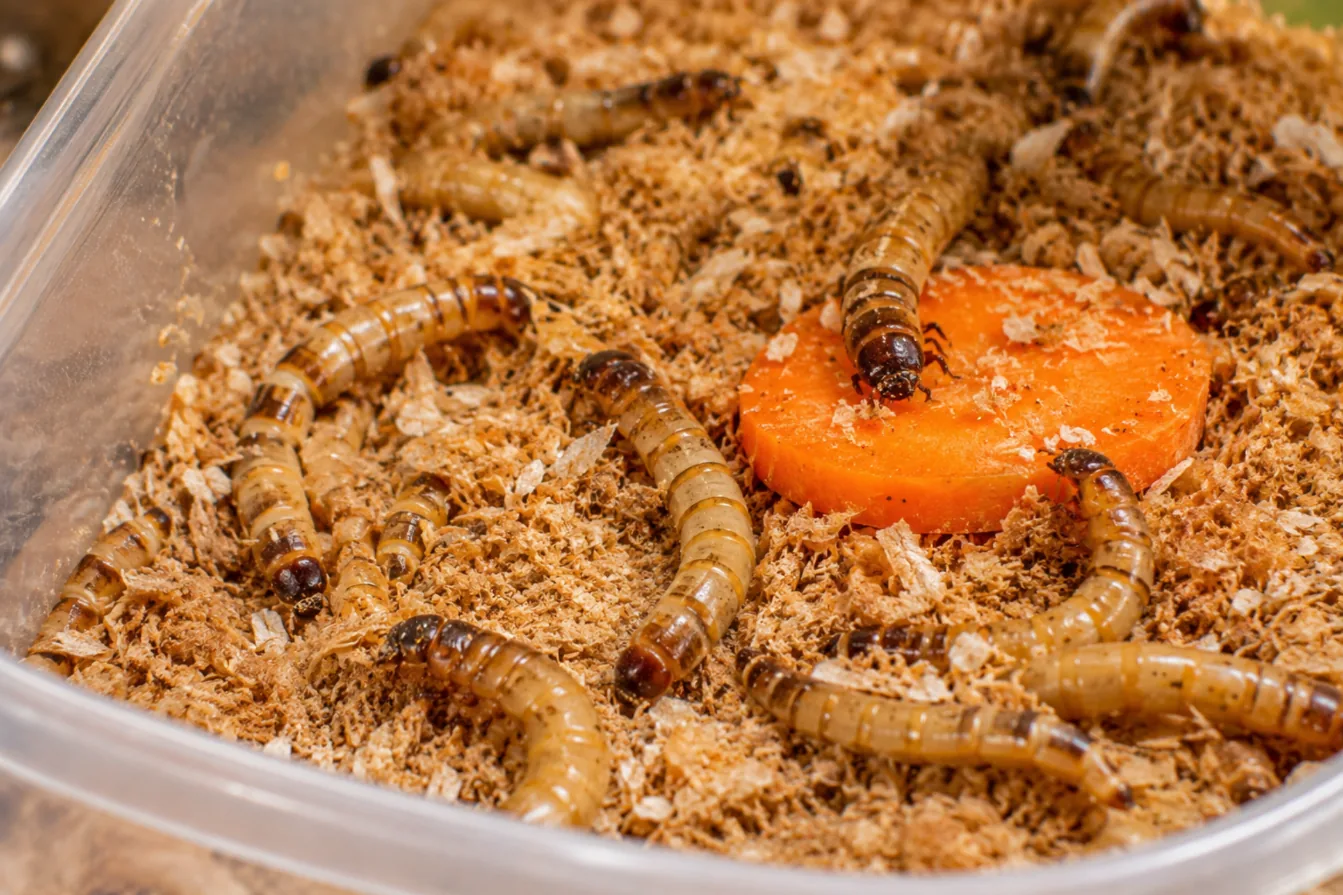
Superworms are a popular feeder insect for lizards, frogs, birds and other insect-eating pets. They are large, active and nutritious when properly gut-loaded. But they need the right setup to stay healthy between feedings. Good superworm care keeps your feeders alive longer and makes them more nutritious for your pets.
This guide covers storing superworms, bedding, food, temperature, gut loading and common mistakes.
What Are Superworms?
Superworms are the larvae of a darkling beetle (Zophobas species). They are larger than mealworms and are often fed to:
- Bearded dragons
- Leopard geckos and other insect-eating lizards
- Blue-tongued skinks
- Some frogs and toads
- Certain birds and small mammals, as advised by a vet

Superworms vs Mealworms
| Feature | Superworms | Mealworms |
|---|---|---|
| Size | Larger | Smaller |
| Storage temperature | Room temperature | Can be refrigerated to slow growth |
| Movement | Very active | Less active |
| Bite | Can pinch small animals | Less likely to pinch |
| Best for | Medium to large reptiles | Smaller reptiles and animals |
Important: Unlike mealworms, superworms should not be refrigerated. Cold temperatures can kill them.
Storing Superworms for Feeding
Container
Use a smooth-sided plastic tub with ventilation holes in the lid. Superworms cannot climb smooth surfaces well.
Bedding
Fill the bottom with a few inches of:
- Wheat bran
- Oats
- Commercial feeder bedding
The bedding doubles as a dry food source.
Temperature
Keep superworms at room temperature, away from direct sunlight and heaters. Avoid cold rooms, garages in winter and refrigerators.
Moisture
Superworms need moisture but not wet bedding. Provide slices of:
- Carrot
- Potato
- Apple
- Leafy greens
Replace them before they mold.
Keeping Superworms Healthy
Clean Regularly
- Remove dead worms and old food every few days.
- Sift out frass (droppings) and replace bedding every few weeks.
- Keep the container dry to prevent mold and mites.
Avoid Overcrowding
Too many worms in a small space can lead to stress and deaths. Use a larger container for large numbers.
Separate for Pupation
When superworms are kept in groups, they usually stay as larvae. If isolated, they often curl into a “C” shape and turn into pupae, then beetles. Keep them together if you want them to stay as feeders.
Superworm Guide to Gut Loading
Gut loading means feeding insects nutritious foods before offering them to your pet. It improves the nutrition your pet receives.
Good gut-loading foods include:
- Leafy greens, such as collard or mustard greens
- Carrots and squash
- Sweet potato
- Commercial gut-load diets
Gut-load superworms for about 24 to 48 hours before feeding them to your pet.

Dusting Superworms
Many reptiles need calcium and vitamin supplements. Lightly dust superworms with the supplement your reptile vet recommends just before feeding.
How Many Superworms Should You Feed?
Superworms are relatively high in fat, so they are often used as part of a varied insect diet rather than the only feeder. The right amount depends on your pet’s species, size and age. Ask your reptile vet for a feeding plan.
Feeding Safety Tips
- Offer superworms with tongs or in a smooth dish.
- Choose worms no longer than the space between your pet’s eyes.
- Remove uneaten worms so they do not bite your pet.
- Supervise young or small animals when feeding.
Common Superworm Care Mistakes
| Mistake | Fix |
|---|---|
| Refrigerating superworms | Store at room temperature |
| Wet bedding | Use dry bran and fresh produce for moisture |
| Moldy food | Replace produce every day or two |
| Too many worms in one tub | Use a bigger container |
| Leaving worms in the enclosure | Remove uneaten feeders |
Breeding Superworms
Some keepers breed superworms by isolating larvae to pupate, then keeping the beetles in a separate container with bedding, food and moisture. Beetles lay eggs in the bedding, which hatch into tiny larvae. This takes time and patience. For another feeder option, see our guide on how to start a Dubia roach colony.

Superworm Care Schedule
| How often | Task |
|---|---|
| Every day or two | Replace fresh vegetables |
| Every few days | Remove dead worms |
| Weekly | Check for mold, mites or bad smells |
| Every few weeks | Sift out frass and replace bedding |
Superworm Care in Hot or Cold Weather
In very warm weather, superworms may pupate faster. In cold weather, they may slow down or die. Keep them in a stable, room-temperature spot away from windows, heaters and air conditioning vents.
Helpful Resources
More guides from Pet Guide Nest:
- Uromastyx Reptile Care Guide: Diet, Enclosure and Lifespan
- What Do Koi Fish Eat? Feeding Guide by Season
- Personal Blogging About Your Pet: How Stories Keep Memories Alive
- Custom Pet Portraits: Gift Ideas Every Pet Lover Will Treasure
- Madagascar Hissing Cockroach Care
Trusted outside sources:
Frequently Asked Questions
How do I keep superworms alive?
Store them at room temperature in a ventilated tub with dry bran bedding, add fresh vegetables for moisture and clean out dead worms regularly.
Can superworms be refrigerated?
No. Unlike mealworms, superworms can die in cold temperatures.
How long do superworms live?
With good care, superworms can stay as larvae for weeks or even months when kept together.
What should I feed superworms?
Dry bran or oats as bedding and food, plus fresh carrots, potatoes or greens for moisture and gut loading.
Final Thoughts
Good superworm care is simple: room temperature, a ventilated tub, dry bedding, fresh vegetables and regular cleaning. Gut-load and dust your superworms before feeding, and remove any your pet does not eat. Healthy feeders mean healthier pets. For more guides like this, explore our Pet Lifestyle and Accessories articles.

Maren Ashcroft
Maren Ashcroft writes the care guides at Pet Guide Nest. She has grown up around dogs, cats, and rabbits and loves learning about the more unusual pets too. She turns vet and animal welfare research into simple, practical advice for everyday pet owners.


