
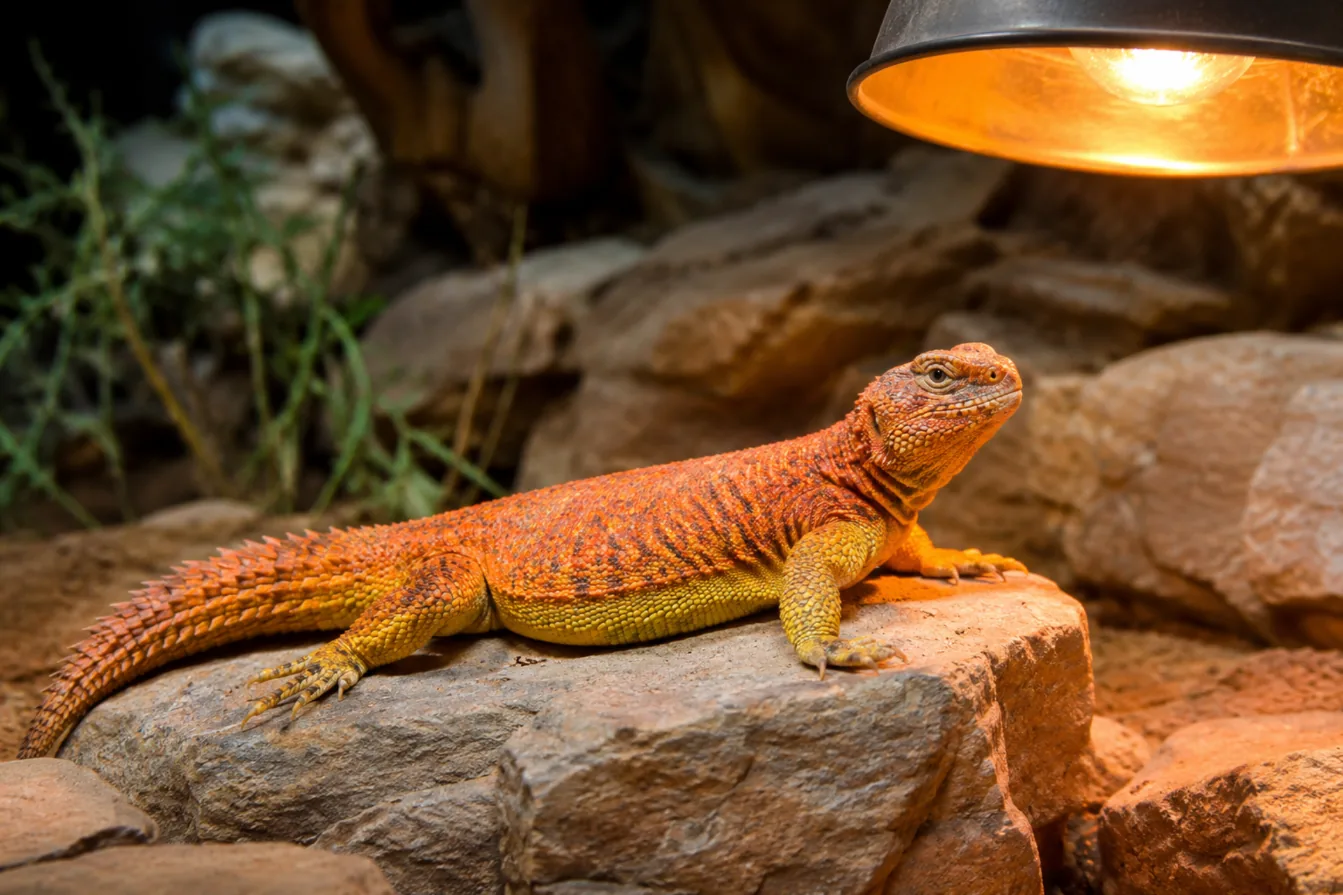
With their spiky tails, round faces and love of sunbathing, uromastyx lizards are full of personality. Often called spiny-tailed lizards, they are hardy, mostly herbivorous reptiles from hot, dry regions. A uromastyx reptile can make a rewarding pet, but it needs very high basking temperatures, strong UVB lighting and a plant-based diet.
This guide covers uromastyx care, diet, feeding, enclosure setup, lifespan and health.
What Is a Uromastyx?
Uromastyx is a group of lizard species found in North Africa, the Middle East and parts of South Asia. They live in deserts and rocky areas, digging burrows to escape heat and predators.
Popular pet species include:
- Mali uromastyx
- Ornate uromastyx
- Moroccan uromastyx
- Egyptian uromastyx (a larger species)
Their thick, spiny tails help defend burrows and store fat.

Uromastyx Reptile at a Glance
| Feature | Details |
|---|---|
| Diet | Mainly plants: leafy greens, vegetables, seeds |
| Activity | Active during the day |
| Temperament | Usually calm and curious once settled |
| Size | Varies by species, from small to fairly large |
| Lifespan | Often 15 to 20 years or more in captivity |
| Key needs | Very hot basking spot, strong UVB, dry enclosure |
Uromastyx Care: Enclosure Setup
Size
Uromastyx need floor space to roam and bask. Choose the largest enclosure you can, with a secure lid and good ventilation. Larger species need even more room.
Substrate
Many keepers use a solid, diggable substrate, such as a sand and soil mix that holds burrows. Avoid loose, dusty substrates if your lizard eats food off the floor; use a feeding dish.
Decor
- Flat basking rocks or slate
- Hides on both warm and cool sides
- Rock stacks secured so they cannot fall
- Space to dig
Heat
Uromastyx need a very hot basking spot, much hotter than many other pet lizards, with a cooler side for temperature control. Use a thermostat with every heat source and measure temperatures with a digital thermometer or temperature gun. Follow a trusted care sheet for your species.
UVB Lighting
Strong UVB light is essential. It helps uromastyx make vitamin D3 and absorb calcium. Without it, they can develop metabolic bone disease. Use a high-output UVB tube across much of the enclosure and replace it as recommended by the manufacturer.
Humidity
Uromastyx come from dry habitats. Keep humidity low and ventilation good. A slightly more humid burrow area can help with shedding.
Uromastyx Diet
Uromastyx are primarily herbivores.
| Food type | Examples |
|---|---|
| Leafy greens | Dandelion greens, collard greens, mustard greens, endive |
| Vegetables | Squash, bell pepper, green beans (shredded) |
| Seeds and lentils | Small amounts of bird seed, millet or split lentils, depending on species and vet advice |
| Flowers | Hibiscus, dandelion flowers (pesticide-free) |
| Supplements | Calcium powder, as advised by a reptile vet |
Uromastyx Feeding Tips
- Offer fresh greens daily or most days.
- Chop food into small pieces.
- Feed in the morning after they have warmed up.
- Avoid spinach in large amounts, iceberg lettuce, fruit in large amounts and animal protein unless your vet advises it.
- Many uromastyx get most of their water from food, but offer a shallow water dish or occasional misting of greens as your vet recommends.

Handling Your Uromastyx
- Let your lizard settle for a week or two before handling.
- Support the whole body, including the legs.
- Never grab the tail.
- Keep sessions short at first.
- Some uromastyx enjoy gentle interaction; others prefer to be watched.
Uromastyx Lifespan
With good care, uromastyx often live 15 to 20 years or more in captivity. This makes them a long-term commitment.
Common Health Problems
| Problem | Signs |
|---|---|
| Metabolic bone disease | Soft jaw, bent limbs, tremors, weakness |
| Dehydration | Sunken eyes, wrinkled skin, lethargy |
| Respiratory infection | Wheezing, mucus, open-mouth breathing |
| Mites | Tiny moving dots on skin |
| Gut problems | Changes in droppings, poor appetite |
Find a reptile vet before you need one, and book a check-up after your lizard settles in.
Is a Uromastyx Right for You?
A uromastyx may suit you if you want a day-active, plant-eating lizard and can provide a large, hot, dry enclosure with strong UVB lighting.
If you are still choosing your first reptile, compare species in our guide to the best pet lizards for beginners.

Uromastyx Reptile Behavior Explained
Why a Uromastyx Reptile Digs
Digging is natural. In the wild, uromastyx dig burrows to escape heat and predators. A diggable substrate lets them follow this instinct.
Basking Behavior
Uromastyx often bask for long periods in the morning. Darker coloring while basking can help them absorb heat; colors may brighten once warm.
Tail Whipping
The spiny tail is a defense tool. A frightened uromastyx may lash its tail. Give it space and approach more slowly next time.
Head Bobbing
Head bobbing can be a display, often seen in males. It is normal behavior.
Helpful Resources
More guides from Pet Guide Nest:
- Superworm Care: How to Keep Feeder Worms Healthy
- Custom Pet Portraits: Gift Ideas Every Pet Lover Will Treasure
- What Do Koi Fish Eat? Feeding Guide by Season
- Personal Blogging About Your Pet: How Stories Keep Memories Alive
Trusted outside sources:
Frequently Asked Questions
What do uromastyx eat?
Uromastyx are mainly herbivores. They eat leafy greens, vegetables, flowers and small amounts of seeds or lentils, depending on species.
Are uromastyx good pets for beginners?
They can be, if the owner can provide very high basking temperatures, strong UVB and a dry enclosure.
How long do uromastyx live?
Often 15 to 20 years or more in captivity with good care.
Do uromastyx need UVB?
Yes. Strong UVB lighting is essential for bone health.
Final Thoughts
A uromastyx reptile is a hardy, sun-loving lizard with a big personality. Provide a spacious, dry enclosure, a very hot basking spot, strong UVB lighting and a varied plant-based diet. With the right setup and regular vet care, your uromastyx can thrive for many years. For more guides like this, explore our Pet Lifestyle and Accessories articles.

Maren Ashcroft
Maren Ashcroft writes the care guides at Pet Guide Nest. She has grown up around dogs, cats, and rabbits and loves learning about the more unusual pets too. She turns vet and animal welfare research into simple, practical advice for everyday pet owners.