
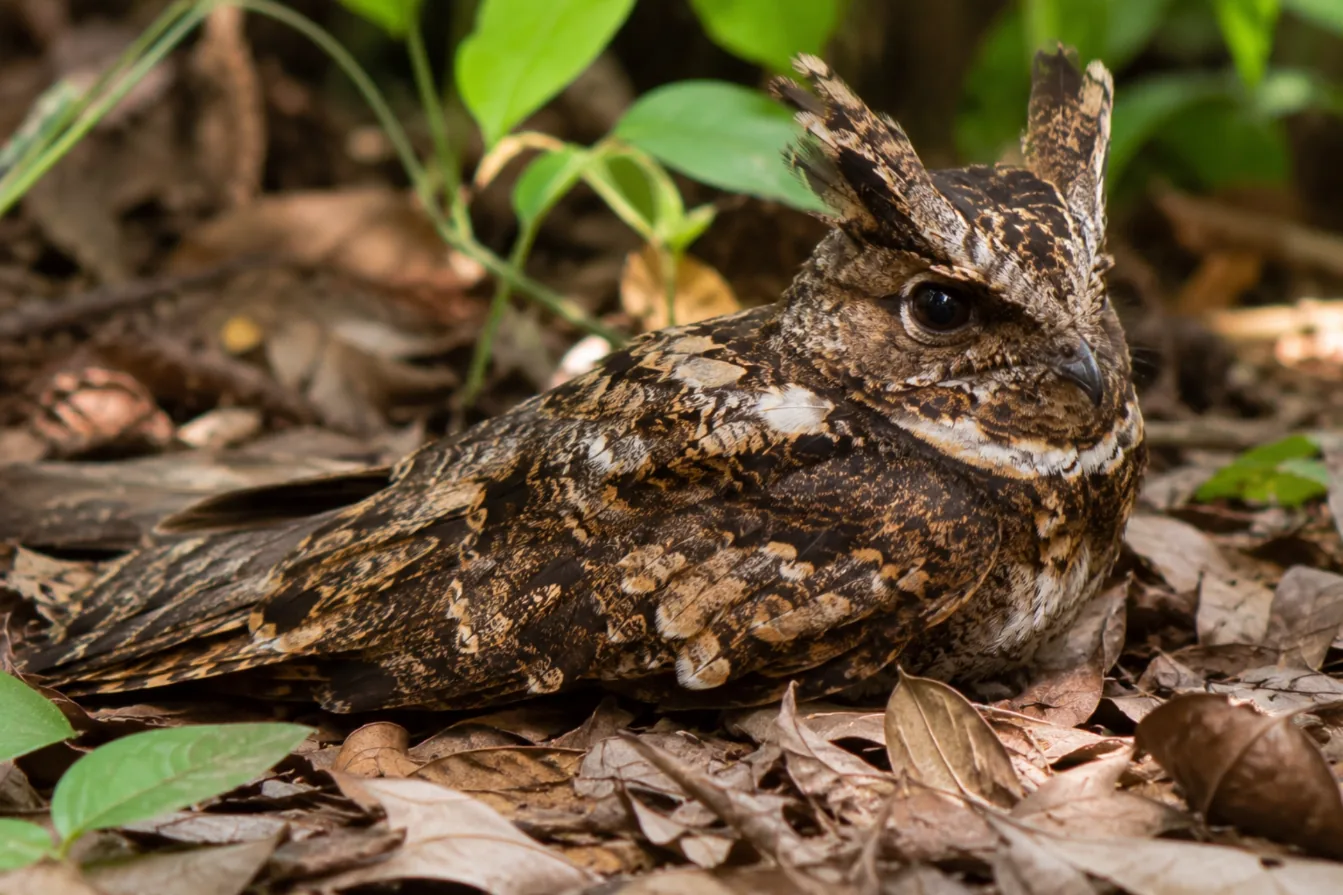
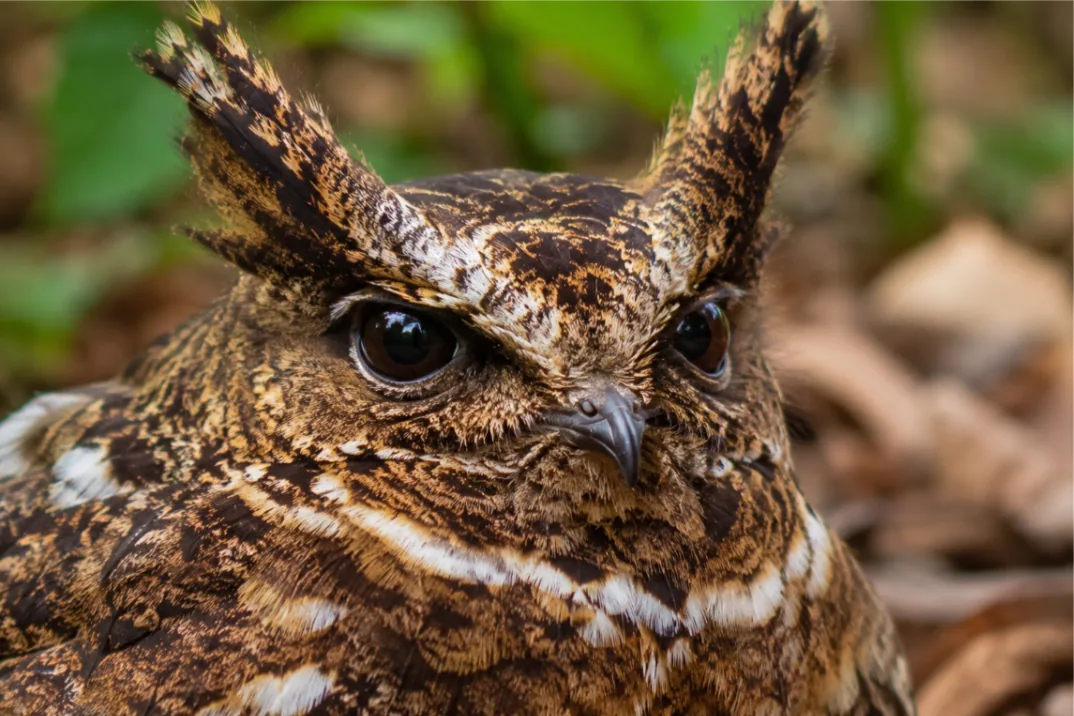
With feathery “ears,” huge dark eyes and a wide mouth, the great eared nightjar looks like something from a fantasy film. Photos of this bird often go viral, with people calling it a “dragon bird” or a real-life Pokémon. But the great eared nightjar is a real species, and its strange appearance helps it survive.
Here are 10 surprising great eared nightjar facts, from its habitat and camouflage to how it hunts at night.
What Is the Great Eared Nightjar?
The great eared nightjar (Lyncornis macrotis) is a large nightjar found in parts of South and Southeast Asia. Nightjars are nocturnal birds that feed mainly on flying insects. This species is one of the largest nightjars, and it is famous for the tufts of feathers on its head that look like ears.
It is a wild bird, not a pet, and is best admired in nature or through wildlife photography.
10 Great Eared Nightjar Facts
1. Its “Ears” Are Not Ears
The tufts on top of its head are feathers, not ears. Like owls’ “ear” tufts, they may help with camouflage by breaking up the bird’s outline. Its real ears are hidden under the feathers on the sides of its head.
2. It Is One of the Largest Nightjars
This species is large for a nightjar, roughly 30 to 40 centimeters long, with long wings and tail.
3. It Lives in Forests of South and Southeast Asia
Its range includes parts of India, Bangladesh, Myanmar, Thailand, Malaysia, Indonesia and the Philippines, among other areas. It lives in forests, forest edges and wooded hills.
4. It Is a Master of Camouflage
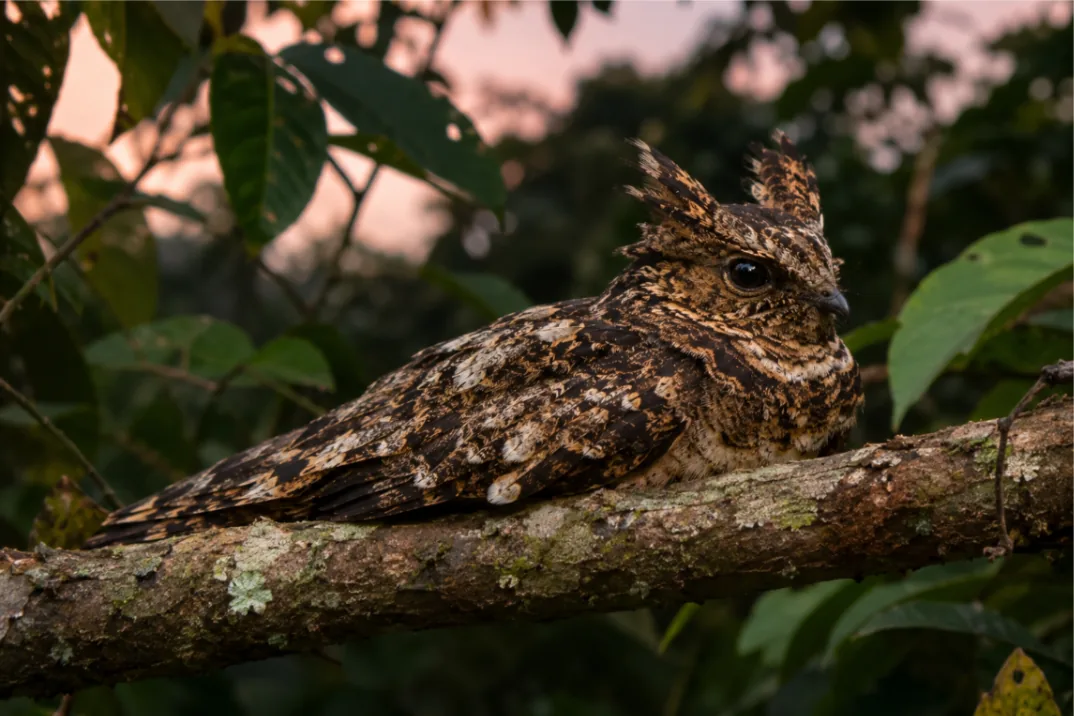
Its feathers are mottled brown, gray and black, looking just like dead leaves and bark. During the day, it rests on the forest floor or on branches, almost invisible to predators.
5. It Hunts at Dusk and Night
Nightjars are crepuscular and nocturnal, most active at dawn, dusk and night. The nightjar flies above the forest canopy and clearings, catching insects in mid-air.
6. It Has a Huge Mouth
Like all nightjars, it has a small beak but a very wide gape. This helps it scoop flying insects such as moths and beetles out of the air.
7. Its Eyes Are Built for the Dark
Large eyes help it see in low light. Like many night birds, its eyes reflect light at night, creating an “eyeshine” when lit by a torch.
8. It Has a Distinctive Call
The nightjar is known for a clear, whistling call, often heard at dusk. Birdwatchers often find it by listening for the call before spotting it.
9. It Nests on the Ground
Nightjars usually do not build nests. The female often lays a single egg directly on the ground, among leaf litter. Camouflage protects both the parent and the egg.
10. It Is Not Considered Globally Threatened
The species is currently assessed as Least Concern on a global level, but like many forest birds, it depends on healthy forests. Habitat loss can affect local populations.
Great Eared Nightjar Bird at a Glance
| Feature | Details |
|---|---|
| Scientific name | Lyncornis macrotis |
| Family | Nightjars (Caprimulgidae) |
| Size | Roughly 30–40 cm long |
| Range | South and Southeast Asia |
| Habitat | Forests, forest edges, wooded hills |
| Diet | Flying insects such as moths and beetles |
| Activity | Dusk and night |
| Nest | Egg laid on the ground |
Why Does It Look Like a Dragon?
The combination of “horn-like” feather tufts, a wide mouth, big eyes and a fluffy face gives this nightjar its dragon-like look in close-up photos. In reality, these features are all practical adaptations for a life of hiding by day and hunting at night.
Can You Keep a Great Eared Nightjar as a Pet?
No. The great eared nightjar is a wild bird, and capturing or keeping wild birds is illegal in many countries and harmful to the birds. Nightjars need large areas to hunt flying insects, which cannot be recreated in captivity at home.
If you love birds and want one as a companion, consider a domesticated species. Our guide on how to find a healthy cockatiel for sale is a great place to start.
How to See a Great Eared Nightjar in the Wild
- Join a guided night walk with a local birding guide.
- Visit forested national parks within its range.
- Listen for its whistling call at dusk.
- Use a dim red light to avoid disturbing wildlife.
- Keep your distance and never handle wild birds.
Facts About the Great Eared Nightjar vs Owls
| Great eared nightjar | Owls |
|---|---|
| Catches insects in flight | Many hunt small mammals and birds |
| Small beak, very wide mouth | Strong hooked beak |
| Weak feet | Strong talons |
| Nests on the ground | Nests in cavities or old nests |
Nightjars and owls are not closely related, even though both are active at night and have “ear” tufts in some species.

Nightjars Around the World
Nightjars are found on every continent except Antarctica. They share a few features:
- Cryptic, leaf-like feathers
- Short beaks and wide mouths
- Active at dusk and night
- Eggs laid on bare ground
Some, like the common nighthawk in North America, are often seen hunting insects over towns at dusk. Others, like the potoos of Central and South America (a related family), pose as broken branches during the day.
Why Birdwatchers Love Them
Nightjars are hard to find, which makes a sighting feel special. Their camouflage, unusual faces and haunting calls make them a favorite challenge for wildlife photographers.
Helpful Resources
More guides from Pet Guide Nest:
- Harlequin Macaw: Facts, Personality and Care Needs
- Old German Owl Pigeon: Breed Guide and Care
- Purple Birds: 8 Stunning Species You Should Know
- Fantail Pigeons: Breed Guide, Care and Showing
- Howler Monkey: The Loudest Monkey
Trusted outside sources:
Frequently Asked Questions
Where does the great eared nightjar live?
It lives in forests of South and Southeast Asia, including parts of India, Thailand, Malaysia, Indonesia and the Philippines.
What does the great eared nightjar eat?
It eats flying insects such as moths and beetles, caught in mid-air at dusk and night.
Are the great eared nightjar’s tufts real ears?
No. They are feather tufts. Its real ears are hidden on the sides of its head.
Is the great eared nightjar endangered?
It is currently assessed as Least Concern globally, but it depends on healthy forests.
Final Thoughts
The great eared nightjar is one of the most remarkable birds in Asia’s forests. Its feather “ears,” wide mouth and perfect camouflage all help it survive as a nighttime insect hunter. Admire it in the wild with a responsible guide, and help protect the forests it calls home. For more guides like this, explore our Birds articles.

Maren Ashcroft
Maren Ashcroft writes the care guides at Pet Guide Nest. She has grown up around dogs, cats, and rabbits and loves learning about the more unusual pets too. She turns vet and animal welfare research into simple, practical advice for everyday pet owners.