
With their proud chests and spectacular fanned tails, fantail pigeons look more like tiny peacocks than everyday street pigeons. They are one of the oldest and most recognizable fancy pigeon breeds, kept for their beauty, gentle nature and graceful display.
This fantail pigeon breed guide covers the breed’s history, appearance, temperament, loft setup, feeding, health and showing.
What Are Fantail Pigeons?
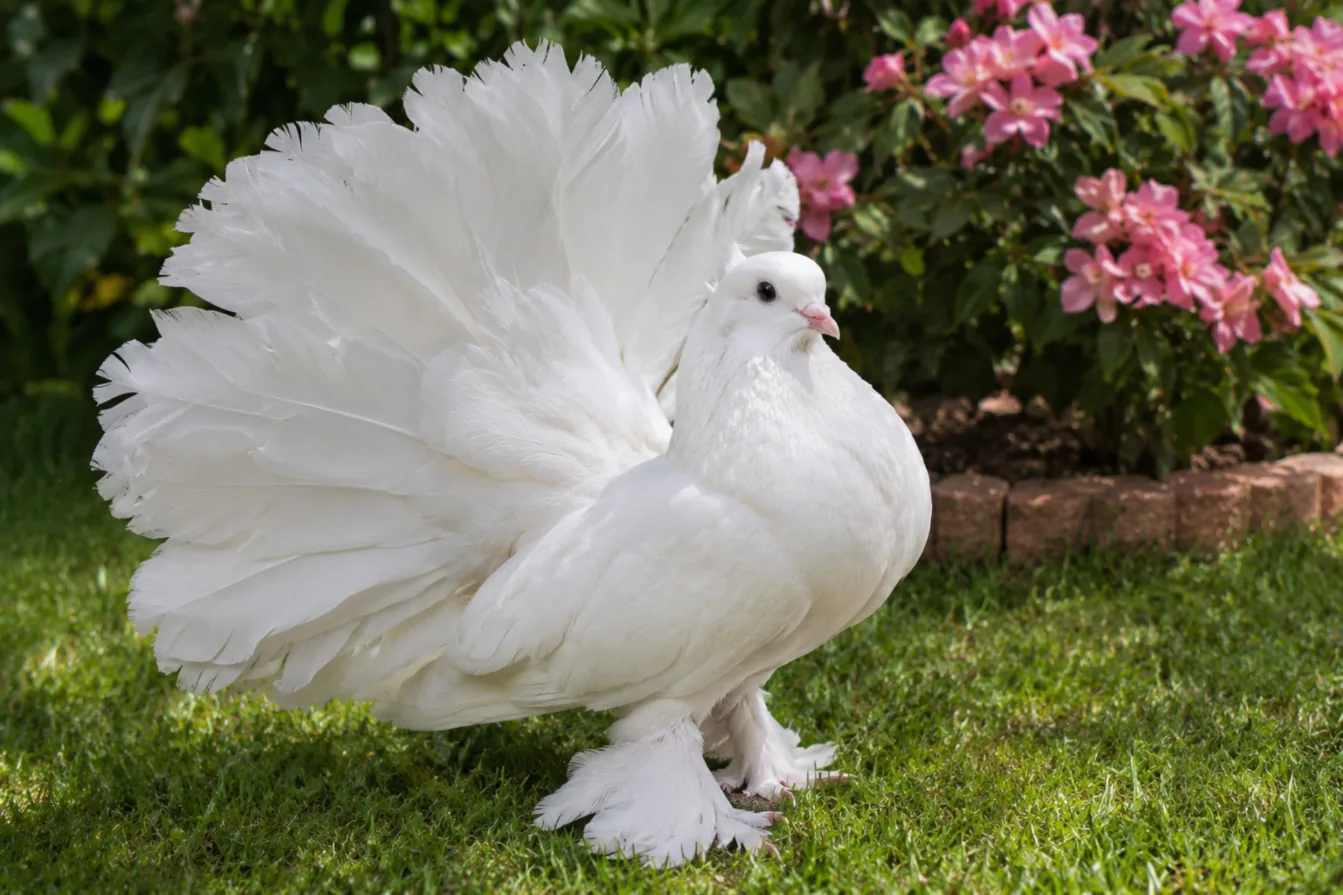
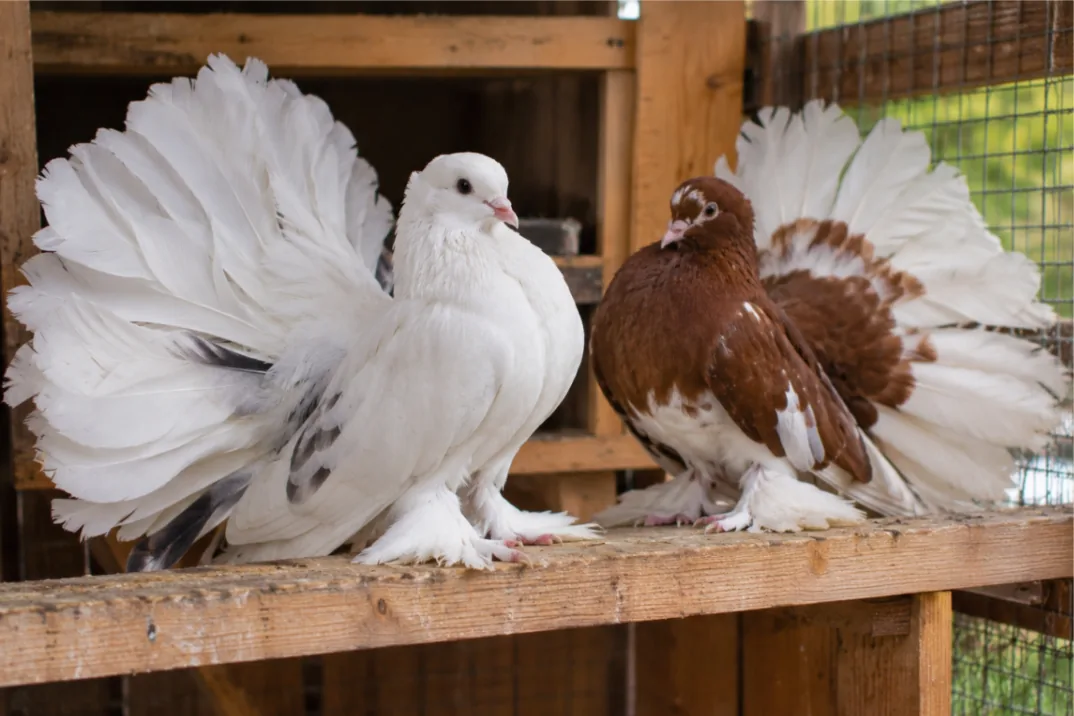
Fantail pigeons are a fancy breed of the domestic pigeon. They were bred over many generations for their upright posture and large, fan-shaped tails. While a typical pigeon has around 12 tail feathers, fantails can have many more, often around 30 or more, held upright like an open fan.
They are kept mainly as ornamental and show birds rather than for racing or homing.
A Short History of the Breed
Fantails are generally believed to have originated in India, and they were well known in Europe by the 1600s. Charles Darwin studied fancy pigeons, including fantails, when writing about how selective breeding changes animals over time. Today there are several types, including American, English, Indian and Scottish fantails, each with slightly different shapes and standards.
Fantail Pigeon Breed Appearance
- Tail: Wide, upright and fan-shaped, ideally forming a full circle behind the body.
- Posture: Upright, with the head often held back so it almost touches the tail.
- Chest: Full and rounded.
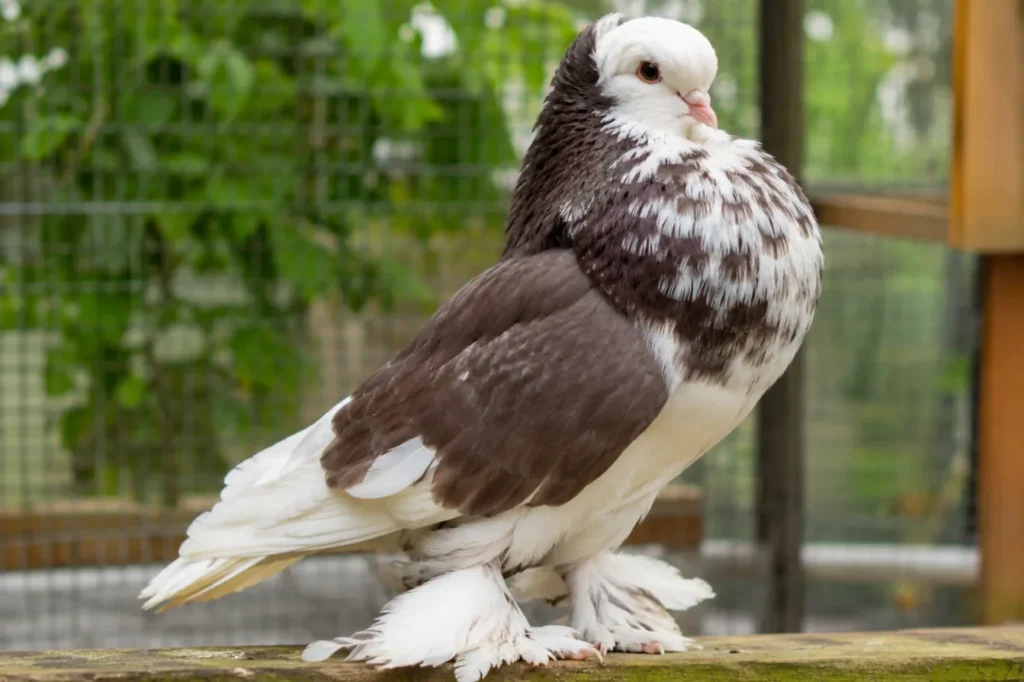
- Feet: Some types have clean legs; others, such as Indian fantails, have feathered feet (“muffs”).
- Movement: Fantails often walk on tiptoe and vibrate their necks when displaying.
Fantail Pigeon Colors
Fantail pigeons come in many colors and patterns, including:
- Pure white (one of the most popular)
- Black, red and yellow
- Blue and silver
- Saddle and shield markings
- Splashes and mottles
Temperament
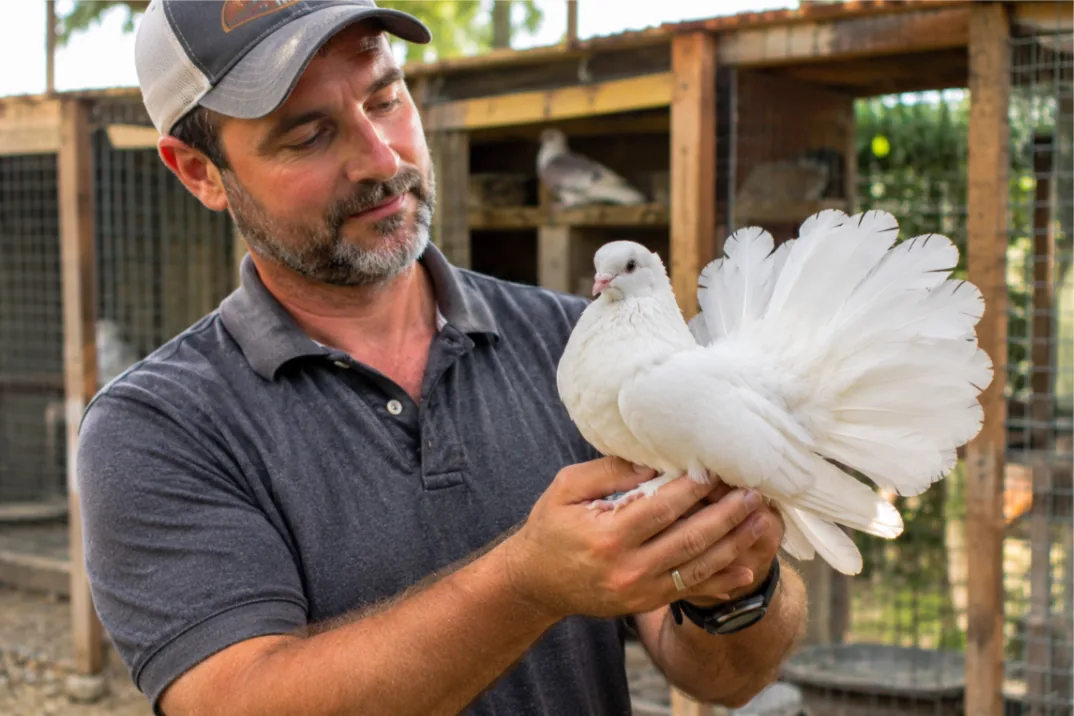
Fantails are usually calm, gentle birds. They can become quite tame with regular, quiet handling. Because of their heavy tails and upright posture, many fantails are not strong fliers, which can make them easier to manage than flying breeds, but also more vulnerable to predators.
Fantail Pigeon Breed Guide to Housing
The Loft
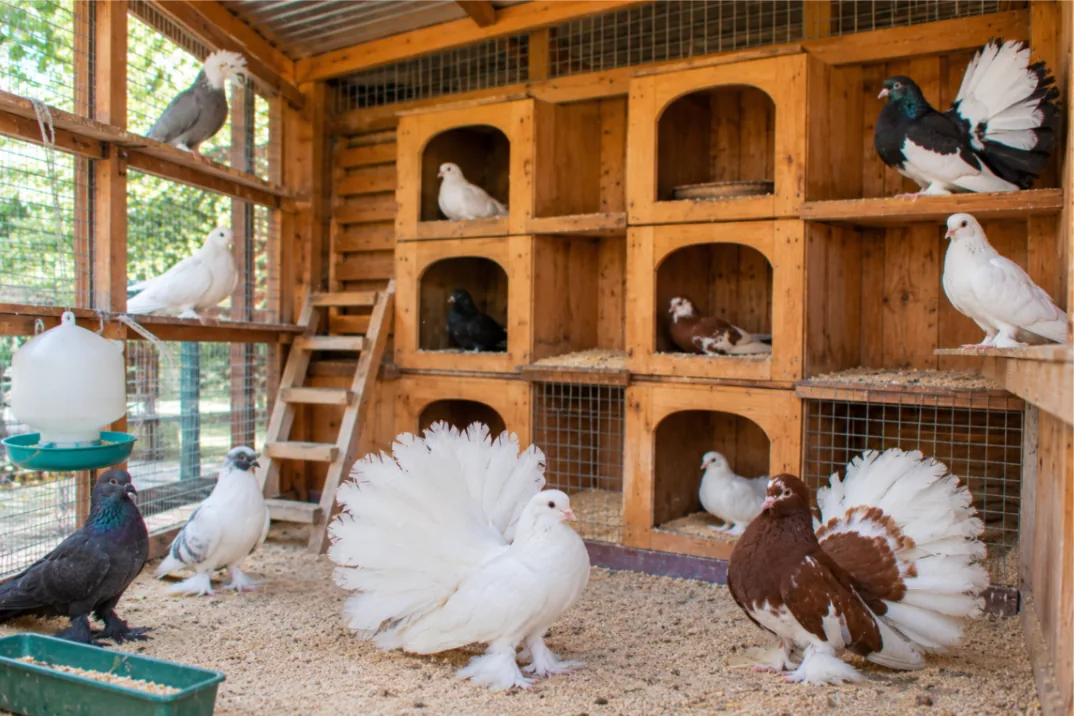
Fantail pigeons need a secure, dry loft (pigeon house) with:
- Good ventilation without drafts
- Protection from rain, wind and predators
- Perches spaced so tails are not damaged
- Nest boxes for breeding pairs
- Easy-to-clean floors
Tail Protection
The fan tail is the breed’s crown, so avoid cramped spaces where feathers can break. Wider perches, open floor space and clean bedding help protect feather quality.
Aviary or Flight
Many keepers add an enclosed aviary or “flight” so birds can get fresh air and sunlight safely. Use strong wire and a solid roof section.
Feeding Fantail Pigeons
| Food | Notes |
|---|---|
| Pigeon seed mix or pellets | The main diet, with a mix of grains and legumes |
| Grit | Helps digestion; offer fine pigeon grit |
| Minerals | Mineral blocks or supplements recommended by an avian vet |
| Clean water | Fresh every day, plus a shallow bath for bathing |
| Treats | Small amounts of greens or seeds |
Feed measured amounts so birds stay at a healthy weight. Remove spilled or wet feed to prevent mold and pests.
Health and Care
- Clean the loft regularly to reduce disease and parasites.
- Provide a bathing dish several times a week; fantails love to bathe.
- Check feathers, feet and eyes during handling.
- Quarantine new birds before adding them to your flock.
- Find a vet experienced with pigeons or poultry.
Common health concerns in pigeons include respiratory infections, parasites (such as mites and worms) and canker, a protozoan infection. Ask your vet about prevention.
Breeding Fantails
Fantail pigeons usually pair for life. A hen typically lays two eggs, and both parents share incubation and feeding. Squabs are fed “crop milk” by their parents in the early days.
Because heavy tails and feathered feet can make breeding trickier, some breeders trim feathers around the vent area to help with successful mating.
Showing Fantail Pigeons
Fantails are popular show birds. Judges look at:
- Tail shape, width and evenness
- Posture and carriage
- Head position
- Color and markings
- Overall balance and condition
Local pigeon clubs and breed associations are a great place to learn show standards and meet experienced breeders.
Fantail Pigeon Overview: Pros and Cons
| Pros | Cons |
|---|---|
| Beautiful, eye-catching birds | Tail feathers need protection |
| Calm and gentle | Weaker fliers, vulnerable to predators |
| Can become tame | Need a secure loft |
| Popular for showing | Feathered-foot types need extra cleaning |
If you love fancy pigeons, read our old German owl pigeon breed guide too.
Protecting Your Flock From Predators
Common Predators
Cats, raccoons, rats, snakes and birds of prey can all target pigeons. Predators may also cause panic that leads to injuries.
Predator-Proofing Tips
- Use strong, small-gauge wire mesh.
- Bury wire below ground level or add a solid base to stop digging.
- Secure doors with predator-proof latches.
- Close birds in the loft at night.
- Remove food spills that attract rats.
Signs of Predator Trouble
Missing birds, feathers outside the loft, damaged wire or nervous, flighty birds can signal a predator problem. Check the loft carefully and fix weak spots.
Helpful Resources
More guides from Pet Guide Nest:
- Purple Birds: 8 Stunning Species You Should Know
- Coturnix Quail Guide: Care, Eggs and Lifespan
- Great Eared Nightjar: 10 Surprising Facts
Trusted outside sources:
Frequently Asked Questions
Can fantail pigeons fly?
Most can fly short distances, but their heavy tails and upright posture make many weaker fliers than other pigeons.
How long do fantail pigeons live?
With good care, many pigeons live around 10 to 15 years, and some live longer.
Are fantail pigeons good for beginners?
Yes. Their calm nature makes them a good choice for beginners who can provide a secure, clean loft.
Do fantail pigeons need a mate?
Pigeons are social and usually happier in pairs or small flocks.
Final Thoughts
Fantail pigeons are living works of art, with fanned tails, proud chests and gentle personalities. Give them a secure, spacious loft, a balanced seed diet, clean water for bathing and regular health checks. With good care, your fantails will thrive and might even win a ribbon or two. For more guides like this, explore our Birds articles.

Maren Ashcroft
Maren Ashcroft writes the care guides at Pet Guide Nest. She has grown up around dogs, cats, and rabbits and loves learning about the more unusual pets too. She turns vet and animal welfare research into simple, practical advice for everyday pet owners.