
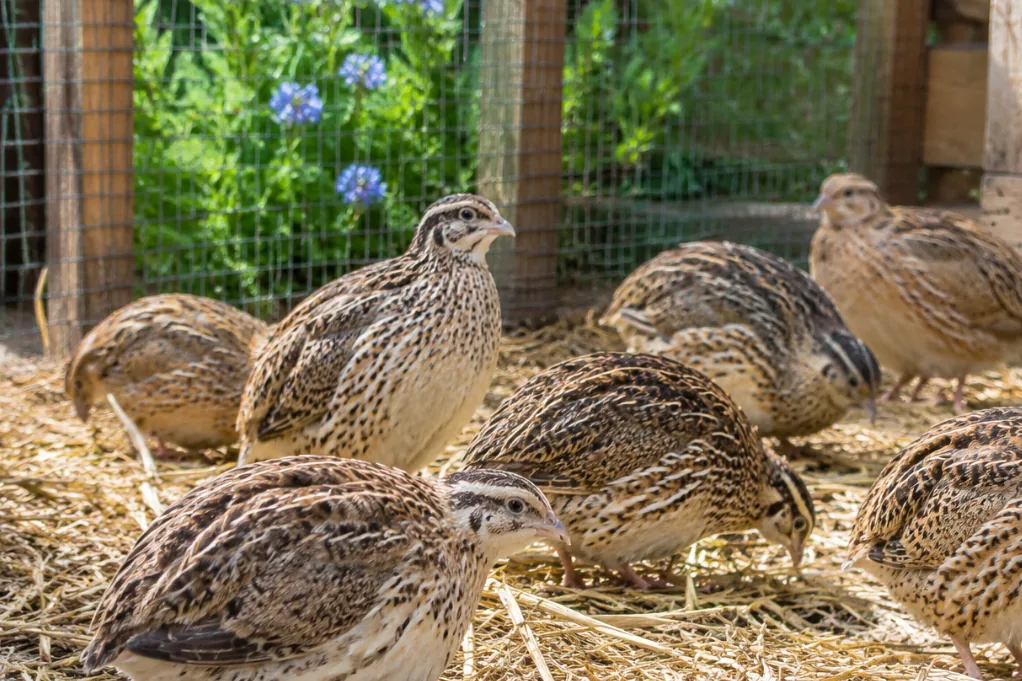
Small, quiet and productive, coturnix quail are one of the easiest birds to keep for eggs. They need far less space than chickens, start laying young and are gentle enough for beginners. If you are thinking about raising coturnix quail at home, this guide covers everything you need to know before you start.
We cover housing, feeding, eggs, lifespan, health and the local rules to check first.
What Are Coturnix Quail?
Quail, also called Japanese quail, are small game birds originally from Asia. They have been kept for eggs and meat for centuries. Adults are roughly the size of a large fist, and hens are usually a little bigger than males.
There are several color varieties, including:
- Pharaoh (the natural brown, wild-type pattern)
- Italian or golden
- Tibetan or rosetta
- Tuxedo
- Texas A&M white (often called “jumbo white”)
Why People Keep Coturnix Quail
- Small space needs: A small backyard or even a large covered pen can work.
- Fast maturity: Hens often start laying at around 6 to 8 weeks old.
- Quiet birds: Hens are much quieter than chickens. Males do crow, but more softly than a rooster.
- Lots of eggs: A healthy hen in good conditions can lay an egg most days during her first year.
- Gentle temperament: They are generally calm with careful handling.
Are Coturnix Quail Legal Where You Live?
Rules on backyard birds vary by state, county and city. Some areas treat quail as poultry, some as game birds, and some need permits. Homeowners associations and rental agreements may also have rules.
Before you buy quail:
- Check your city or county ordinances on backyard poultry.
- Ask your state agriculture or wildlife agency whether a permit is needed.
- Check any HOA or lease rules.
Coturnix Quail Housing
Space
Many keepers suggest at least 1 square foot of floor space per bird, but more space reduces stress and pecking. Give them more room if you can.
Hutch, Pen or Aviary
Good quail housing is:
- Predator-proof: Use sturdy wire mesh with small openings. Cover the top as well as the sides.
- Covered: Protect birds from rain, wind and strong sun.
- Low-roofed or padded: Startled quail jump straight up. A low ceiling or soft netting helps prevent head injuries.
- Well ventilated: Ammonia from droppings builds up quickly in closed spaces.
Bedding and Sand Baths
Use pine shavings, straw or another absorbent bedding. Quail love dust bathing, so offer a shallow tray of clean sand. Clean bedding regularly to control odor and disease.
Coturnix Quail Care: Feeding and Water
Quail need more protein than chickens.
| Age | What to feed |
|---|---|
| Chicks (0–6 weeks) | High-protein game bird or turkey starter crumble |
| Laying hens | High-protein game bird feed, with extra calcium such as crushed oyster shell offered separately |
| Treats | Small amounts of greens, mealworms or seeds |
Always provide clean, fresh water. Use shallow waterers with marbles or pebbles for chicks so they cannot drown.
Avoid feeding large amounts of scraps, which can unbalance their diet.
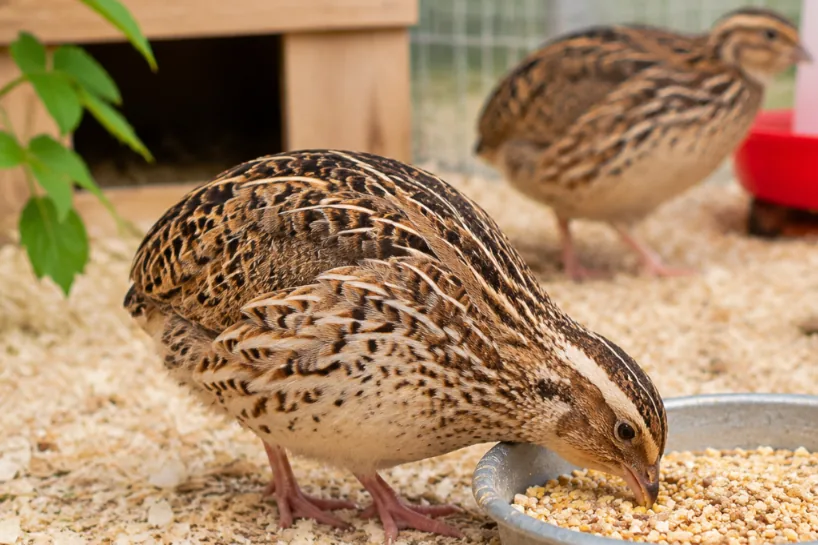
Coturnix Quail Eggs
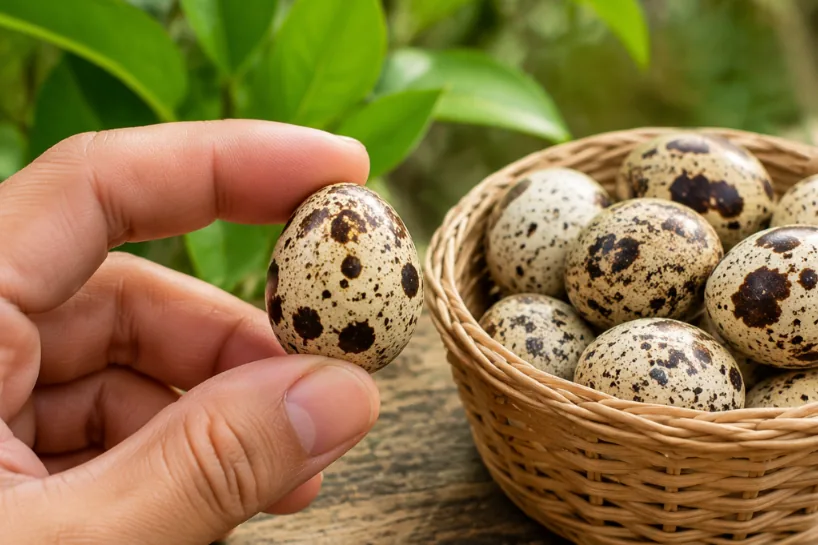
Quail eggs are small and speckled, with a creamy yolk. Hens lay best with:
- Around 14 to 16 hours of light a day
- A high-protein diet with extra calcium
- Low stress and enough space
Egg laying usually slows in winter and as hens get older. Collect eggs daily.
Coturnix Quail Lifespan
Quail are short-lived birds. Many live around two to three years, although some live longer with good care. Egg production is highest in the first year and declines after that. Plan for this before you start a flock.
Males and Females
You can often tell sexes apart by chest feathers in pharaoh-colored birds: males usually have a plain rusty chest, while females have a speckled chest. Males can be aggressive with each other and hard on hens. Many keepers keep one male with four or five hens, or keep hens only if they do not plan to hatch eggs.
Keeping Your Flock Healthy
- Keep bedding dry and clean.
- Provide fresh water every day.
- Quarantine new birds for several weeks before adding them to the flock.
- Watch for feather pecking, which can mean overcrowding or boredom.
- Check feet and eyes regularly.
- Find a vet who treats poultry or avian species.
Thinking about other pet birds? Our healthy cockatiel for sale checklist can help you choose a companion parrot.
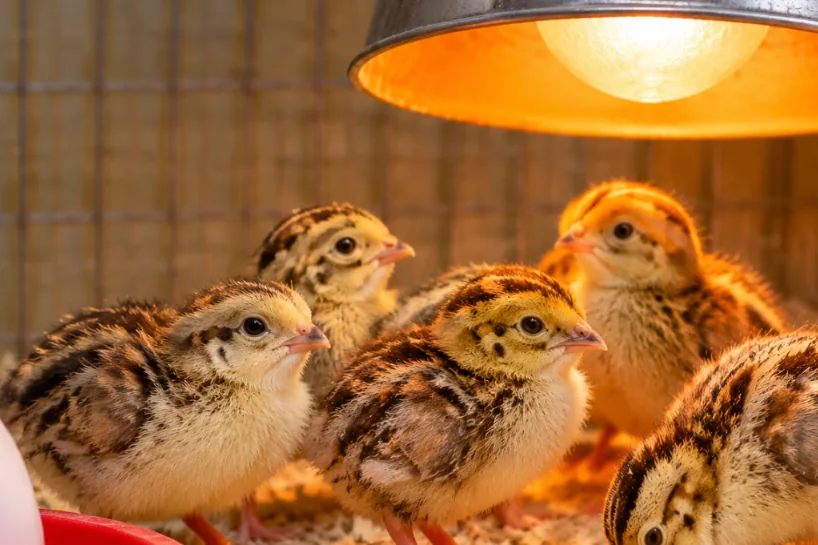
Hatching Your Own Quail
Some keepers hatch eggs to grow their flock. If you plan to hatch:
Incubation
Quail eggs usually hatch in around 16 to 18 days in an incubator with stable temperature and humidity. Follow your incubator’s instructions carefully.
Brooder Setup
Chicks need a warm brooder with a safe heat source, shallow waterers, chick crumble and non-slip bedding such as paper towels for the first days.
Planning for Males
About half of hatched chicks are usually male. Plan what you will do with extra males before hatching, as too many males can lead to fighting.
Local Rules
Check whether your area limits flock size or hatching. Responsible planning keeps your flock healthy and manageable.
Helpful Resources
More guides from Pet Guide Nest:
Trusted outside sources:
Frequently Asked Questions
Are coturnix quail good for beginners?
Yes. They are small, quiet and easy to house, which makes them a popular first bird for eggs.
How long do coturnix quail live?
Many live about two to three years. Egg laying is highest in the first year.
When do coturnix quail start laying eggs?
Hens often begin laying at around 6 to 8 weeks old, depending on light, diet and genetics.
Can coturnix quail live with chickens?
It is usually not recommended. Chickens can injure quail, and the two species have different feed and space needs.
Final Thoughts
Coturnix quail are a smart choice if you want a small, quiet flock that lays plenty of eggs. Check local rules first, build a predator-proof, covered pen and feed a high-protein diet with extra calcium. With clean bedding and fresh water every day, your coturnix quail can thrive. For more guides like this, explore our Birds articles.

Maren Ashcroft
Maren Ashcroft writes the care guides at Pet Guide Nest. She has grown up around dogs, cats, and rabbits and loves learning about the more unusual pets too. She turns vet and animal welfare research into simple, practical advice for everyday pet owners.