

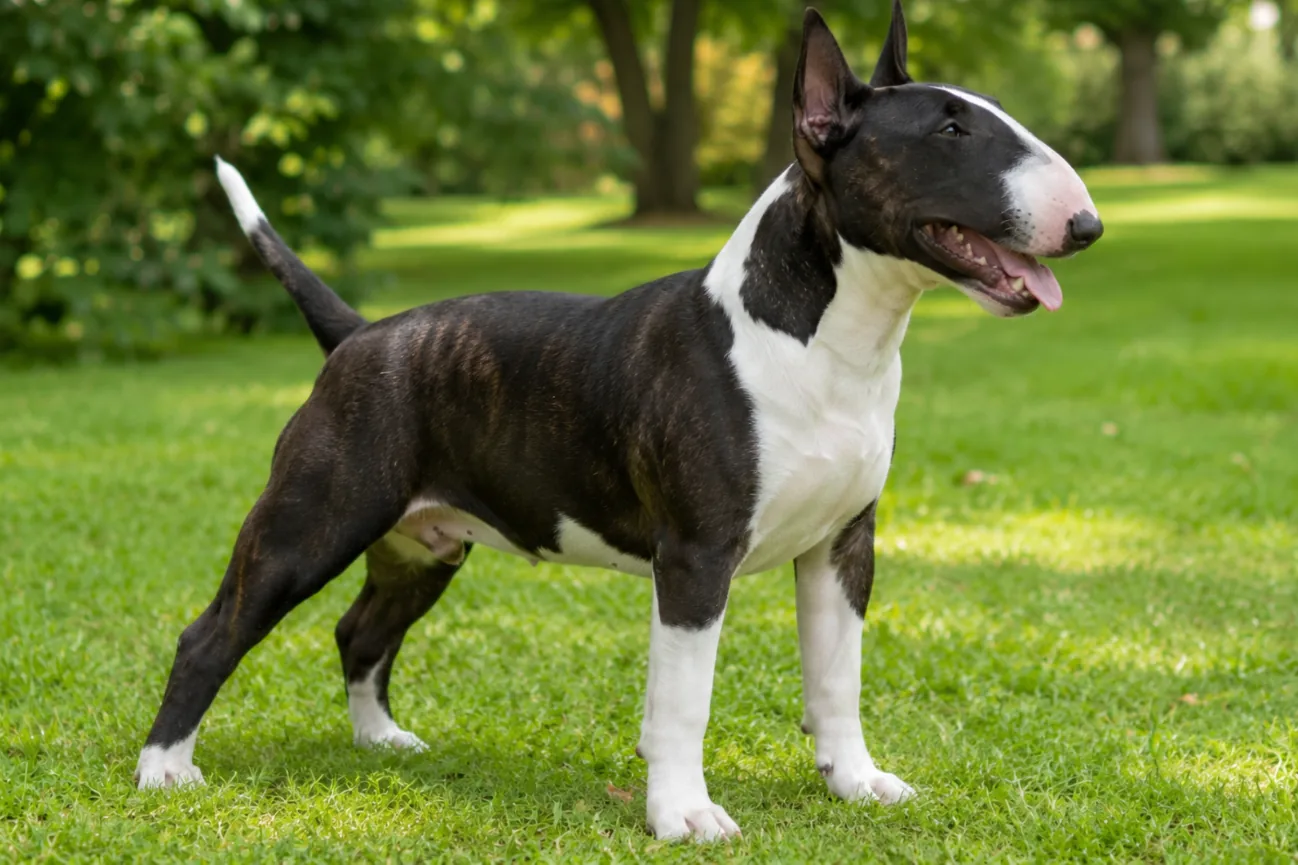
With its egg-shaped head, muscular body and cheeky personality, the bull terrier is one of the most recognizable dog breeds. Black is one of the less common colors, and a black bull terrier is especially striking. But is this playful, strong-willed dog right for you?
This guide covers the black bull terrier’s temperament, the truth about aggression, care needs, health and the kind of home where it thrives.
What Is a Black Bull Terrier?
A black bull terrier is a standard bull terrier (or miniature bull terrier) with a coat that is mostly black, usually with some white markings. Breed standards group colors into white and “colored,” and black usually appears as black brindle or black with white, rather than solid black.
Color does not change the breed’s personality or care needs. A black bull terrier behaves like any other bull terrier.

Black Bull Terrier Temperament
Bull terriers are often described as clownish, affectionate and full of energy. Typical traits include:
- Playful and funny: They love games and often act like puppies well into adulthood.
- Very people-focused: Most bond closely with their family and dislike being left alone for long.
- Strong-willed: They are intelligent but can be stubborn, so training takes patience.
- Energetic: They need daily exercise and play.
Is the Black Bull Terrier Aggressive?
This is a common question. A well-bred, well-socialized bull terrier is usually friendly and affectionate with people. However, like many terrier breeds, some bull terriers can be intolerant of other dogs, particularly of the same sex, and may chase small animals.
Factors that affect behavior include:
- Genetics and breeding
- Early socialization
- Training methods
- Exercise and mental stimulation
- Health and pain
Labels like “aggressive” are not helpful on their own. Focus on early socialization, reward-based training and good management. Our guide to aggression in dogs explains warning signs and how to get help if problems appear.
Exercise Needs
A black bull terrier needs at least an hour of activity most days, split between walks, play and training games. Without enough exercise, bull terriers may become destructive, and some develop repetitive behaviors such as tail chasing.
Good activities include:
- Brisk walks and jogging (once fully grown)
- Tug and fetch games
- Puzzle feeders and scent games
- Short, fun training sessions

Training a Black Bull Terrier
Bull terriers respond best to positive, reward-based training. Harsh corrections can make a stubborn dog shut down or push back.
Training tips:
- Start socialization early with people, places and calm dogs.
- Keep sessions short and upbeat.
- Use high-value rewards like food and toys.
- Teach impulse control: “wait,” “leave it” and a solid recall.
- Consider puppy classes with a qualified trainer.
Black Bull Terrier Care
Grooming
The short, flat coat is easy to care for. Brush weekly to remove loose hair, more during seasonal shedding. Bathe as needed.
Skin and Sun
Bull terriers can have sensitive skin and allergies. White areas of the coat can be prone to sunburn, so limit strong midday sun.
Diet
Feed a complete and balanced diet in the right amount. Bull terriers can gain weight easily, which strains their joints.
Health Considerations
Bull terriers can be affected by several inherited conditions. Ask breeders about testing for:
| Condition | What it affects |
|---|---|
| Deafness | Hearing; more common in white bull terriers, but possible in colored dogs |
| Kidney disease | Kidney function |
| Heart conditions | Heart valves and function |
| Luxating patella | Kneecaps |
| Skin allergies | Itching, redness, infections |
A responsible breeder will share health test results for both parents.
Is a Black Bull Terrier Right for You?
A black bull terrier may suit you if you:
- Want a funny, affectionate and energetic companion
- Have time for daily exercise and training
- Can be patient with a stubborn streak
- Can manage interactions with other dogs and small pets
It may not suit you if you want a calm, low-energy dog, are away from home for long hours or have other pets that would be stressed by a boisterous terrier.

Living With a Black Bull Terrier Day to Day
A Typical Day
Most bull terriers do best with a predictable routine: a brisk morning walk, a puzzle feeder for breakfast, a quiet rest period, an afternoon play or training session and a calm evening walk. Short bursts of play spread through the day suit them better than one long, exhausting session.
Time Alone
Bull terriers are very social and can become anxious or destructive if left alone for long hours. Build alone time gradually from puppyhood, using safe chew toys and a comfortable crate or dog-proof room. If you work long days, consider a dog walker or daycare.
Children and Visitors
Because they are strong and enthusiastic, bull terriers can knock over small children by accident. Teach your dog to greet calmly, and teach children to stay still and quiet if the dog gets too excited.
Helpful Resources
More guides from Pet Guide Nest:
Trusted outside sources:
Frequently Asked Questions
Are black bull terriers rare?
Black usually appears as black brindle or black with white markings. Solid or mostly black bull terriers are less common than white or brindle dogs.
Are bull terriers good family dogs?
Many are affectionate family dogs when well socialized and exercised. Supervise them with young children because they are strong and boisterous.
Do black bull terriers get along with other dogs?
Some do, but bull terriers can be intolerant of other dogs, especially of the same sex. Careful introductions and supervision help.
How long do bull terriers live?
Many bull terriers live around 12 to 13 years, depending on health and care.
Final Thoughts
A black bull terrier is a striking, funny and loyal dog that needs plenty of exercise, patient training and early socialization. Choose a health-tested puppy from a responsible breeder or meet adult dogs at a breed rescue. With the right home, this playful breed makes a devoted companion. For more guides like this, explore our Dogs articles.

Maren Ashcroft
Maren Ashcroft writes the care guides at Pet Guide Nest. She has grown up around dogs, cats, and rabbits and loves learning about the more unusual pets too. She turns vet and animal welfare research into simple, practical advice for everyday pet owners.