

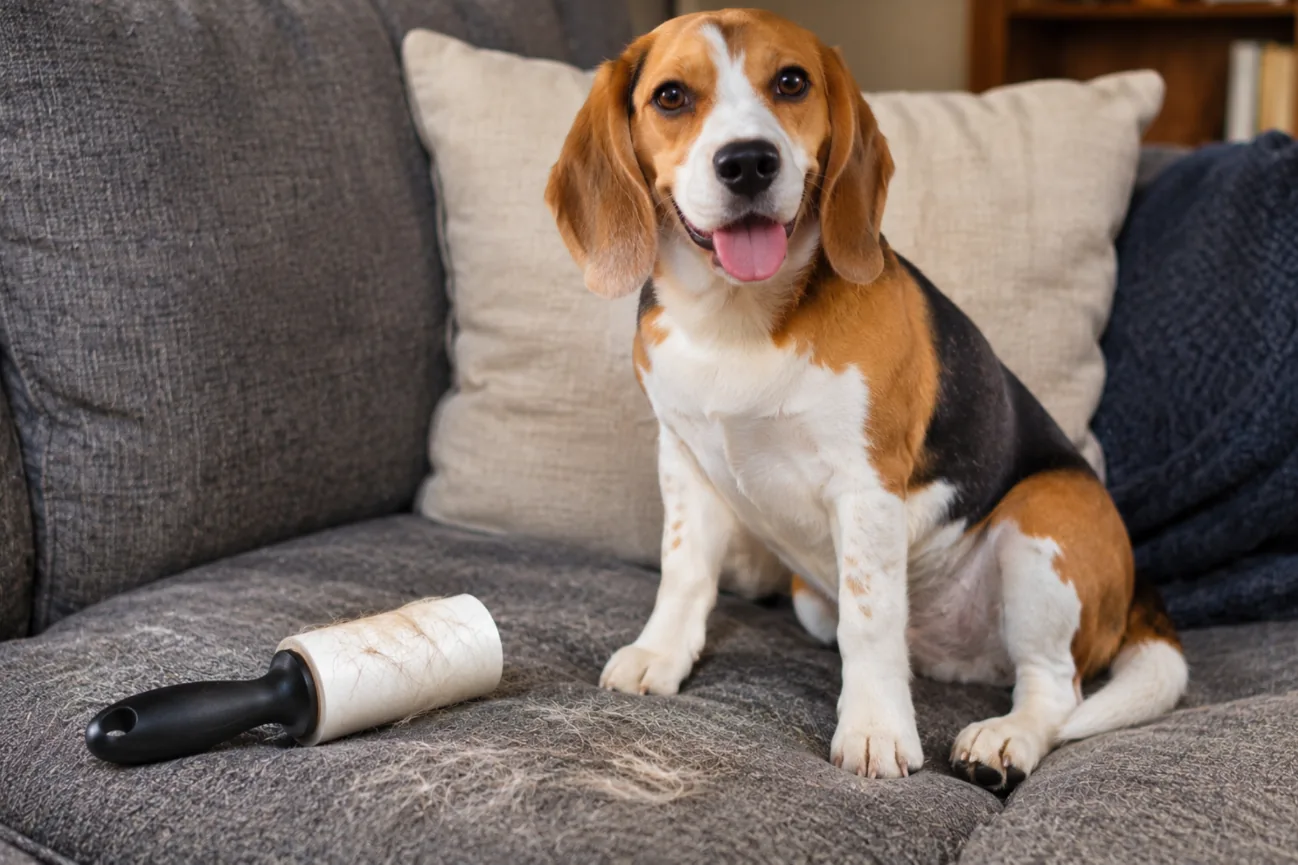
Beagles have short, smooth coats, so it surprises many owners when they find hair on every sofa cushion. Beagle shedding is normal, and it happens all year, with heavier periods in spring and fall. The good news is that a simple routine keeps it under control.
This guide explains why beagles shed, what is normal and how to manage the hair in your home.
Do Beagles Shed?
Yes. Beagles are moderate shedders. Their short hairs are stiff and tend to weave into fabric, so they can seem to shed more than they really do.
Beagles have a double coat: a dense undercoat for warmth and a harder outer coat for protection. The undercoat sheds more heavily when the seasons change.
Why Do Beagles Shed?
Seasonal Coat Changes
In spring, beagles shed their thicker winter undercoat. In fall, they shed again as a new coat grows in. These are the times you will notice the most hair.
Natural Hair Cycle
Each hair grows, rests and falls out. New hairs replace old ones constantly, which is why beagle shedding never completely stops.
Other Causes
| Cause | Signs |
|---|---|
| Allergies | Itching, licking paws, ear infections, red skin |
| Fleas or mites | Scratching, scabs, small black specks in the coat |
| Poor diet | Dull, dry coat; flaky skin |
| Stress | Sudden extra shedding after big changes |
| Medical conditions | Thinning coat, bald patches, weight changes |
If shedding comes with itching, bald spots or skin changes, see your vet.
How to Manage Beagle Shedding
Brush Two or Three Times a Week
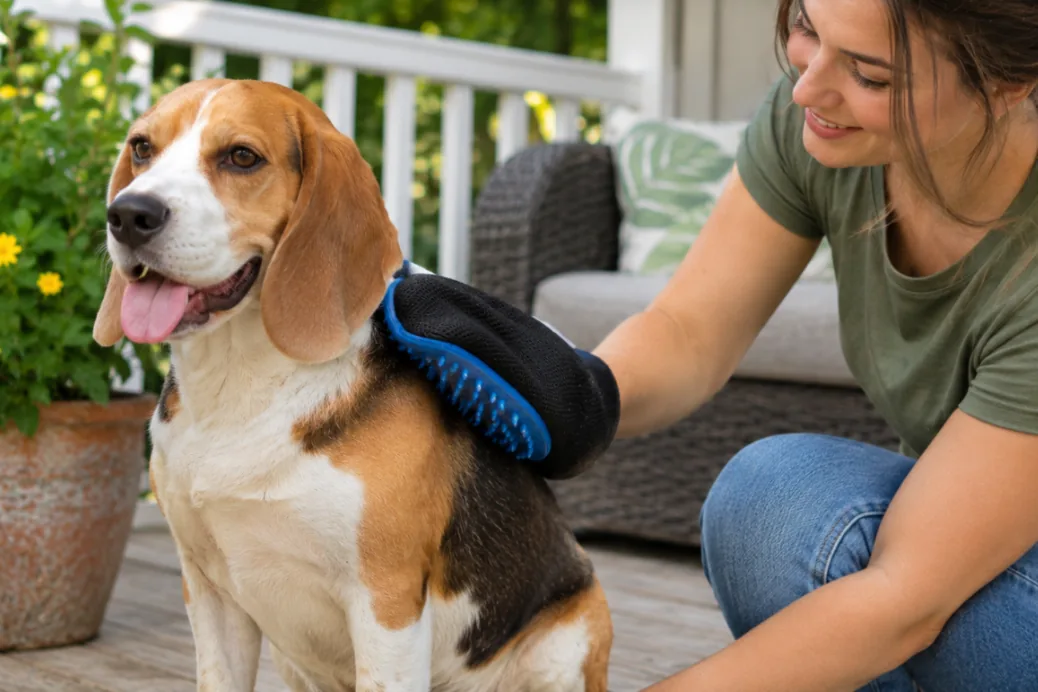
Regular brushing is the most effective way to reduce loose hair around the house. Good tools for beagle coat care include:
- Rubber curry brush or grooming mitt: Gently lifts loose hair and dirt.
- Bristle brush: Smooths the coat and spreads natural oils.
- Deshedding tool: Use lightly during heavy seasonal shedding.
Brush in the direction the hair grows. Most beagles enjoy the massage-like feel of a rubber brush.
Bathe Occasionally
Beagles usually need a bath every four to six weeks, or when they roll in something smelly, which beagles often do. Use a gentle dog shampoo and rinse thoroughly. Brush after drying to remove loosened hair.
Feed a Good Diet
Healthy skin grows a healthy coat. Feed a complete and balanced diet, and ask your vet whether an omega-3 supplement would help.
Prevent Parasites
Keep your beagle on year-round flea and tick prevention as recommended by your vet.
Beagle Coat Care Routine
| Task | How often |
|---|---|
| Brushing | 2–3 times a week; daily during heavy shedding |
| Bath | Every 4–6 weeks or when dirty |
| Ear check and clean | Weekly (beagle ears are prone to infection) |
| Nail trim | Every 3–4 weeks |
| Teeth brushing | Several times a week |

Keeping Your Home Hair-Free
- Vacuum twice a week with a pet hair attachment.
- Use washable covers on furniture and car seats.
- Wash dog bedding weekly.
- Keep a lint roller or rubber glove handy for quick clean-ups.
Beagles can carry a strong “hound” smell too. For odor tips, see our guide on what to do when your house smells like dog.
Do Beagles Shed More Than Other Breeds?
Beagles shed about as much as many other short-coated breeds. They shed less than heavy-coated dogs such as huskies, but more than low-shedding breeds such as poodles. If you want to compare a similar short-coated dog, read our article on do rottweilers shed.
Are Beagles Good for People With Allergies?
Beagles are not hypoallergenic. They shed and produce dander, which can trigger allergies. If you have allergies, spend time with beagles before deciding and speak with your doctor.

Beagle Shedding at Different Life Stages
Puppies
Beagle puppies have a soft coat that gradually changes to the denser adult coat during their first year. You may see extra shedding during this change.
Adults
Healthy adult beagles shed steadily, with heavier periods in spring and fall. Brushing two or three times a week keeps beagle shedding under control.
Seniors
Older beagles may develop drier skin or thinner coats. Gentle brushing, a balanced diet and regular vet checks help. Sudden coat changes in an older dog are worth mentioning to your vet, as they can be linked to conditions such as thyroid problems.
Is Beagle Shedding Worse Indoors?
Indoor heating can dry the skin and lead to more flaking and hair loss in winter. Keep your beagle well hydrated, avoid over-bathing and brush regularly to remove loose hair before it ends up on your sofa.
Helpful Resources
More guides from Pet Guide Nest:
Trusted outside sources:
Frequently Asked Questions
Do beagles shed a lot?
Beagles are moderate shedders. Regular brushing keeps hair under control for most homes.
When do beagles shed the most?
Beagles usually shed most in spring and fall, when their undercoat changes.
Can I stop my beagle from shedding?
No, shedding is natural. You can reduce loose hair with brushing, a healthy diet and parasite prevention.
Is excessive shedding in beagles a health problem?
It can be. If you see bald patches, red skin, itching or a dull coat, ask your vet to check for allergies, parasites or other conditions.
Final Thoughts
Beagle shedding is a normal part of life with this cheerful hound. Brush two or three times a week, bathe every month or so and keep up with parasite prevention. With a simple coat care routine and regular vacuuming, you can enjoy your beagle without hair taking over your home. For more guides like this, explore our Dogs articles.

Maren Ashcroft
Maren Ashcroft writes the care guides at Pet Guide Nest. She has grown up around dogs, cats, and rabbits and loves learning about the more unusual pets too. She turns vet and animal welfare research into simple, practical advice for everyday pet owners.