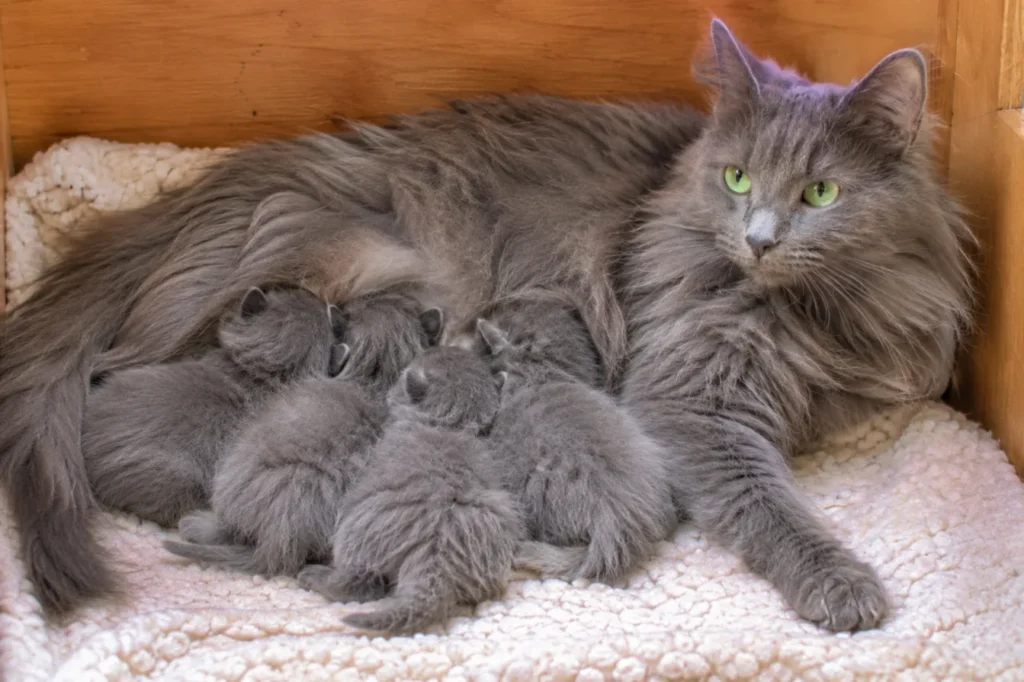

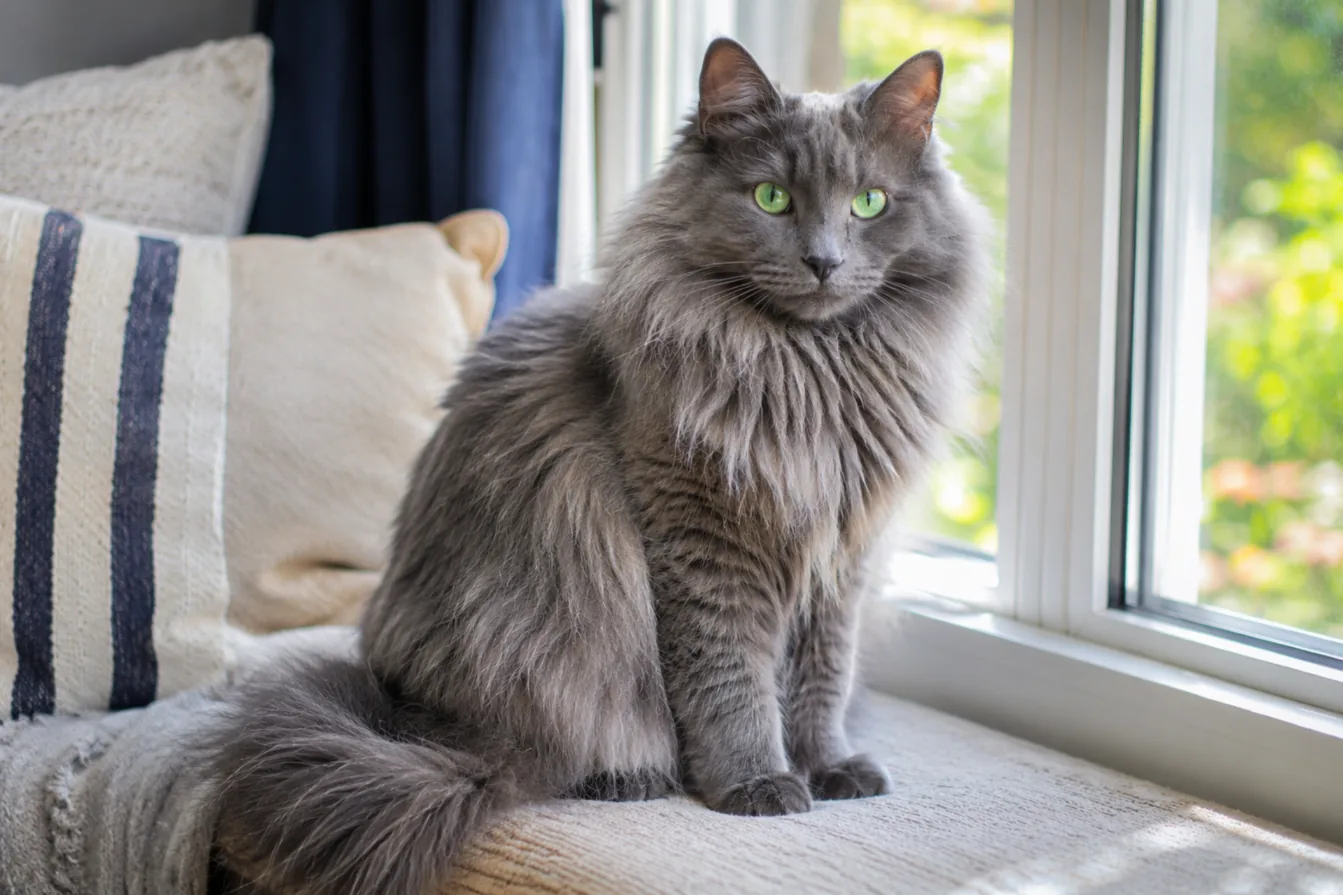
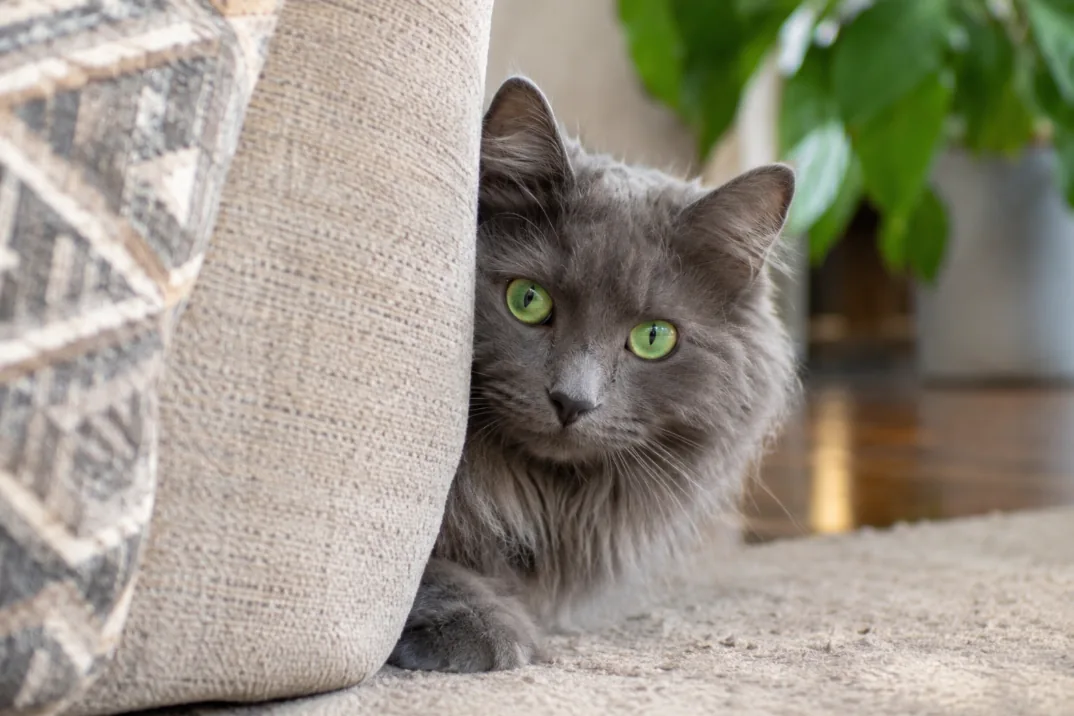
With a shimmering silver-blue coat and gentle green eyes, the Nebelung cat looks like it stepped out of a misty fairy tale. In fact, its name comes from the German word Nebel, meaning “mist” or “fog.” This rare breed is known for being shy with strangers but deeply loyal to its family.
This Nebelung cat breed guide covers history, appearance, personality, care, health and how it compares with the Russian Blue.
Nebelung Cat Breed History
The Nebelung is a relatively new breed. It was developed in the United States in the 1980s by breeder Cora Cobb, starting with a long-haired blue male cat. The goal was a cat that looked like a long-haired version of the Russian Blue.
The breed is recognized by some cat registries, including The International Cat Association (TICA), but it remains rare.
Nebelung Cat Appearance
| Feature | Description |
|---|---|
| Coat | Medium-long, silky, blue-gray with silver tipping |
| Eyes | Green or yellow-green (kittens may have yellow eyes that change) |
| Body | Medium-sized, long and graceful |
| Tail | Long and plumed |
| Ears | Large and pointed |
| Weight | Medium; males are usually larger |
The silver tips on each hair give the coat a soft, misty shimmer in the light.
Nebelung Cat Personality
- Shy with strangers: Many hide when guests visit.
- Loyal and affectionate: They bond closely with their family, often one favorite person.
- Gentle: Usually calm and quiet.
- Playful: They enjoy toys and games once comfortable.
- Routine-loving: They prefer predictable schedules and calm homes.
- Intelligent: Many learn tricks and enjoy puzzle toys.
A Nebelung may take time to warm up to new people, but once it trusts you, it is a devoted companion.
Nebelung vs Russian Blue
| Feature | Nebelung | Russian Blue |
|---|---|---|
| Coat length | Medium-long | Short, dense |
| Coat color | Blue with silver tips | Blue with silver tips |
| Eyes | Green | Green |
| Personality | Shy, loyal, gentle | Reserved, loyal, gentle |
| Grooming | Weekly to twice weekly | Weekly |
| Rarity | Rare | More common |
The two breeds share a similar look and personality, but the Nebelung’s longer coat is the clearest difference.
Nebelung Breed Information: Care
Grooming
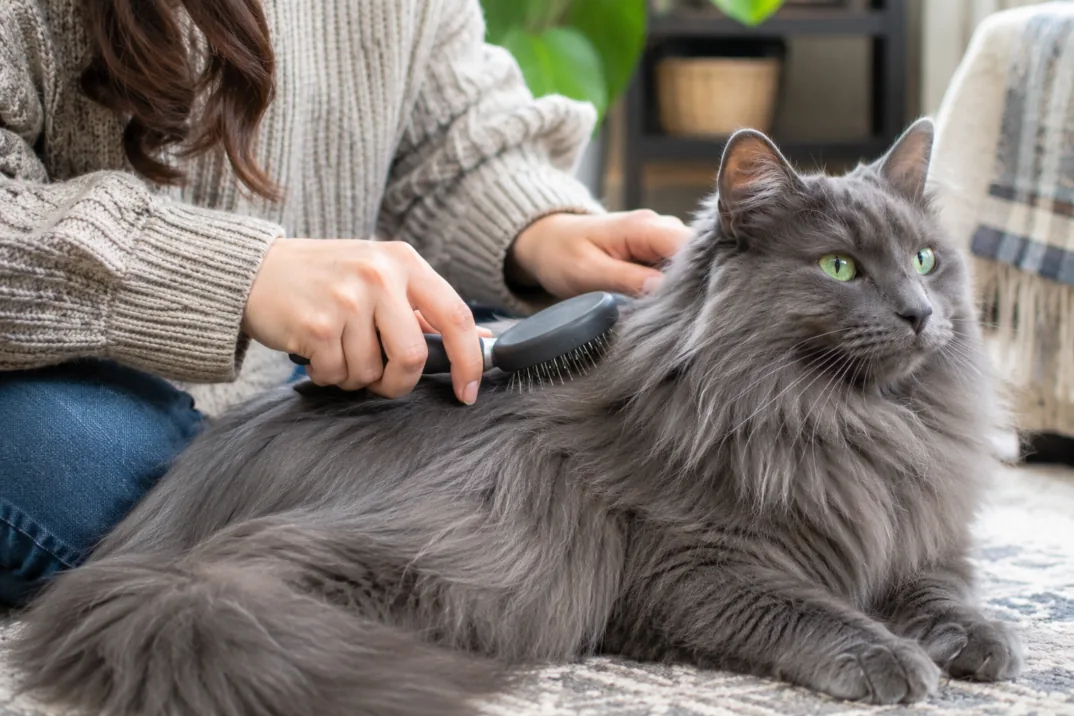
The silky coat rarely mats, but brush once or twice a week to remove loose hair. Brush more often during seasonal shedding in spring and fall.
Diet
Feed a complete and balanced cat food suited to age and activity. Nebelungs enjoy their food, so measure portions to prevent weight gain.
Enrichment
- Cat trees and window perches
- Puzzle feeders
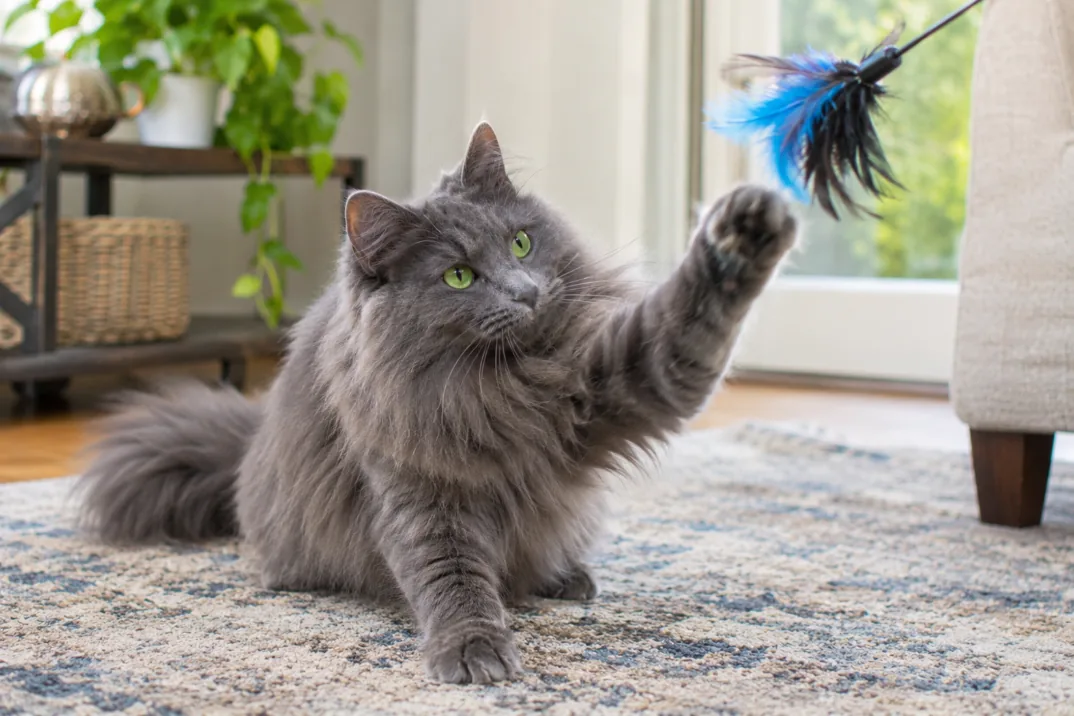
- Interactive play with wand toys
- Quiet hiding spots for when they need space
Routine
Keep feeding times, play times and household routines consistent. Sudden changes may stress a Nebelung.
Indoor Living
Indoor living or a secure outdoor enclosure keeps your cat safe from traffic, predators and disease.
Nebelung Cat Health
The Nebelung is generally considered a healthy breed, with few known breed-specific problems. Still:
- Keep up with vaccinations and parasite prevention.
- Schedule yearly vet checkups.
- Watch weight, as Nebelungs can become overweight.
- Brush teeth or provide dental care to prevent gum disease.
Many Nebelungs live into their mid-teens or longer with good care.
Is a Nebelung Cat Right for You?
A Nebelung may suit you if you:
- Have a calm, quiet home
- Want a loyal, affectionate cat that bonds closely
- Can keep a steady daily routine
- Do not mind a cat that is shy with visitors
A Nebelung may not suit you if your home is very busy and noisy, or if you want a cat that loves meeting every guest.
Finding a Nebelung Kitten
Because the Nebelung cat breed is rare, you may need to join a waiting list. Choose a breeder who:
- Lets you meet the parents
- Raises kittens in the home
- Provides health records
- Answers questions about temperament
Also check cat rescues, as similar-looking long-haired blue cats sometimes need homes.
For more striking breeds, read our guides to the black Siberian cat and the ragamuffin cat.
Living With a Shy Cat
Give Them a Safe Space
Shy cats feel more secure with a quiet room or hiding place where they can retreat. Covered beds, high shelves and cat trees all help.
Let Them Come to You
Avoid picking up a nervous cat or forcing contact. Sit quietly, offer a treat or a wand toy and let the cat approach in its own time.
Introduce Guests Slowly
Ask visitors to ignore the cat at first. Many shy cats come out to investigate once they feel the guest is not a threat.
Keep Routines Steady
Feed, play and groom at similar times each day. Predictability helps sensitive cats feel safe.
Helpful Resources
More guides from Pet Guide Nest:
- Responsible Cat Breeding: What Every Owner Should Know
- Siamese Cat Grooming: Easy Step-by-Step Routine
- Homemade Cat Food: Nutrients, Risks and How to Do It Safely
Trusted outside sources:
Frequently Asked Questions
What does Nebelung mean?
It comes from the German word *Nebel*, meaning mist or fog, which describes the cat’s misty blue coat.
Are Nebelung cats rare?
Yes. The Nebelung is a rare breed, and kittens can be hard to find.
Are Nebelung cats affectionate?
Yes, with their families. They are often shy with strangers but very loyal to the people they trust.
Do Nebelung cats shed?
They shed moderately, more in spring and fall. Weekly brushing keeps it manageable.
Final Thoughts
The Nebelung cat is a rare, beautiful breed with a misty silver-blue coat and a gentle, loyal heart. Give it a calm home, a steady routine, regular brushing and plenty of quiet affection. If you are patient while it warms up, a Nebelung will reward you with years of devoted companionship. For more guides like this, explore our Cats articles.

Maren Ashcroft
Maren Ashcroft writes the care guides at Pet Guide Nest. She has grown up around dogs, cats, and rabbits and loves learning about the more unusual pets too. She turns vet and animal welfare research into simple, practical advice for everyday pet owners.