
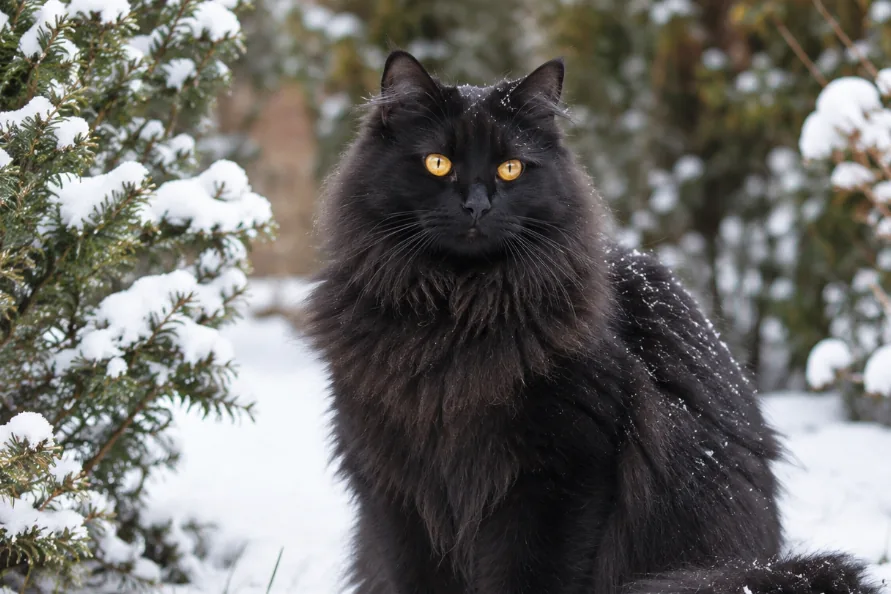
With a thick, glossy coat and bright eyes, a black Siberian cat looks like it stepped out of a fairy tale. Siberians are large, playful and affectionate, and black is one of their most striking colors. If you are thinking about bringing one home, here is what you should know about rarity, personality, care and allergies.
What Is a Siberian Cat?
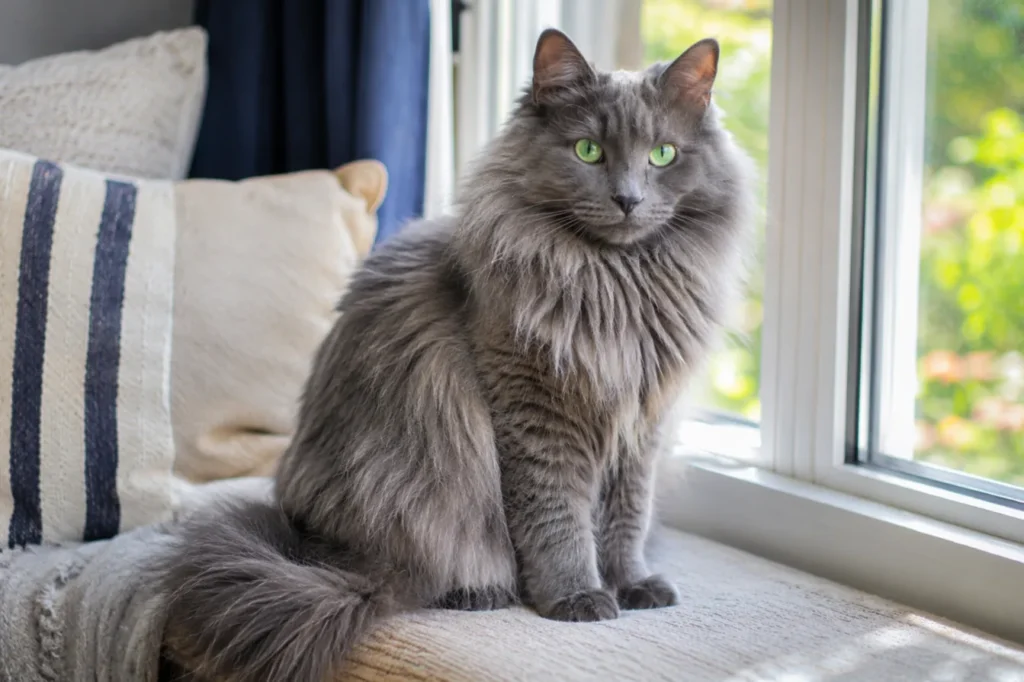
The Siberian is a natural breed from Russia, developed in a cold climate. It has a semi-long, triple-layered coat that is water-resistant and dense. Siberians are medium to large, muscular cats that can take several years to reach full size.
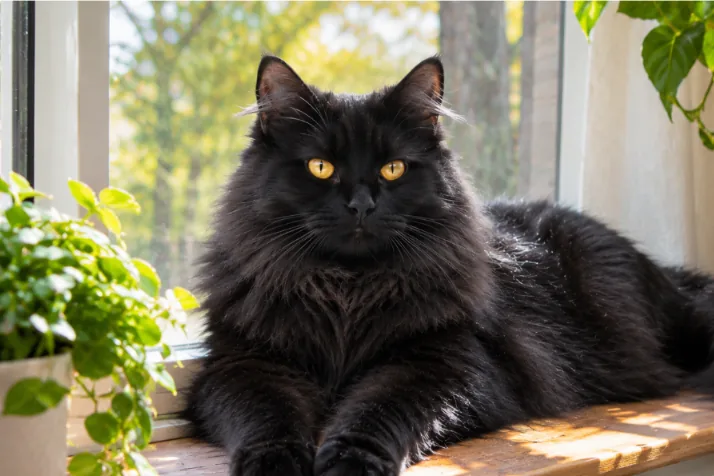
Are Black Siberian Cats Rare?
Siberians come in many colors and patterns, including tabby, solid, bicolor and colorpoint (sometimes called Neva Masquerade). Solid black is accepted in breed standards, but it is less common than tabby patterns. Availability depends on breeders in your area.
A black Siberian cat may have:
- A deep, glossy black coat
- A slightly rusty or brownish tint in sunlight, especially as kittens
- Gold, green or copper eyes
Black Siberian Cat Personality
- Affectionate and social: Siberians usually love their families and follow them around.
- Playful: They stay playful into adulthood and enjoy toys and games.
- Intelligent: Many learn tricks, open doors and enjoy puzzle toys.
- Gentle: Often good with children and other pets when introduced well.
- Moderately vocal: Many make soft chirps and trills rather than loud meows.
Are Siberian Cats Hypoallergenic?
Many people say Siberian cats are hypoallergenic, but that is not fully accurate. No cat is completely allergen-free.
The main cat allergen is a protein called Fel d 1, found in saliva, skin and dander. Some Siberians are reported to produce lower levels of Fel d 1 than other cats, and some people with mild allergies react less to them. But levels vary from cat to cat, and some allergic people still react strongly.
If you have allergies:
- Spend time with the specific kitten or cat before committing.
- Ask breeders whether they have tested their cats’ allergen levels.
- Talk to your doctor or allergist.
- Keep bedrooms cat-free and use HEPA air filters.
Caring for a Black Siberian Cat
Grooming
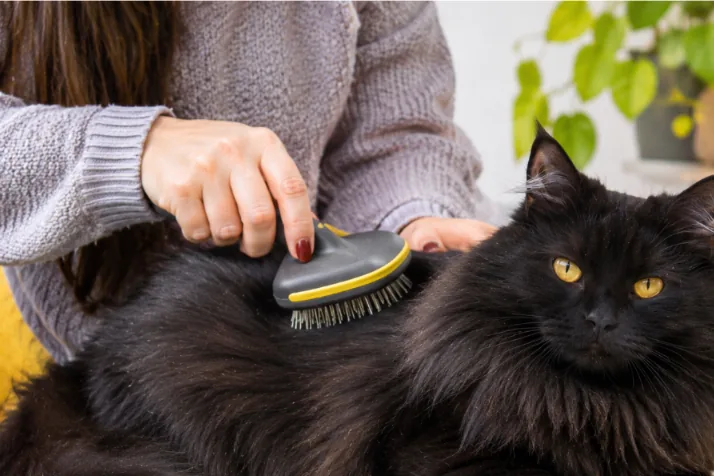
Despite their thick coats, Siberians are fairly easy to groom. Brush once or twice a week to prevent tangles, and more often during spring and fall shedding.
Coat Color Care
Black coats can turn slightly rusty with lots of sun exposure. This is cosmetic and harmless.
Diet
Feed a complete and balanced cat food suited to age and activity. Siberians grow slowly and can be large, so watch their weight.
Exercise and Play
Provide cat trees, scratching posts and interactive toys. Siberians love climbing and chasing.
Health
Siberians are generally a sturdy breed. Ask breeders about screening for hypertrophic cardiomyopathy (HCM), a heart condition seen in many cat breeds. Keep up with vaccines, parasite control and dental care.
Siberian Black Cat vs Other Black Cat Breeds
| Breed | Coat | Personality |
|---|---|---|
| Siberian | Semi-long, dense | Playful, affectionate |
| Bombay | Short, sleek | Social, people-focused |
| Maine Coon (black) | Long, shaggy | Gentle, laid-back |
| Persian (black) | Long, silky | Calm, quiet |
| British Shorthair (black) | Short, plush | Calm, independent |
For more options, read our guide to black cat breeds.
Buying or Adopting a Black Siberian Cat
- Choose a breeder who health-tests and lets you meet the parents.
- Ask about personality and how kittens are socialized.
- Get a written contract and health guarantee.
- Check cat rescues too, as purebred cats sometimes need new homes.
Black Siberian Cat Kittens: What to Expect
Coat Changes
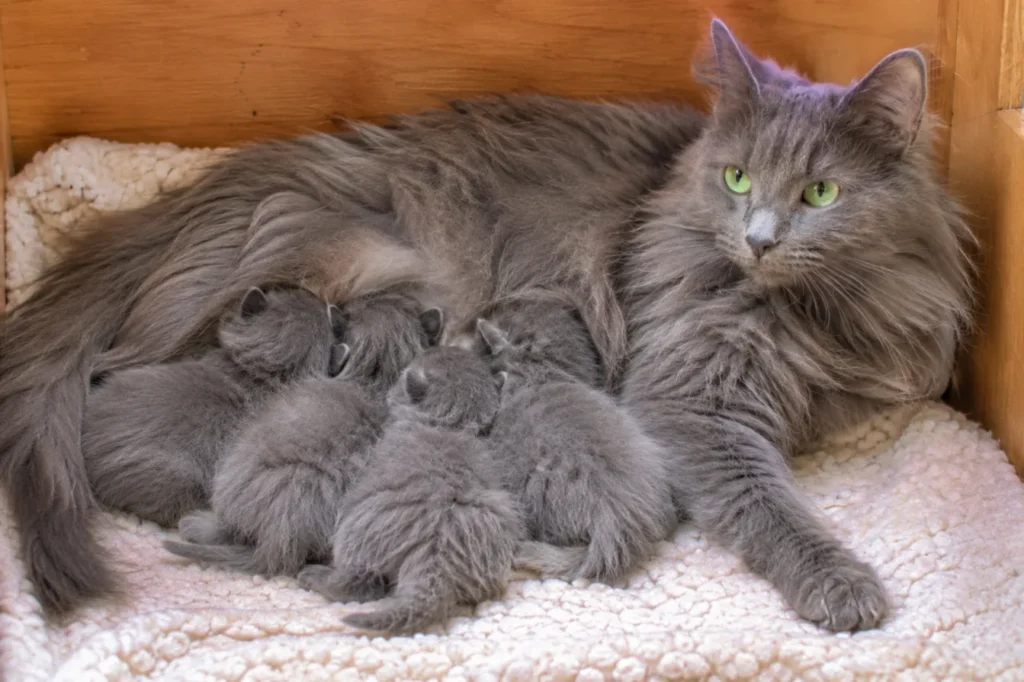
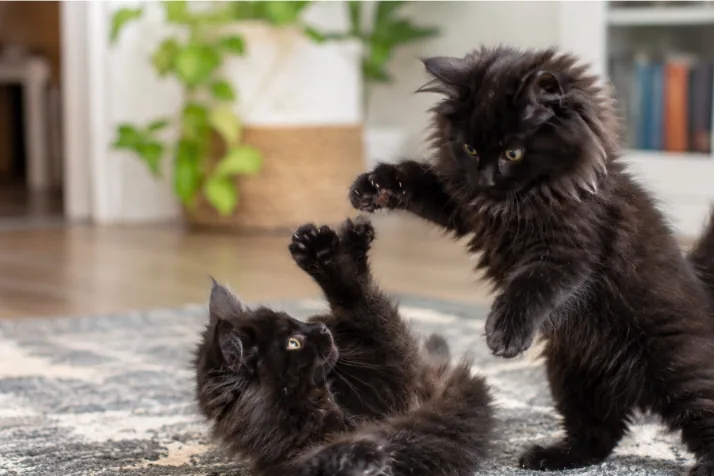
Black Siberian cat kittens sometimes show a rusty tint or faint tabby markings, which usually deepen to a richer black as they grow. The full adult coat can take a few years to develop.
Growth
Siberians mature slowly. Many keep growing and filling out until around three to five years old.
Personality
Kittens are lively and curious. Provide climbing spaces, scratching posts and plenty of toys from the start.
Choosing a Kitten
Spend time with the litter and watch how kittens interact. Ask the breeder about the parents’ temperaments and health screening, and make sure kittens stay with their mother until they are old enough, usually around 12 weeks for many pedigree breeders.
A black Siberian cat is a long-term commitment, often living well into its teens with good care.
Helpful Resources
More guides from Pet Guide Nest:
- Black Scottish Fold Cats
- Ragamuffin Cat Guide
- Cutest Cat Breeds
- Siamese Cat Grooming: Easy Step-by-Step Routine
Trusted outside sources:
Frequently Asked Questions
Are black Siberian cats rare?
Solid black Siberians are less common than tabby Siberians, but they are an accepted color and available from some breeders.
Are Siberian cats hypoallergenic?
No cat is fully hypoallergenic. Some Siberians produce lower levels of the main cat allergen, but reactions vary by person and cat.
Do black Siberian cats shed a lot?
They shed moderately, with heavier seasonal shedding in spring and fall. Weekly brushing keeps it manageable.
How big do Siberian cats get?
Siberians are medium to large cats. Males are usually bigger, and the breed can take several years to reach full size.
Final Thoughts
A black Siberian cat combines a stunning coat with a playful, loving personality. Brush weekly, offer plenty of climbing and play, and choose a health-tested kitten from a responsible breeder. If you have allergies, spend time with the cat first, because “hypoallergenic” is never a guarantee. For more guides like this, explore our Cats articles.
Maren Ashcroft
Maren Ashcroft writes the care guides at Pet Guide Nest. She has grown up around dogs, cats, and rabbits and loves learning about the more unusual pets too. She turns vet and animal welfare research into simple, practical advice for everyday pet owners.