

With round eyes, a sweet face and ears that fold forward, the Scottish fold is instantly recognizable. A black Scottish fold cat adds a glossy dark coat to that owl-like look. These cats are calm and affectionate, but the gene that folds their ears also affects their joints, so careful care matters.
This guide covers black Scottish fold care, health concerns and ways to bond with your cat.
What Is a Scottish Fold?
The Scottish fold breed began with a barn cat in Scotland in the 1960s that had naturally folded ears. The fold comes from a dominant gene that affects cartilage throughout the body, not just in the ears.
Scottish folds can have short or long coats and come in many colors, including solid black. Not all kittens have folded ears; those with straight ears are often called “Scottish straights.”
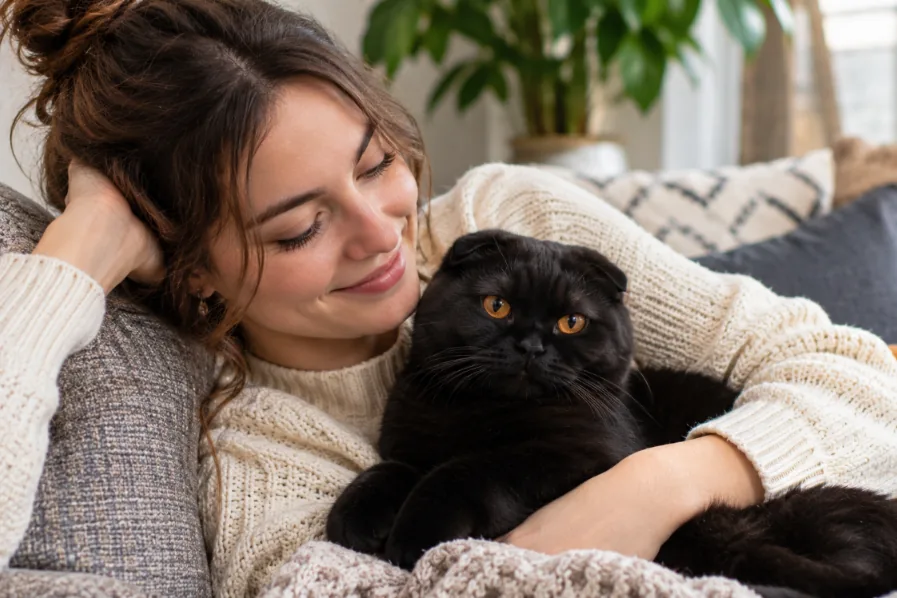
Black Scottish Fold Personality
- Calm and gentle: Often relaxed and easygoing.
- Affectionate: They enjoy being near their people.
- Quiet: Many have soft voices.
- Adaptable: Usually comfortable in apartments and family homes.
- Quirky: Some sit in unusual positions, such as upright like an otter.
Scottish Fold Health: What You Need to Know
The gene that causes folded ears affects cartilage and bone development. Many folded-ear cats develop a condition called osteochondrodysplasia, which can lead to painful joint and bone changes, particularly in the legs and tail.
Because of these welfare concerns, some veterinary and breed organizations discourage breeding Scottish folds, and some countries restrict it.
Signs of Joint Pain
- Stiffness or reluctance to jump
- Short, stiff or thickened tail
- Walking with an unusual gait
- Sitting in odd positions to relieve pressure
- Less interest in play
- Changes in grooming habits
Cats hide pain well, so regular vet checks are important. Your vet can recommend X-rays and pain management if needed.
Other Health Points
Ask your vet about screening for heart disease (hypertrophic cardiomyopathy) and kidney disease (polycystic kidney disease), which are seen in some related breeds.
Black Scottish Fold Care
Gentle Handling
Support the body and hind legs when lifting. Avoid pulling on the tail or bending it.
Make Your Home Joint-Friendly
- Provide low, wide cat trees and ramps instead of tall jumps.
- Use soft, supportive beds.
- Place litter boxes with low sides.
- Keep food, water and favorite spots easy to reach.
Weight Control
Extra weight puts more strain on painful joints. Feed measured portions of a complete and balanced diet. Ask your vet about joint-support diets or supplements.
Grooming
Short-haired folds need weekly brushing; long-haired folds need brushing several times a week. Check the folded ears weekly, as wax can build up. Clean gently only if your vet recommends it.
Coat Care
Black coats can develop a slightly rusty tint in strong sun. This is cosmetic.
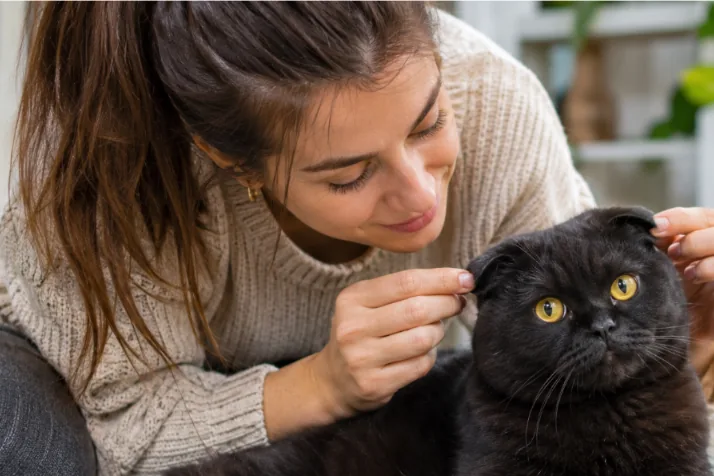
Caring for a Black Scottish Fold: Routine
| Task | How often |
|---|---|
| Gentle play | Daily, low-impact |
| Brushing | Weekly (short coat) or several times a week (long coat) |
| Ear check | Weekly |
| Nail trim | Every 2–3 weeks |
| Vet check | At least yearly, more often if joint pain is suspected |
Bonding With a Scottish Fold Cat
Bonding with a black Scottish fold cat takes patience and a gentle touch.
- Quiet time together: Folds often love sitting beside you.
- Gentle play: Use wand toys at floor level to avoid jumping.
- Grooming sessions: Brushing can be relaxing and helps you notice changes.
- Routine: Feed and play at similar times each day.
- Respect their limits: If your cat seems stiff, choose calmer activities.
Thinking About Getting a Scottish Fold?
If you love the look, consider adopting an adult Scottish fold from a rescue, or a Scottish straight. If you buy a kitten, ask breeders about their health testing and why they breed folds.
For other affectionate breeds, see our guides to the ragamuffin cat and black cat breeds.
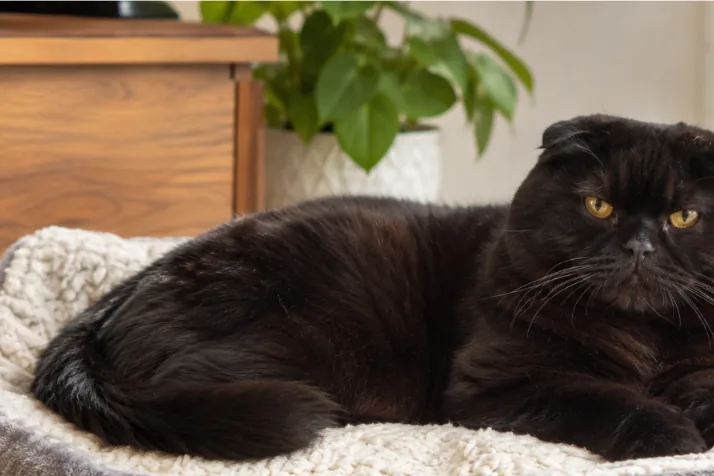
Black Scottish Fold Cat Care for Seniors
As a black Scottish fold cat ages, joint problems may become more noticeable.
Comfort at Home
- Add extra ramps and steps to favorite resting places.
- Use heated or orthopedic beds.
- Keep litter boxes with very low entry points.
- Place food and water at a comfortable height.
Pain Management
Your vet may suggest pain relief, joint-support diets or other treatments. Never give human pain medication; many are toxic to cats.
Black Scottish Fold Care Checkups
Senior cats benefit from vet visits every six months. These checks can catch joint, kidney, heart and dental problems early.
Keeping Your Cat Engaged
Gentle play, food puzzles on the floor and quiet time with you keep an older fold happy, even if jumping and climbing become harder.
Note: This article is for general information only and is not a substitute for advice from a qualified veterinarian. If your pet seems unwell or you are unsure, please contact your vet.
Helpful Resources
More guides from Pet Guide Nest:
- Black Siberian Cats
- Curly Haired Cats
- Cutest Cat Breeds
- Nebelung Cat Breed: Personality, Care and Facts
Trusted outside sources:
Frequently Asked Questions
Are black Scottish fold cats rare?
Black is one of many accepted colors. Solid black folds are less common than tabby patterns, but available.
Do Scottish fold cats have health problems?
Many folded-ear cats develop joint and bone problems caused by the same gene that folds their ears. Regular vet checks are important.
How do I know if my Scottish fold is in pain?
Watch for stiffness, reluctance to jump, a stiff tail, unusual sitting positions and less activity. Ask your vet if you notice these signs.
How long do Scottish folds live?
Many live around 11 to 15 years, depending on their health and care.
Final Thoughts
A black Scottish fold cat is gentle, affectionate and beautiful, but the fold gene brings real joint health concerns. Handle your cat gently, make your home easy to move around, keep weight healthy and book regular vet checks. With thoughtful care, your fold can live comfortably and enjoy a strong bond with you.

Maren Ashcroft
Maren Ashcroft writes the care guides at Pet Guide Nest. She has grown up around dogs, cats, and rabbits and loves learning about the more unusual pets too. She turns vet and animal welfare research into simple, practical advice for everyday pet owners.