
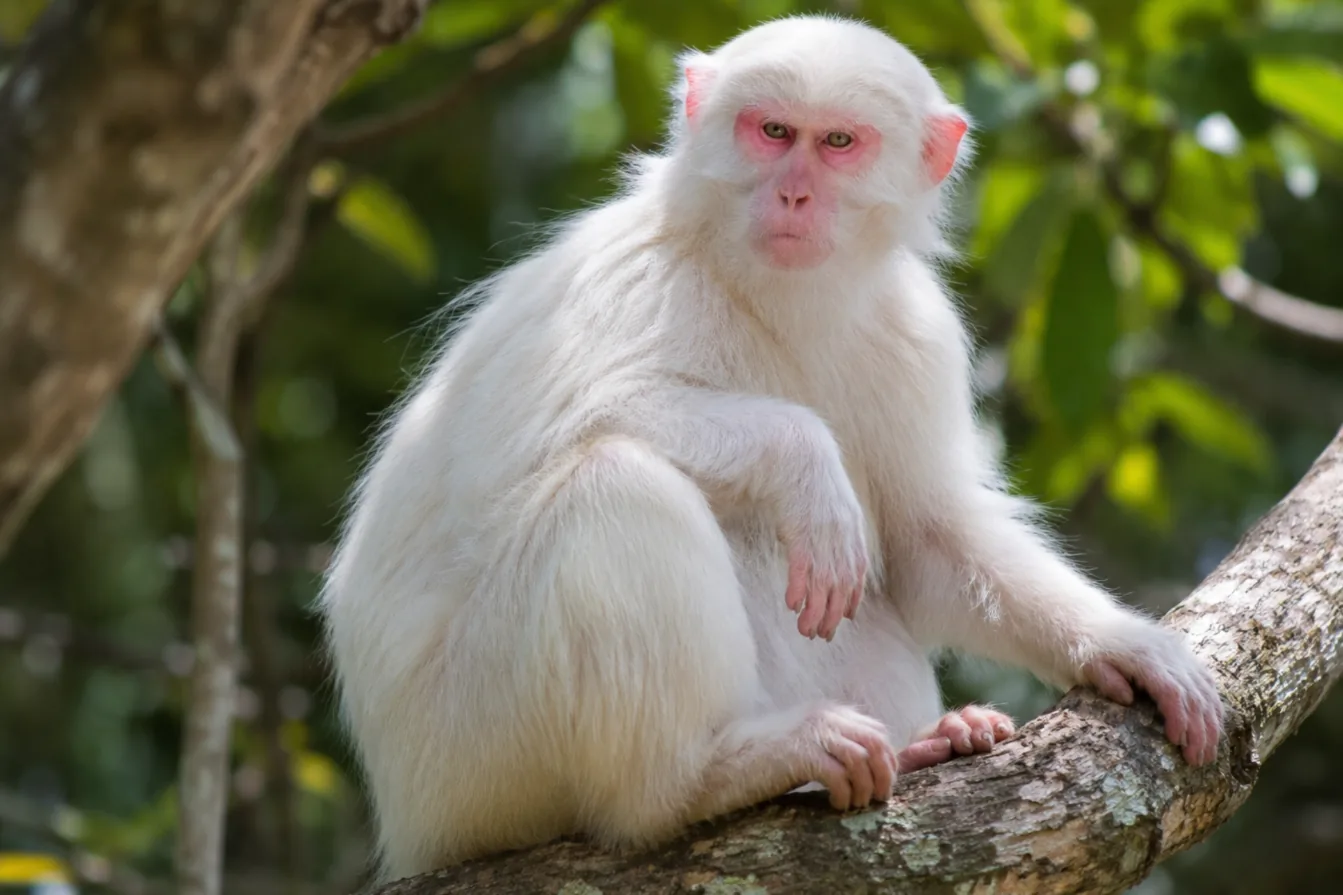
Photos of an albino monkey, with pale fur, pink skin and light-colored eyes, often spread quickly online. These animals are extremely rare and striking. But what causes albinism in monkeys, and how does it affect their lives?
This guide covers albino monkey appearance, causes, habitat, lifespan and the facts behind the viral images.
What Is an Albino Monkey?
An albino monkey is a monkey born with albinism, a genetic condition that reduces or prevents the production of melanin. Melanin is the pigment that colors skin, hair and eyes.
Albinism has been recorded in many animals, including several primate species. In primates, it is very rare.

Albino Monkey Appearance
Albino monkeys usually have:
- White or very pale fur
- Pink or very light skin, especially on the face, hands and feet
- Pale eyes that may look pink, red or very light blue
- Light-colored nails
Some animals have partial loss of pigment, which can look similar but is a different condition.
Albinism vs Leucism
| Feature | Albinism | Leucism |
|---|---|---|
| Cause | Reduced or absent melanin | Partial loss of several pigments |
| Eyes | Pink, red or very pale | Usually normal color |
| Skin | Pale or pink | May be normal or patchy |
| Fur | White or very pale | White or patchy |
Not every white animal is albino. Eye color is often the clearest clue.
What Causes Albinism in Monkeys?
Albinism is usually caused by inherited genetic changes. In most cases, an animal must inherit the gene from both parents to show the trait. Parents can carry the gene without showing it themselves.
In small or isolated populations, related animals breeding can make albinism slightly more likely to appear.
Health Challenges for Albino Monkeys
Vision Problems
Melanin plays a role in eye development. Albino animals often have poor eyesight and sensitivity to bright light.
Sun Sensitivity
Without protective pigment, skin can burn more easily and may be at higher risk of damage from sunlight.
Visibility to Predators
White fur stands out in forests and grasslands, making albino monkeys easier for predators to spot.
Social Challenges
Some researchers and observers have suggested that animals with unusual appearances may sometimes face social difficulties within their groups, although this varies.
Albino Monkey Habitat
Albino monkeys belong to the same species as normally colored monkeys, so their habitat depends on the species. Monkeys live in tropical rainforests, dry forests, savannas, mountains and even cities in parts of Africa, Asia and Central and South America.
Albino individuals face the same environment as their group but with extra challenges from light and visibility.
Albino Monkey Lifespan
Lifespan depends on the species and conditions. In the wild, albino monkeys may have shorter lives because of poor eyesight, sunburn risk and predators. In protected settings, such as accredited sanctuaries, albino animals can receive care that helps them live longer.
Famous Albino Primates
One of the most famous albino primates was Snowflake, an albino western lowland gorilla who lived at Barcelona Zoo and died in 2003. Gorillas are apes, not monkeys, but Snowflake helped raise public awareness of albinism in primates. Scientists later studied his genome to understand the cause of his albinism.
What About “Hairless” Monkey Photos?
Images of so-called “hairless monkeys” sometimes circulate alongside albino monkey photos. These usually show animals with hair loss caused by illness, skin conditions, parasites, stress or poor diet, not albinism. Albino monkeys have fur, just without pigment.
If you see a viral photo, look for a trusted source, such as a zoo, sanctuary or scientific publication.
Should Monkeys Be Kept as Pets?
No. Monkeys are wild animals with complex social, dietary and behavioral needs. Keeping them as pets is illegal or restricted in many places and can cause serious welfare and safety problems. Monkeys can also carry diseases that affect people.
The best way to support primates, including rare albino individuals, is to support accredited sanctuaries and conservation organizations.

How to Help Primates in the Wild
Support Accredited Sanctuaries
Accredited sanctuaries rescue primates from the pet trade and entertainment industry and give them lifelong care.
Avoid Primate Selfies and Pet Experiences
Photo opportunities with monkeys often involve animals taken from the wild or kept in poor conditions.
Choose Responsible Tourism
Visit wildlife responsibly with licensed guides who keep a respectful distance.
Share Accurate Information
When you see viral photos of rare animals, look for credible sources before sharing. Accurate information helps protect wildlife.
Helpful Resources
More guides from Pet Guide Nest:
- What Do Koi Fish Eat? Feeding Guide by Season
- Baby Bobcat Facts: What They’re Called and Life in the Wild
- Spider Ball Python: Facts, Wobble and Ethics
- Capuchin Monkey Facts
- Finger Monkey (Pygmy Marmoset)
- Pet Monkey: Laws and Cost
Trusted outside sources:
Frequently Asked Questions
How rare are albino monkeys?
Very rare. Albinism has been recorded in several primate species, but cases are uncommon.
Do albino monkeys have health problems?
They often have poor eyesight, light sensitivity and higher sunburn risk, and they may be more visible to predators.
Are white monkeys always albino?
No. Some have leucism or other conditions. Eye color is often the clearest difference.
Can you keep an albino monkey as a pet?
No. Monkeys are wild animals, and keeping them as pets is illegal or restricted in many places.
Final Thoughts
An albino monkey is a rare and remarkable sight, but albinism brings real challenges, from poor eyesight to sun sensitivity and visibility to predators. Learn to tell albinism apart from leucism and hair loss, check sources behind viral photos and support conservation groups that protect primates in the wild. For more guides like this, explore our Monkey articles.

Maren Ashcroft
Maren Ashcroft writes the care guides at Pet Guide Nest. She has grown up around dogs, cats, and rabbits and loves learning about the more unusual pets too. She turns vet and animal welfare research into simple, practical advice for everyday pet owners.