

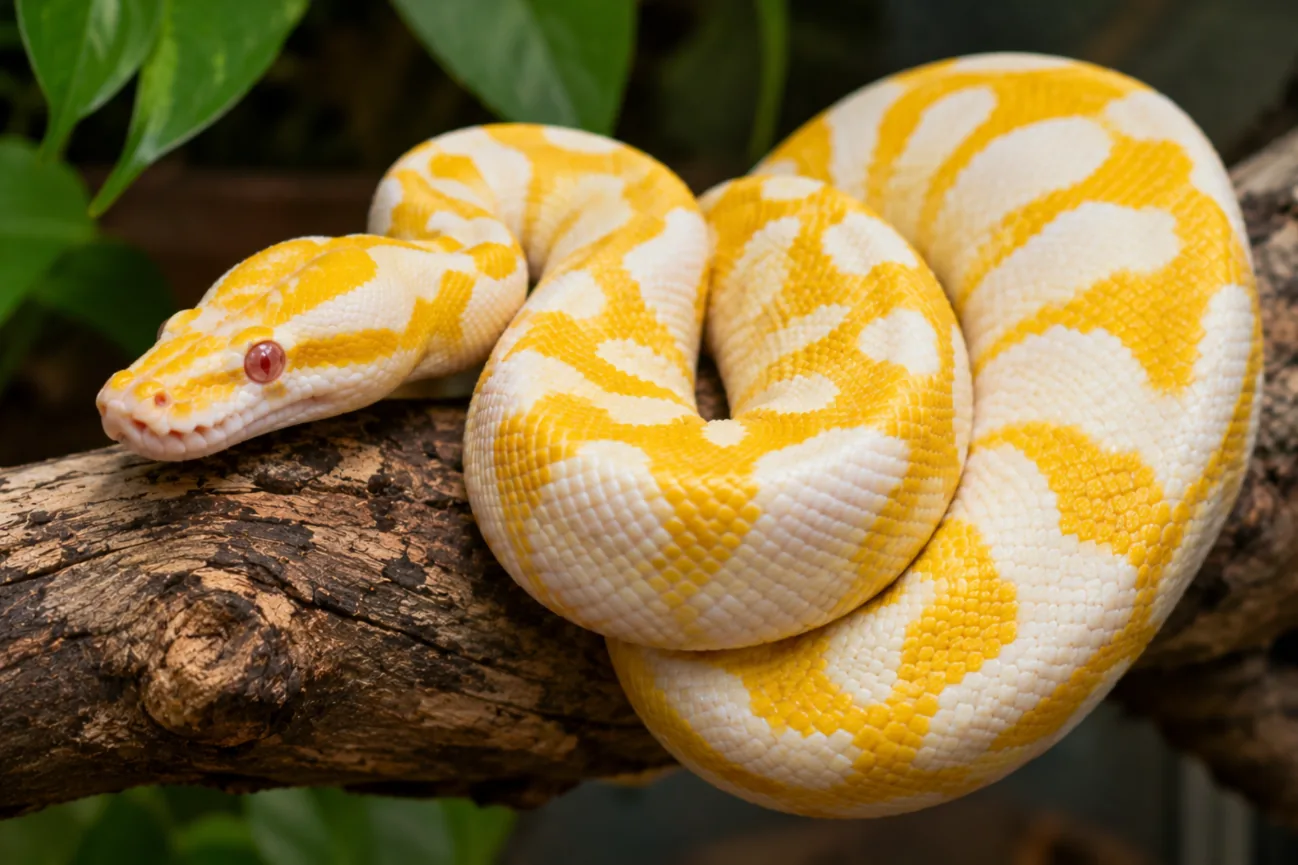
With bright yellow patterns on a white background and striking pink or red eyes, albino ball pythons are one of the most eye-catching snakes you can keep. Good albino ball python care is almost the same as caring for any ball python, with a few extra points about light sensitivity and handling.
This guide covers enclosure setup, heat and humidity, feeding, handling and health.
What Is an Albino Ball Python?
An albino ball python lacks melanin, the pigment that produces black and brown colors. This leaves white and yellow patterns, with pink or red eyes. The albino gene is recessive, so a snake needs two copies to show the trait. Snakes with one copy look normal but are called “het albino.”
Albinos are also called “amelanistic.”

Albino Ball Python as a Pet
Albino ball pythons have the same calm temperament as other ball pythons. They are generally docile, slow-moving and tolerant of gentle handling, which makes them good beginner snakes.
Albino Ball Python Care: Enclosure Setup
Size and Security
Provide a secure enclosure suited to an adult ball python, with a locking lid. Ball pythons are skilled escape artists.
Hides
Offer at least two snug hides: one on the warm side and one on the cool side. Snakes feel secure in tight spaces.
Substrate
Choose a substrate that holds humidity well, such as cypress mulch, coconut husk or a bioactive mix. Avoid cedar, which is toxic to reptiles.
Decor and Enrichment
Add branches, cork bark and artificial or live plants for cover and climbing.
Lighting
Albinos lack protective pigment in their eyes and may be more sensitive to bright light. Avoid very bright lights directly over hides, and provide plenty of shaded areas. Use a day-night cycle rather than lights left on constantly.
Heat and Humidity
| Area | General guidance |
|---|---|
| Warm side | A basking area created by a thermostat-controlled heat source |
| Cool side | Noticeably cooler, so the snake can regulate its temperature |
| Humidity | Moderate to high, raised during shedding |
| Humid hide | A hide with damp moss to help with shedding |
Always use a thermostat with any heat source, and check temperatures with digital thermometers on both sides. Use a hygrometer to monitor humidity. Exact numbers depend on your setup, so follow trusted care sheets and your reptile vet’s advice.
Feeding an Albino Ball Python
- Feed frozen-thawed rodents of an appropriate size: roughly as wide as the snake’s thickest point.
- Juveniles eat more often than adults.
- Use tongs to offer food.
- Do not handle your snake for a day or two after feeding to avoid regurgitation.
- Ball pythons sometimes refuse food, especially in cooler months or before shedding. If your snake loses weight or refuses food for a long time, see a vet.
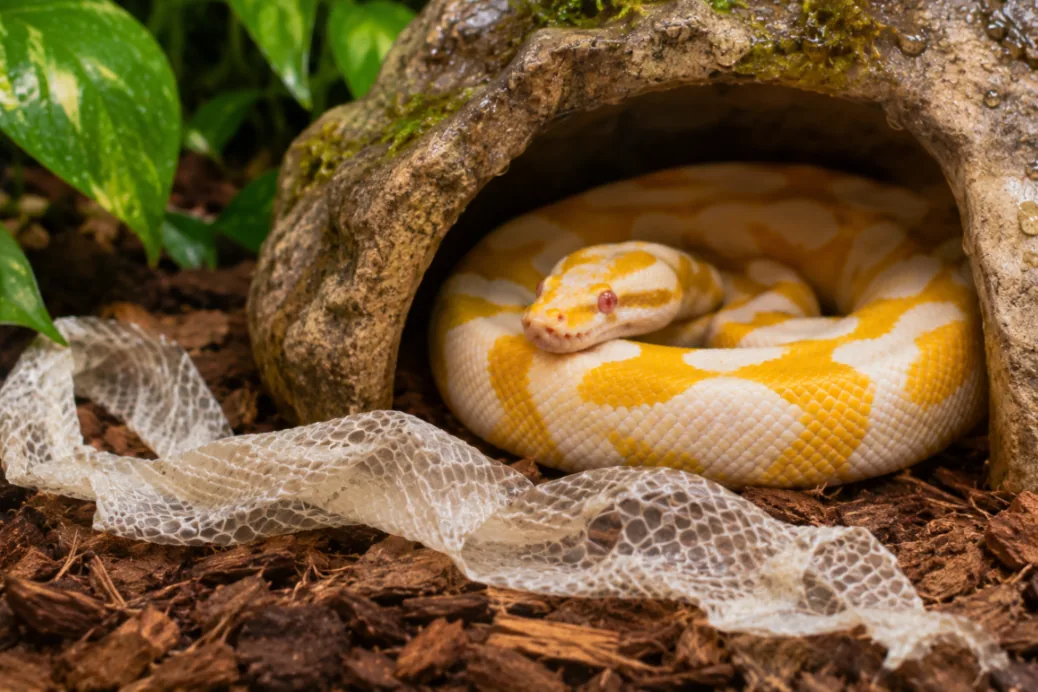
Caring for an Albino Ball Python: Shedding
Healthy snakes shed in one piece. Before a shed, the eyes turn cloudy blue. On albinos, this can look pinkish-white rather than blue. Keep humidity up during this time and avoid handling.
If shed is stuck, especially around the eyes or tail tip, raise humidity and offer a soak in shallow, lukewarm water. Ask a vet for help with stuck eye caps.
Handling Tips
- Let a new snake settle for about a week before handling.
- Approach from the side, not from above.
- Support the body with both hands.
- Keep early sessions short.
- Avoid bright light shining in its eyes during handling.
See our guide on how to pet a ball python for more handling advice.
Keeping an Albino Ball Python Healthy
Watch for:
- Wheezing, bubbles at the nose or open-mouth breathing (respiratory infection)
- Mites (tiny moving dots, especially around the eyes)
- Blister-like skin or burns
- Stuck shed
- Regurgitation or long-term weight loss
Find a reptile vet before you need one.
Albino vs Other Ball Python Morphs
Care is the same for most morphs. For comparisons with other popular morphs, read our pastel ball python and piebald ball python care guides, and our overview of ball python morphs.

Albino Ball Python Care Costs
Setup Costs
Most of the expense comes at the beginning: the enclosure, thermostat, heat source, thermometers, hides and substrate. Good equipment helps prevent health problems later.
Ongoing Costs
Ongoing albino ball python care includes frozen rodents, substrate changes, electricity for heating and replacement equipment over time.
Vet Costs
Plan for an initial vet check and occasional visits for issues such as stuck shed or respiratory infections.
Long-Term Commitment
Because ball pythons can live for decades, think about who will care for your snake if your circumstances change. A long-lived pet deserves a long-term plan.
Note: This article is for general information only and is not a substitute for advice from a qualified veterinarian. If your pet seems unwell or you are unsure, please contact your vet.
Helpful Resources
More guides from Pet Guide Nest:
Trusted outside sources:
Frequently Asked Questions
Is albino ball python care different from normal ball python care?
Mostly no. The main difference is that albinos may be more sensitive to bright light, so provide plenty of shade.
How long do albino ball pythons live?
Ball pythons often live 20 to 30 years with good care, and albinos are the same.
Are albino ball pythons good for beginners?
Yes. They have the same gentle temperament as other ball pythons.
What does “het albino” mean?
It means the snake carries one copy of the albino gene without showing it.
Final Thoughts
Albino ball python care follows the same basics as any ball python: a secure enclosure, proper heat and humidity, snug hides and appropriately sized prey. Add plenty of shade for light-sensitive eyes, handle gently and find a reptile vet. With good care, your albino can be a stunning companion for decades. For more guides like this, explore our Snakes articles.

Maren Ashcroft
Maren Ashcroft writes the care guides at Pet Guide Nest. She has grown up around dogs, cats, and rabbits and loves learning about the more unusual pets too. She turns vet and animal welfare research into simple, practical advice for everyday pet owners.


