

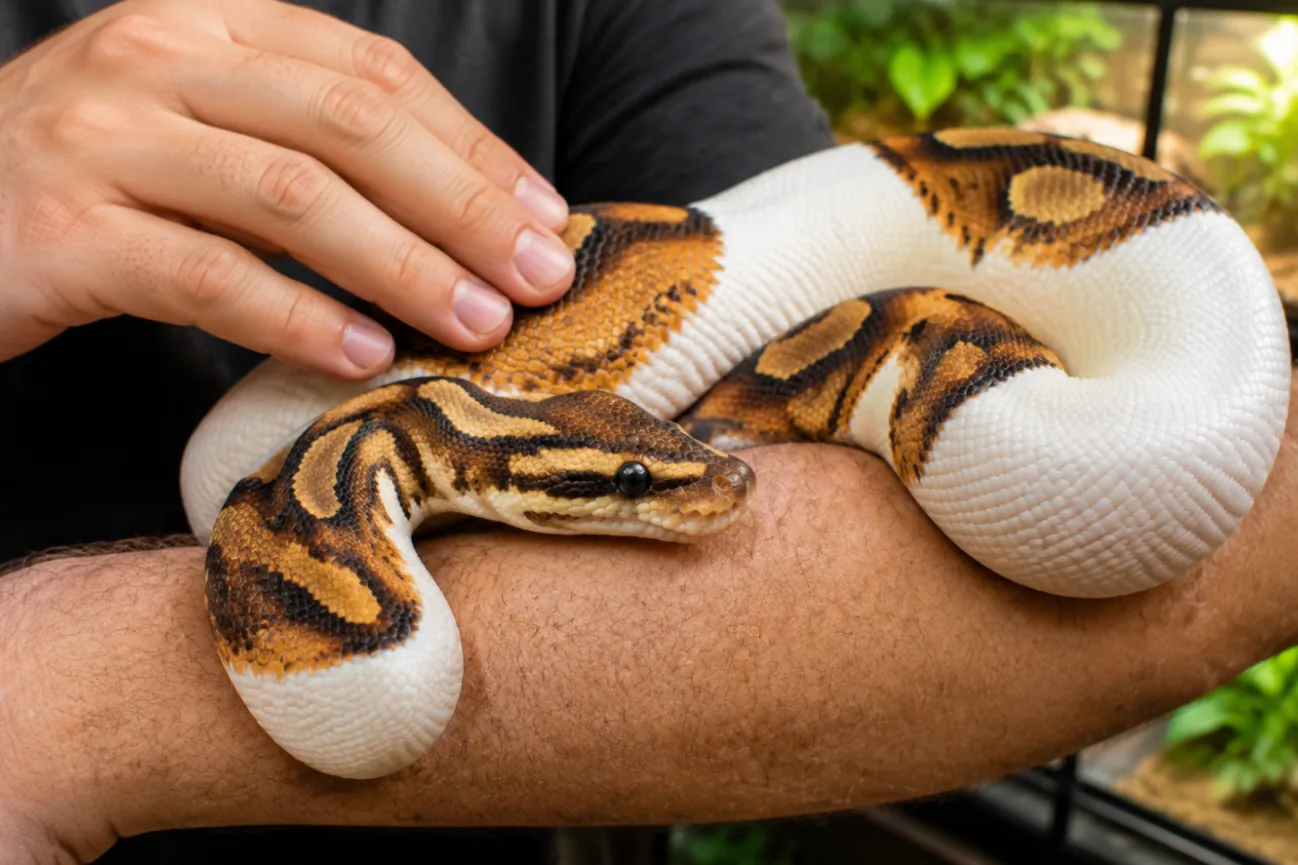
Ball pythons are known for their calm nature, and many enjoy gentle handling once they trust you. But snakes do not like to be petted the way dogs or cats do. Learning how to pet a ball python the right way keeps your snake relaxed and keeps you safe.
This guide covers when to start, step-by-step handling, how often to handle and the signs your snake needs a break.
Do Ball Pythons Like Being Petted?
Ball pythons do not seek affection, but many tolerate and seem comfortable with calm handling. They explore using their sense of smell and touch. A relaxed snake will move slowly through your hands and flick its tongue to investigate.
Handling also helps you check your snake’s health regularly.

When to Start Handling a New Ball Python
Give a new snake about a week to settle into its enclosure before handling. Wait until it has eaten at least once in its new home. This reduces stress.
Also avoid handling:
- For a day or two after feeding (to prevent regurgitation)
- When your snake is in shed (eyes cloudy, skin dull)
- When your snake is hiding and defensive
How to Pet a Ball Python: Step by Step
1. Wash Your Hands
Wash and dry your hands before and after handling. Food smells on your hands can trigger a feeding response.
2. Approach Calmly From the Side
Snakes may see a hand from above as a predator. Approach slowly from the side, and avoid sudden movements.
3. Let Your Snake Know You Are There
Gently touch the middle of the body first, or use a snake hook to lightly tap the snake. This tells it you are not food.
4. Lift With Support
Slide one hand under the front third of the body and the other under the back. Never grab the head or pull a snake by the tail.
5. Let the Snake Move
Let your ball python move through your hands. Keep your hands under it like a moving tree branch rather than holding it tightly.
6. Pet Gently in the Direction of the Scales
If your snake is calm, you can gently stroke along its body from head to tail, following the scales. Avoid touching the head, as many snakes dislike it.
7. Keep Sessions Short at First
Start with about five minutes. Gradually build to longer sessions as your snake becomes more comfortable.
8. Return It Gently
Place your snake back near a hide and let it settle.
Ball Python Handling: How Often?
Many keepers handle their ball pythons a few times a week for short sessions. Some snakes enjoy more time out; others prefer less. Watch your snake’s body language and adjust.

Signs Your Ball Python Is Relaxed or Stressed
| Relaxed | Stressed |
|---|---|
| Slow, steady movement | Rapid, jerky movement or trying hard to escape |
| Gentle tongue flicks | Hissing |
| Loose grip around your hands | Tight squeezing |
| Calm, curious exploring | Balling up with head hidden |
| Normal breathing | Striking or open-mouth posture |
If your snake shows stress, calmly return it to its enclosure and try again another day.
Petting a Ball Python: Safety Tips
- Supervise children at all times. Teach them to support the snake and stay seated.
- Handle low to the ground or while sitting, in case the snake slips.
- Do not wrap a snake around your neck.
- Keep other pets out of the room during handling.
- Wash hands afterwards, as reptiles can carry Salmonella.
Building Trust Over Time
- Handle at the same time of day when possible.
- Keep sessions calm and predictable.
- Avoid handling during feeding times.
- Be patient. Some snakes take weeks or months to fully relax.
Ball Python Morphs as Pets
All ball python morphs can be handled the same way. A few morphs, such as the Spider, are linked to a neurological “wobble” that can affect coordination, so handle them extra carefully. Read more in our ball python morphs guide, and see care tips in our pastel ball python and piebald ball python care articles.

How to Pet a Ball Python With Children
Children can enjoy ball pythons safely with adult supervision.
- Have the child sit on the floor with the snake on their lap.
- Show them how to support the snake’s body with two hands.
- Teach them to stroke gently along the body, never near the head.
- Keep sessions very short.
- Make sure everyone washes their hands afterwards.
How to Pet a Ball Python: Common Mistakes
- Grabbing the snake from above
- Holding the snake too tightly
- Handling right after feeding
- Letting the snake roam unsupervised
- Ignoring stress signals
Learning how to pet a ball python properly makes handling enjoyable for everyone, including the snake.
Helpful Resources
More guides from Pet Guide Nest:
Trusted outside sources:
Frequently Asked Questions
Is it safe to pet a ball python?
Yes, when you handle it calmly and correctly. Ball pythons are generally docile, but always respect stress signals.
Where do ball pythons like to be touched?
Most tolerate gentle strokes along the body. Many dislike having their heads touched.
How long should I hold my ball python?
Start with about five minutes and build up gradually. Many snakes are comfortable with 15 to 20 minutes once settled.
Why does my ball python ball up when I hold it?
Balling up is a defensive posture. Your snake may feel threatened. Return it calmly and try again later.
Final Thoughts
Learning how to pet a ball python is about patience and respect. Let your snake settle first, approach from the side, support its body and keep sessions short. Watch for stress signals and build trust over time. With gentle, consistent handling, your ball python can become a calm, confident companion. For more guides like this, explore our Snakes articles.

Maren Ashcroft
Maren Ashcroft writes the care guides at Pet Guide Nest. She has grown up around dogs, cats, and rabbits and loves learning about the more unusual pets too. She turns vet and animal welfare research into simple, practical advice for everyday pet owners.


