


The pastel ball python is one of the most popular and widely available ball python morphs. With brighter yellows, lighter blushing on the head and a cleaner pattern than a normal ball python, it is a favorite for beginners and breeders alike.
This guide explains what makes a pastel ball python, how the gene works, how to care for one and how to choose a healthy snake.
What Is a Pastel Ball Python?
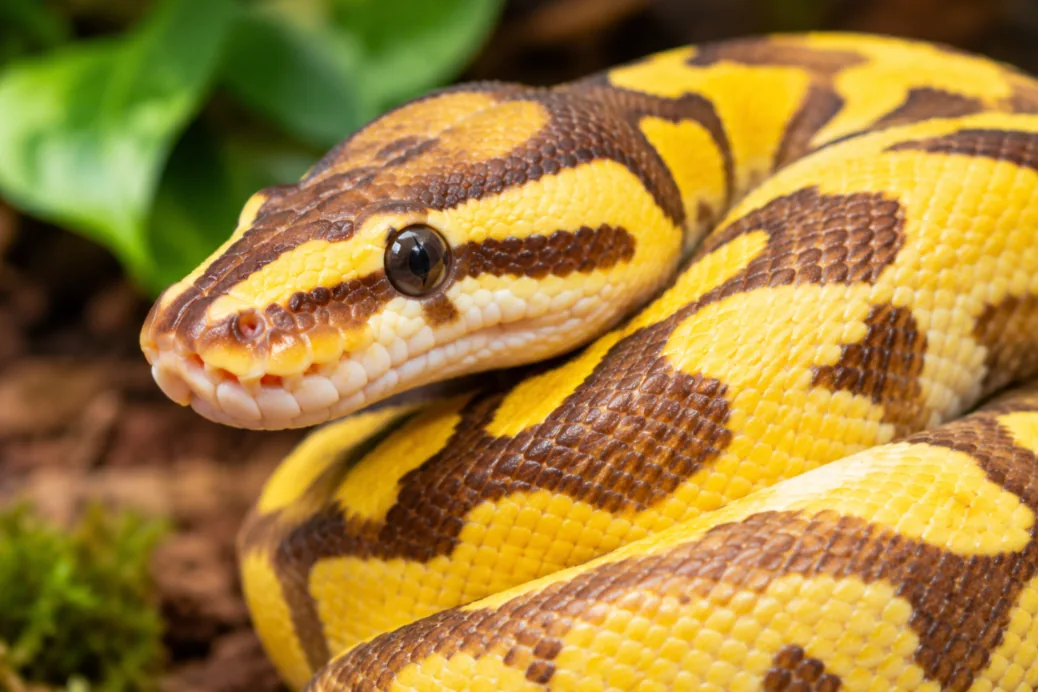
A pastel ball python is a ball python with the pastel gene, a color mutation that brightens yellow tones and reduces some dark pigment. Compared with a normal ball python, pastels usually have:
- Brighter, more golden yellow coloring
- A lighter “blushed” head
- Slightly cleaner patterns
- Often greenish-gray eyes
Coloring can vary between individual snakes, and some pastels “brown out” a little as they age.
How the Pastel Gene Works
The pastel gene is incomplete dominant, often called co-dominant.
| Genetic copies | Result |
|---|---|
| One copy | Pastel |
| Two copies | Super pastel: even brighter yellow and lighter coloring |
If you breed a pastel to a normal, roughly half the babies are expected to be pastels. Breeding two pastels can produce normals, pastels and super pastels.
Popular Pastel Combinations
Pastel is often combined with other genes to create new looks, such as:
- Pastel Clown: clown pattern with brighter color
- Pastel Enchi: extra orange and reduced side pattern
- Pastel Piebald: bright coloring with white piebald patches
Learn more about combining genes in our ball python morphs guide.
Pastel Ball Python as a Pet
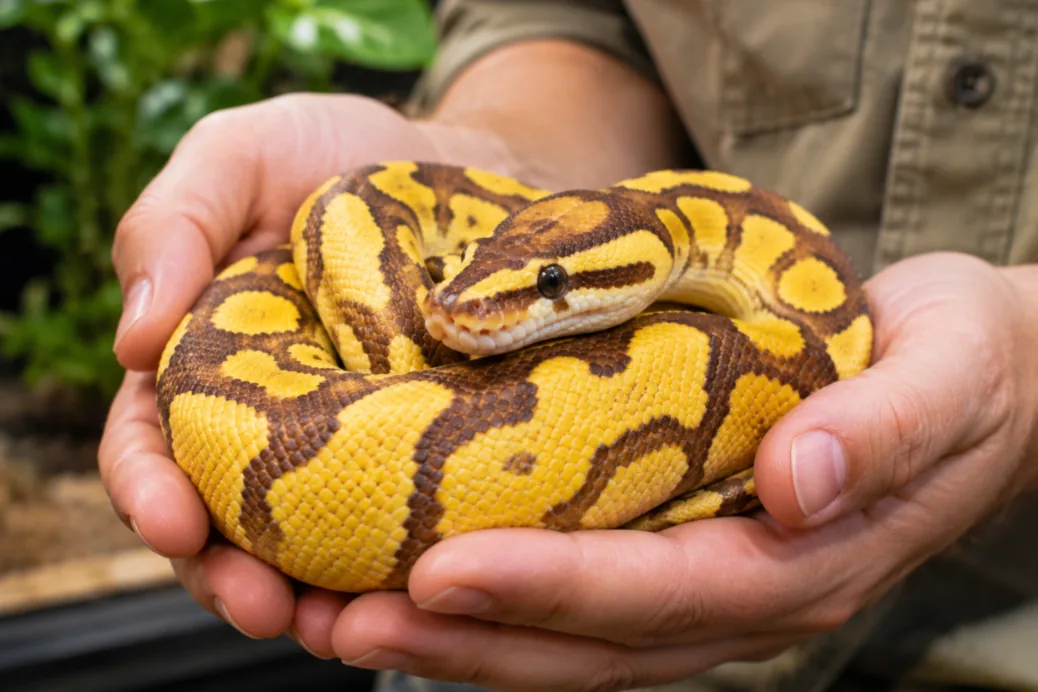
Pastel ball pythons have the same temperament and care needs as normal ball pythons. They are usually docile and tolerate gentle handling well. The pastel gene is not linked to the neurological issues seen in some other morphs.
Pastel Ball Python Care
Enclosure
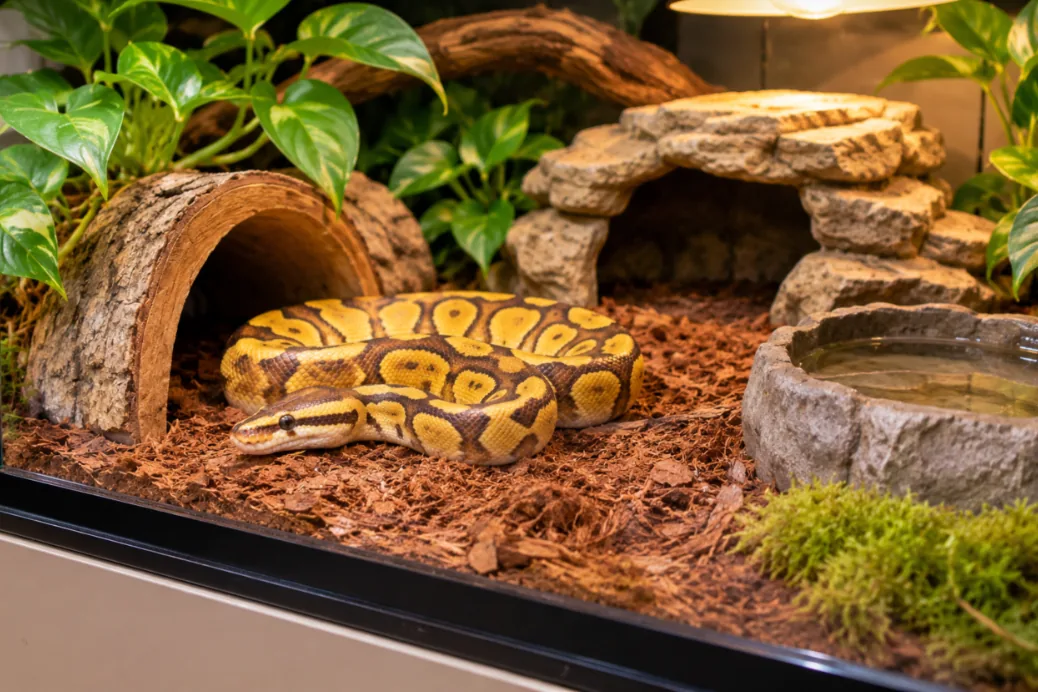
- A secure enclosure sized for an adult ball python, with a locking lid
- Hides on both the warm and cool sides
- A water bowl large enough to soak in
- Branches or decor for enrichment
Temperature and Humidity
- A warm side and cooler side, with a thermostat-controlled heat source
- Thermometers on both sides
- Humidity appropriate for ball pythons, with higher humidity during shedding
- A humid hide to help with shedding
Feeding
Ball pythons usually eat appropriately sized, frozen-thawed rodents. Juveniles eat more often than adults. Feed prey roughly the width of the snake’s body at its thickest point. Always use tongs to avoid accidental bites.
Handling
Let a new snake settle for about a week before handling. Support the body, move slowly and keep sessions short at first. Our guide on how to pet a ball python has step-by-step tips.
Choosing a Pastel Ball Python
Look for Signs of Health
- Clear eyes (except just before a shed)
- Clean nostrils with no bubbles or discharge
- Smooth skin with no stuck shed, sores or mites
- Firm, rounded body
- Alert tongue flicking
- No wheezing or open-mouth breathing
Ask the Breeder
- Is the snake captive-bred?
- How old is it, and what sex?
- What is it eating, and how many feeds has it taken?
- Do you have photos of the parents?
- Does it carry any other genes or “hets”?
Pastel Ball Python Price
Pastels are among the more affordable morphs because they are widely bred. Price depends on age, quality of color, extra genes and location. Combination morphs usually cost more. Always budget for the full enclosure setup, which often costs more than the snake itself.
Setting Up Your First Snake Enclosure
Before Your Snake Arrives
Set up the enclosure at least a few days before bringing your snake home. Run the heating and check temperatures and humidity until they are stable.
Shopping List
- Secure enclosure with a locking lid
- Thermostat and heat source
- Two digital thermometers and a hygrometer
- Two hides and a humid hide
- Water bowl
- Substrate
- Feeding tongs
- Branches and cover
The First Week
Leave your new snake alone to settle. Offer a meal after about a week. Keep the room calm and avoid moving decor around.
Finding a Reptile Vet
Find a reptile vet before you need one, and book a check-up after your snake has settled.
Helpful Resources
More guides from Pet Guide Nest:
- Albino Ball Python Care
- Piebald Ball Python Care
- Baby Cockroach Facts
- Spider Ball Python: Facts, Wobble and Ethics
Trusted outside sources:
Frequently Asked Questions
What is a pastel ball python?
It is a ball python with the pastel gene, which brightens yellow coloring and lightens the head.
Are pastel ball pythons good for beginners?
Yes. They have the same easygoing temperament and care needs as normal ball pythons.
What is a super pastel ball python?
A super pastel has two copies of the pastel gene and is usually even brighter and lighter than a single pastel.
Do pastel ball pythons have health problems?
The pastel gene is not known for specific health issues. Good husbandry matters most for a healthy snake.
Final Thoughts
The pastel ball python is a beautiful, beginner-friendly morph with brighter yellows and a lighter head. Give it a secure, well-heated enclosure, proper humidity and appropriately sized prey, and buy from a reputable breeder. With good care, your pastel can be a calm companion for many years. For more guides like this, explore our Snakes articles.

Maren Ashcroft
Maren Ashcroft writes the care guides at Pet Guide Nest. She has grown up around dogs, cats, and rabbits and loves learning about the more unusual pets too. She turns vet and animal welfare research into simple, practical advice for everyday pet owners.


