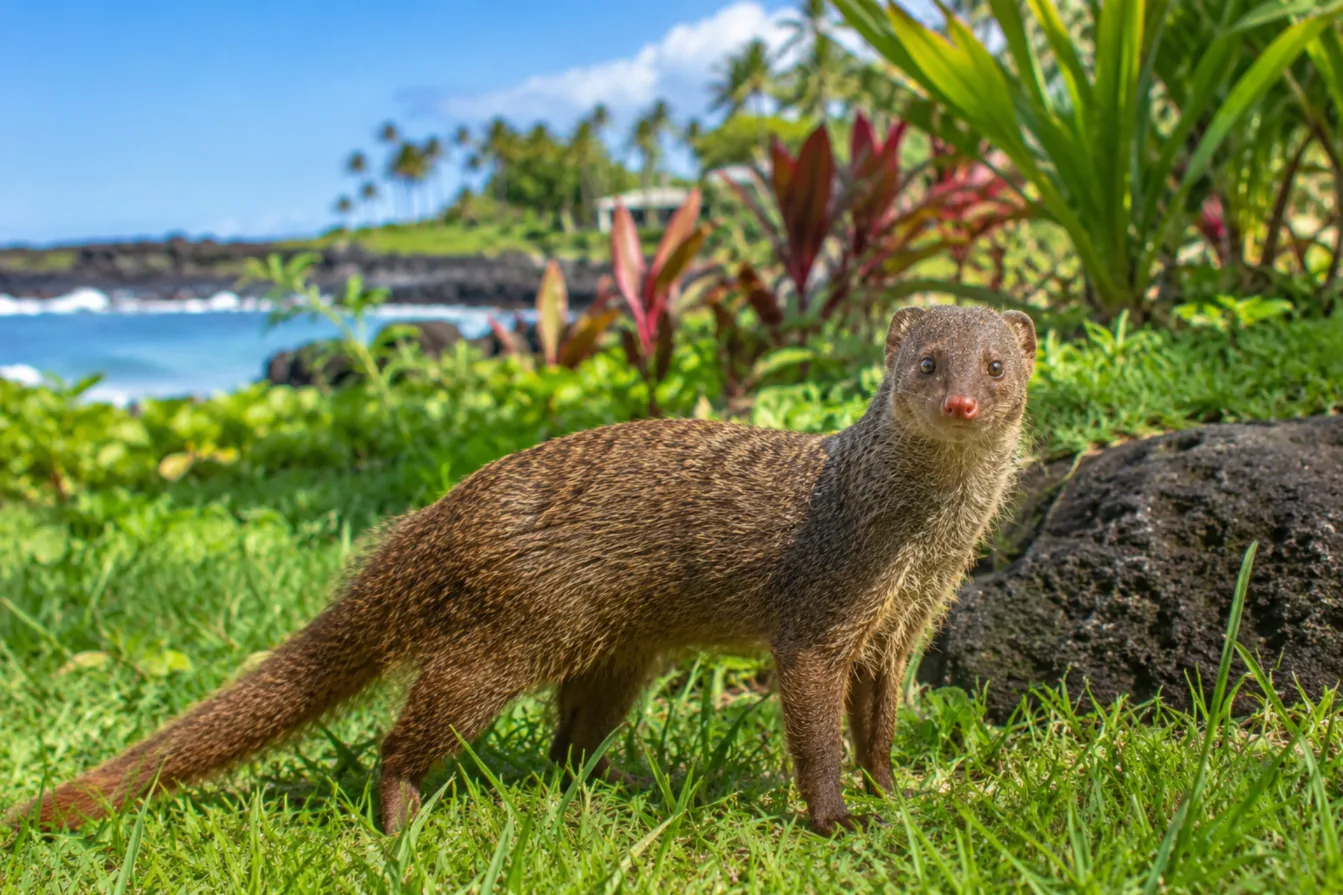
Visitors to Hawaii are often surprised to see a small, brown, weasel-like animal dart across the road. That is the small Indian mongoose, one of the islands’ most famous invasive species. This mongoose Hawaii guide explains how mongooses arrived, what they eat and why they are a major problem for native wildlife.
What Is the Hawaiian Mongoose?
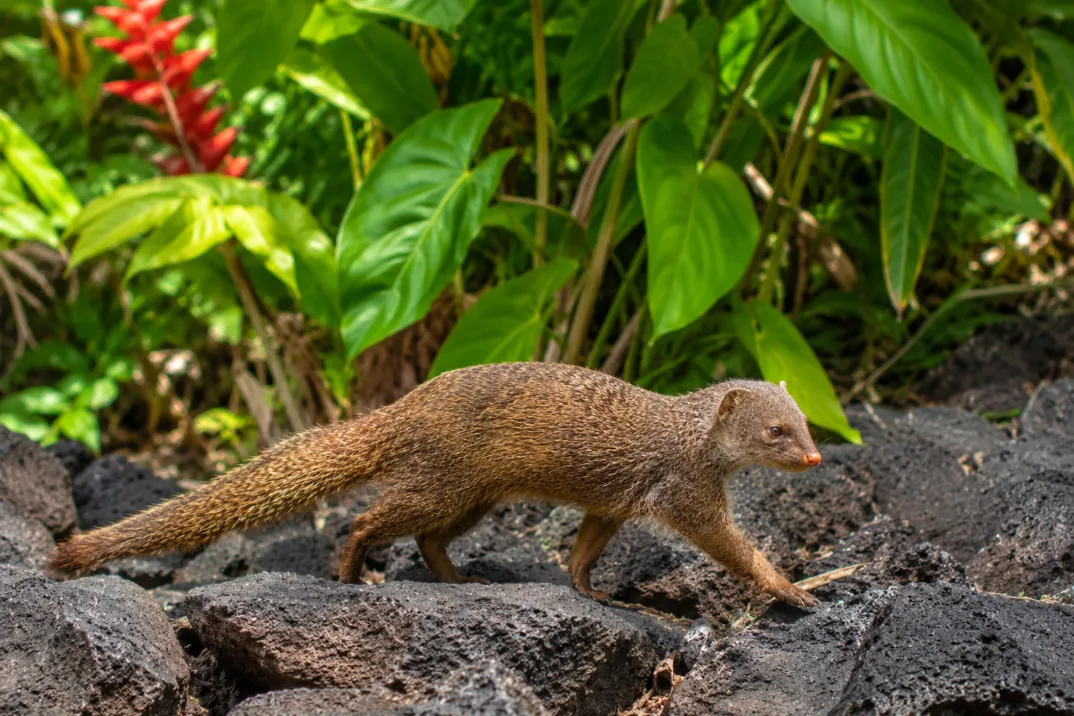
The mongoose found in Hawaii is the small Indian mongoose (Urva auropunctata, formerly Herpestes auropunctatus). It is not native to Hawaii. It is a small carnivore, usually brown with fine golden flecks, a long body and a long tail.
Key facts:
- Active mainly during the day
- Fast, agile and an opportunistic hunter
- Breeds quickly
- Lives in many habitats, from forests to towns
Why Are There Mongooses in Hawaii?
In 1883, mongooses were brought to Hawaii from Jamaica by sugar cane planters. The idea was that mongooses would control rats damaging sugar cane crops.
The plan did not work as hoped. Rats are mostly active at night, while mongooses are active during the day, so they rarely met. Instead, mongooses found easier prey among Hawaii’s native birds and other wildlife.
Mongoose Hawaii: Which Islands Have Them?
| Island | Mongoose status |
|---|---|
| Oahu | Established |
| Maui | Established |
| Hawaii Island (Big Island) | Established |
| Molokai | Established |
| Kauai | Not considered established; sightings are investigated |
| Lanai | Not considered established |
Preventing mongooses from becoming established on Kauai is a priority for conservation agencies.
What Do Mongooses Eat in Hawaii?
Mongooses in Hawaii are opportunistic omnivores. They eat:
- Bird eggs and chicks, especially of ground-nesting birds
- Insects and other invertebrates
- Small mammals, including rats and mice
- Reptiles, such as geckos and skinks
- Fruit and plant matter
- Sea turtle eggs and hatchlings on some beaches
- Garbage and pet food near people
Mongoose Impact on Hawaiian Wildlife
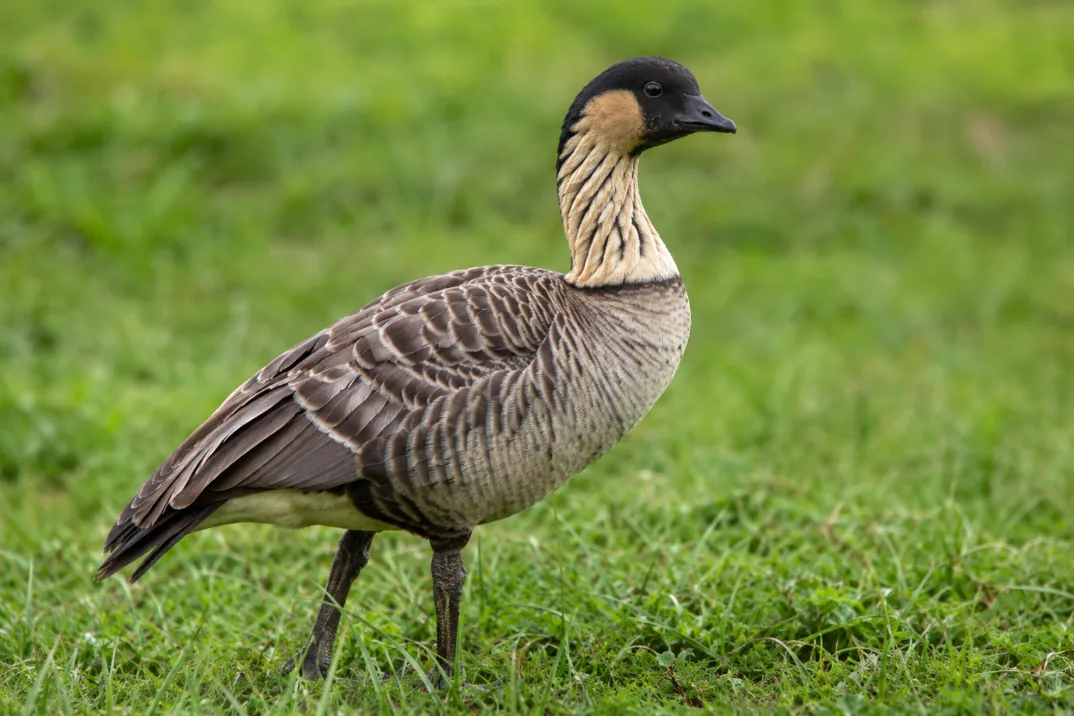
Hawaii’s native birds evolved without ground predators like mongooses. Many nest on or near the ground and have few defenses.
Mongooses are a threat to:
- Nēnē (Hawaiian goose), the state bird
- Seabirds, such as Hawaiian petrels and shearwaters, which nest in burrows
- Waterbirds, such as Hawaiian stilts and coots
- Sea turtles, through egg predation
- Native insects and reptiles
Mongooses have contributed to population declines in several native species, alongside other threats such as habitat loss, rats and feral cats.
Mongooses and Disease
Mongooses can carry leptospirosis, a bacterial disease that can spread to people and pets through contaminated water or soil. Avoid touching mongooses or their droppings.
How Hawaii Manages Mongooses
Conservation groups and state agencies use several methods:
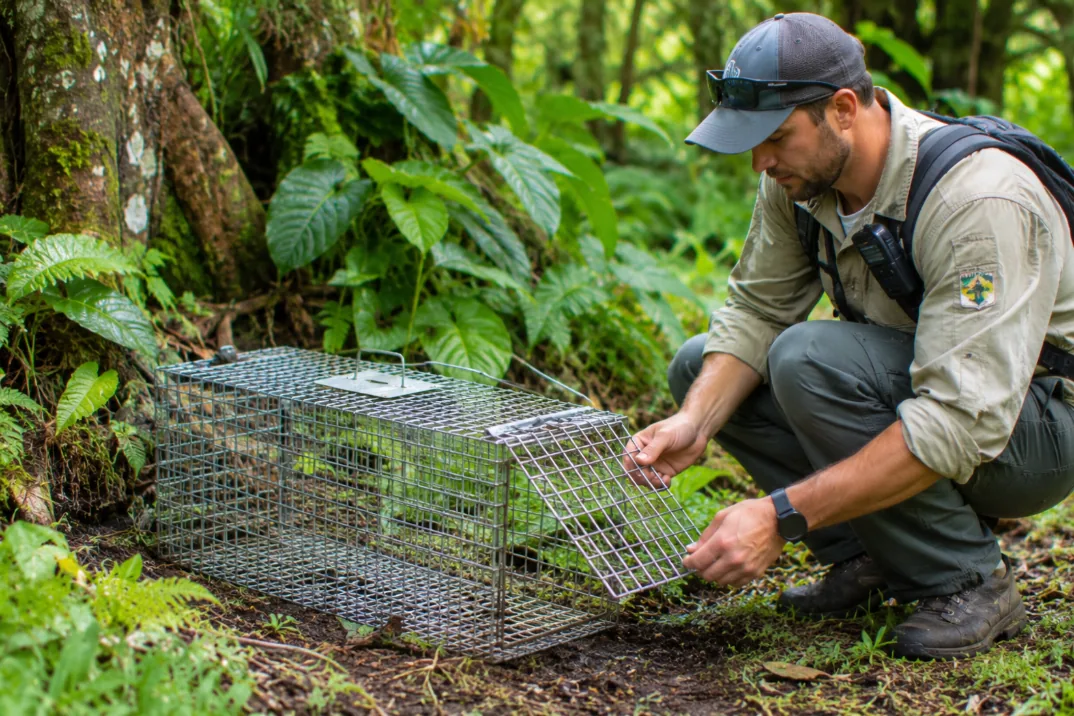
- Trapping near important nesting areas
- Predator-proof fencing around seabird colonies
- Monitoring islands without established populations
- Public reporting of sightings on Kauai and Lanai
- Research into new control methods
What Residents and Visitors Can Do
- Do not feed mongooses. Feeding helps populations grow.
- Secure garbage and pet food.
- Report mongoose sightings on Kauai to local authorities.
- Keep pets indoors at night and supervise them outdoors to protect wildlife.
- Support conservation groups working to protect native birds.
Hawaiian Mongoose vs Other Animals
| Animal | Native to Hawaii? | Main impact |
|---|---|---|
| Small Indian mongoose | No | Preys on native birds and eggs |
| Rats | No | Prey on eggs, seeds and chicks |
| Feral cats | No | Prey on birds and small animals |
| Nēnē | Yes | Native, protected goose |
Are Mongooses Dangerous to People?
Mongooses are generally shy and avoid people. They can bite if cornered or handled. The bigger concern is disease and their impact on wildlife.
Can You Keep a Mongoose as a Pet?
No. Importing and keeping mongooses is heavily restricted in the United States because of their history as invasive species. For more about wild animals that do not make good pets, see our guide to the baby bobcat as a pet.
Mongoose Hawaii Facts and Myths
Mongoose Hawaii Myth: They Control Rats
Mongooses were introduced to control rats, but because rats are active at night and mongooses during the day, they did little to solve the problem.
Fact: They Breed Quickly
Mongooses can have more than one litter a year, which helps populations grow quickly.
Fact: They Are Strong Swimmers
Mongooses can swim, which is one reason conservation agencies watch for them around harbors and coastlines on islands where they are not established.
Fact: They Are Active in Daytime
Unlike many island predators, mongooses hunt by day, which is why visitors often see them crossing roads.
These mongoose Hawaii facts show why preventing their spread remains a conservation priority.
Helpful Resources
More guides from Pet Guide Nest:
- Animals With Down Syndrome: Myths vs Science
- Cool Animal Facts That Will Surprise You (2026 Edition)
- Baby Bobcat Facts: What They’re Called and Life in the Wild
- Spider Monkey Facts
Trusted outside sources:
Frequently Asked Questions
Why are there mongooses in Hawaii?
They were brought from Jamaica in 1883 to control rats in sugar cane fields.
What do mongooses eat in Hawaii?
They eat bird eggs and chicks, insects, rodents, reptiles, fruit, sea turtle eggs and human food waste.
Are there mongooses on Kauai?
Mongooses are not considered established on Kauai, and sightings are investigated to prevent them from settling.
Are mongooses harmful in Hawaii?
Yes. They are invasive predators that threaten native birds and other wildlife.
Final Thoughts
The mongoose Hawaii story is a classic lesson in how introducing a species can go wrong. Brought to control rats, mongooses instead became predators of Hawaii’s native birds and turtles. You can help by never feeding mongooses, securing food waste and reporting sightings on islands where they are not established. For more guides like this, explore our Facts and Myths articles.

Maren Ashcroft
Maren Ashcroft writes the care guides at Pet Guide Nest. She has grown up around dogs, cats, and rabbits and loves learning about the more unusual pets too. She turns vet and animal welfare research into simple, practical advice for everyday pet owners.