
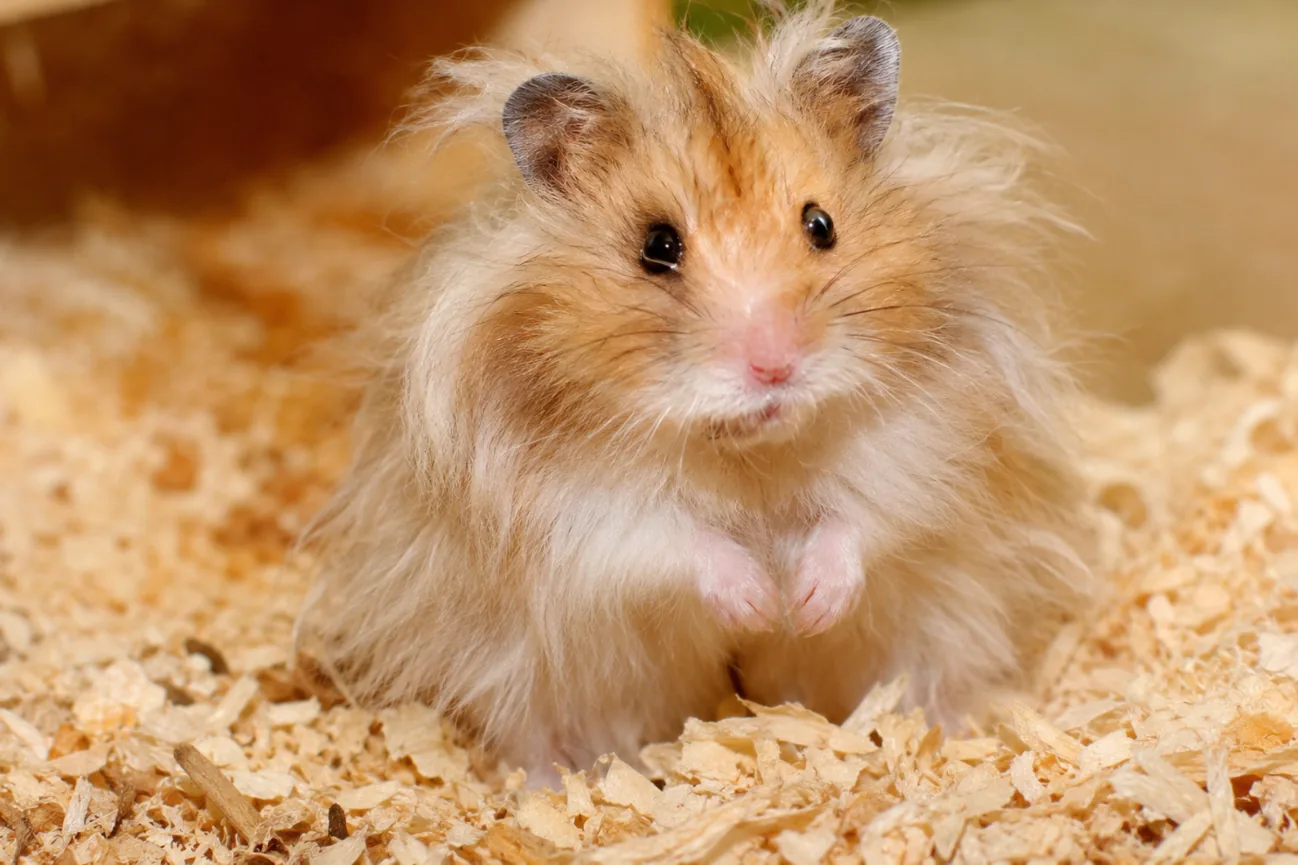
With their fluffy coats and round faces, teddy bear hamsters look just like tiny stuffed toys. They are a long-haired type of Syrian hamster, and they make charming pets for the right owner. This guide covers teddy bear hamster care, from the cage and diet to coat care and health.
What Is a Teddy Bear Hamster?
A teddy bear hamster is a long-haired Syrian hamster. Syrians are the largest common pet hamster. The “teddy bear” name comes from their fluffy, soft coat. Males usually have longer hair than females.
Key facts:
- Lifespan: Usually around 2 to 3 years
- Activity: Mostly active at dusk and night
- Social needs: Syrian hamsters must live alone

Why Teddy Bear Hamsters Must Live Alone
Adult Syrian hamsters are territorial. Keeping two together usually leads to serious fights and injuries. A single hamster is not lonely; it is the natural way for Syrians to live.
Teddy Bear Hamster Cage
Hamsters need far more space than many store cages provide.
Size
Many animal welfare groups recommend a large enclosure with plenty of floor space. A bigger cage reduces stress and boredom. Large tanks, bin cages or roomy hamster enclosures with solid bases work well.
Bedding
- Use deep bedding, several inches thick, so your hamster can burrow.
- Choose paper-based bedding or aspen shavings.
- Avoid cedar and pine shavings that have not been heat-treated, which can irritate the airways.
Essentials
| Item | Why it matters |
|---|---|
| Solid exercise wheel, large enough to run with a straight back | Daily exercise |
| Hideouts | Security and sleeping places |
| Chew toys | Keep teeth healthy |
| Sand bath (chinchilla sand, not dust) | Natural grooming |
| Water bottle or bowl | Fresh water at all times |
| Food scattered or in a bowl | Encourages foraging |
Teddy Bear Hamster Diet
A balanced hamster diet includes:
- Hamster pellets or a quality mix as the base
- Small amounts of fresh vegetables, such as carrot, cucumber or broccoli
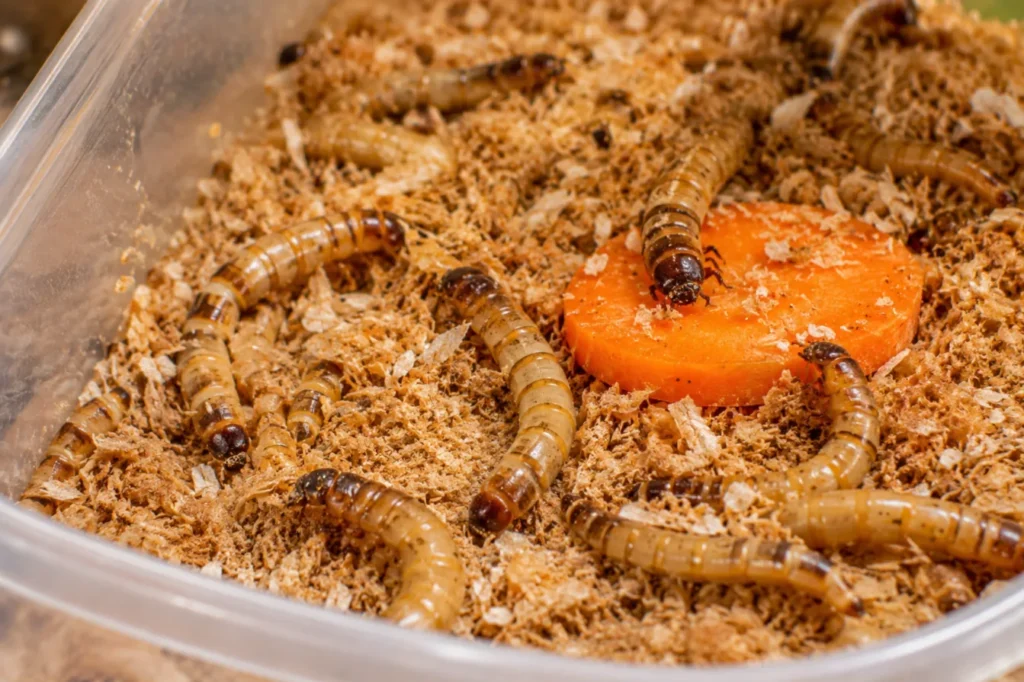
- Occasional protein, such as a small piece of boiled egg or mealworms
- Fresh water every day
Avoid:
- Citrus fruits
- Onions, garlic and raw beans
- Chocolate and sugary snacks
- Almonds (bitter almonds can be toxic)
- Sticky or salty foods
Remove uneaten fresh food daily, as hamsters hoard food in their nests.
Teddy Bear Hamster Coat Care
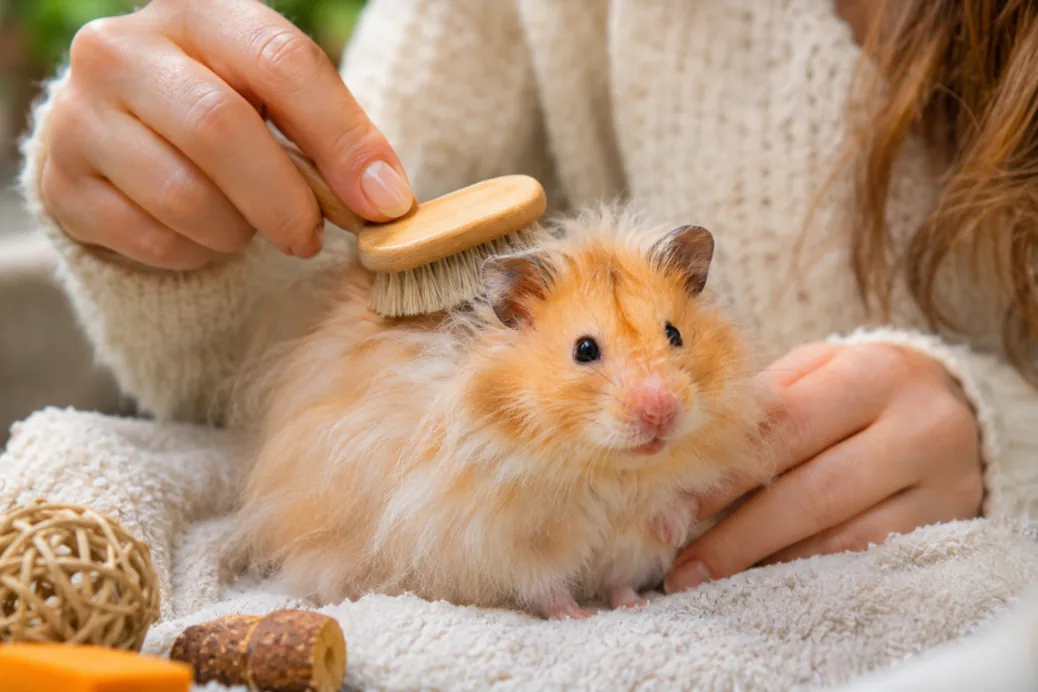
The long coat needs some extra care:
- Check for tangles a couple of times a week, especially in males.
- Gently comb with a soft toothbrush or fine comb if needed.
- Remove bedding stuck in fur.
- Never bathe in water. Wet hamsters can get cold and ill. Offer a sand bath instead.
- Trim carefully around the rear if hair gets soiled, or ask a vet.
Handling and Taming
- Let your hamster settle for a few days before handling.
- Offer treats from your hand first.
- Scoop gently with both hands, close to the ground.
- Avoid waking your hamster during the day; it may bite if startled.
Signs of a Healthy Teddy Bear Hamster
- Bright, clear eyes
- Clean nose and ears
- Smooth, clean coat
- Dry tail area (wet tail can signal serious illness)
- Active at night, eating and drinking normally
Contact a small-animal vet if you notice diarrhea, a wet rear end, weight loss, overgrown teeth or lumps.
Teddy Bear Hamsters and Children
Hamsters can be good pets for older children with adult supervision. Because they are nocturnal and can nip if startled, they are not ideal for very young children.
If you are comparing small pets, see our guides on how to choose a guinea pig and how long do chinchillas live.
Teddy Bear Hamster Behavior Explained
Burrowing
Hamsters love to dig. Deep bedding lets them build tunnels and nests, which reduces stress.
Hoarding
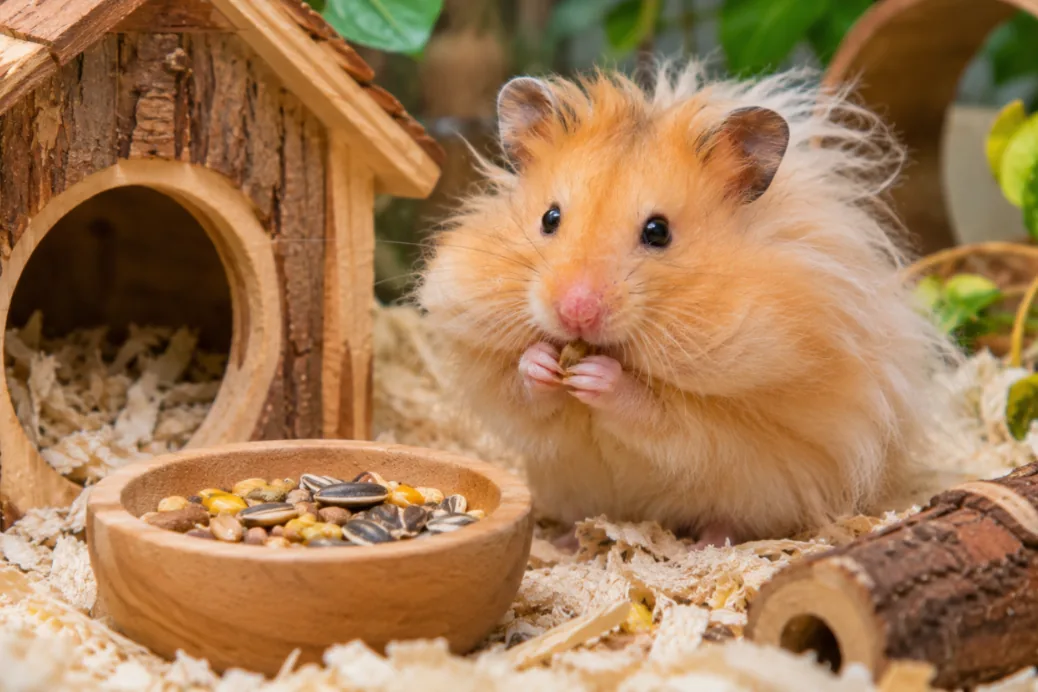
Teddy bear hamsters store food in their cheek pouches and carry it to a hidden stash. This is normal. Check the stash for fresh food that could spoil.
Bar Chewing
Constant bar chewing can mean boredom or a cage that is too small. Add more space, bedding and enrichment.
Running on the Wheel
Hamsters can run long distances at night. A quiet, solid wheel of the right size is essential.
Grooming
Teddy bear hamsters spend lots of time grooming their long coats. A sand bath helps them stay clean.
Night Noises
Expect rustling, digging and wheel noise at night. Keep the cage out of bedrooms if you are a light sleeper.
Helpful Resources
More guides from Pet Guide Nest:
Trusted outside sources:
Frequently Asked Questions
Can two teddy bear hamsters live together?
No. Teddy bear hamsters are Syrian hamsters and must live alone to avoid fights.
How long do teddy bear hamsters live?
Usually around 2 to 3 years.
Do teddy bear hamsters need baths?
No water baths. Give them a sand bath instead and spot-clean the coat if needed.
What do teddy bear hamsters eat?
A base of hamster pellets or mix, small amounts of fresh vegetables, occasional protein and fresh water.
Final Thoughts
A teddy bear hamster is a fluffy, curious pet that needs a spacious cage, deep bedding, a solid wheel and gentle coat care. Keep them alone, feed a balanced diet and handle them calmly in the evening. With the right setup, your teddy bear hamster can enjoy a healthy, happy life. For more guides like this, explore our Pet Lifestyle and Accessories articles.

Maren Ashcroft
Maren Ashcroft writes the care guides at Pet Guide Nest. She has grown up around dogs, cats, and rabbits and loves learning about the more unusual pets too. She turns vet and animal welfare research into simple, practical advice for everyday pet owners.