

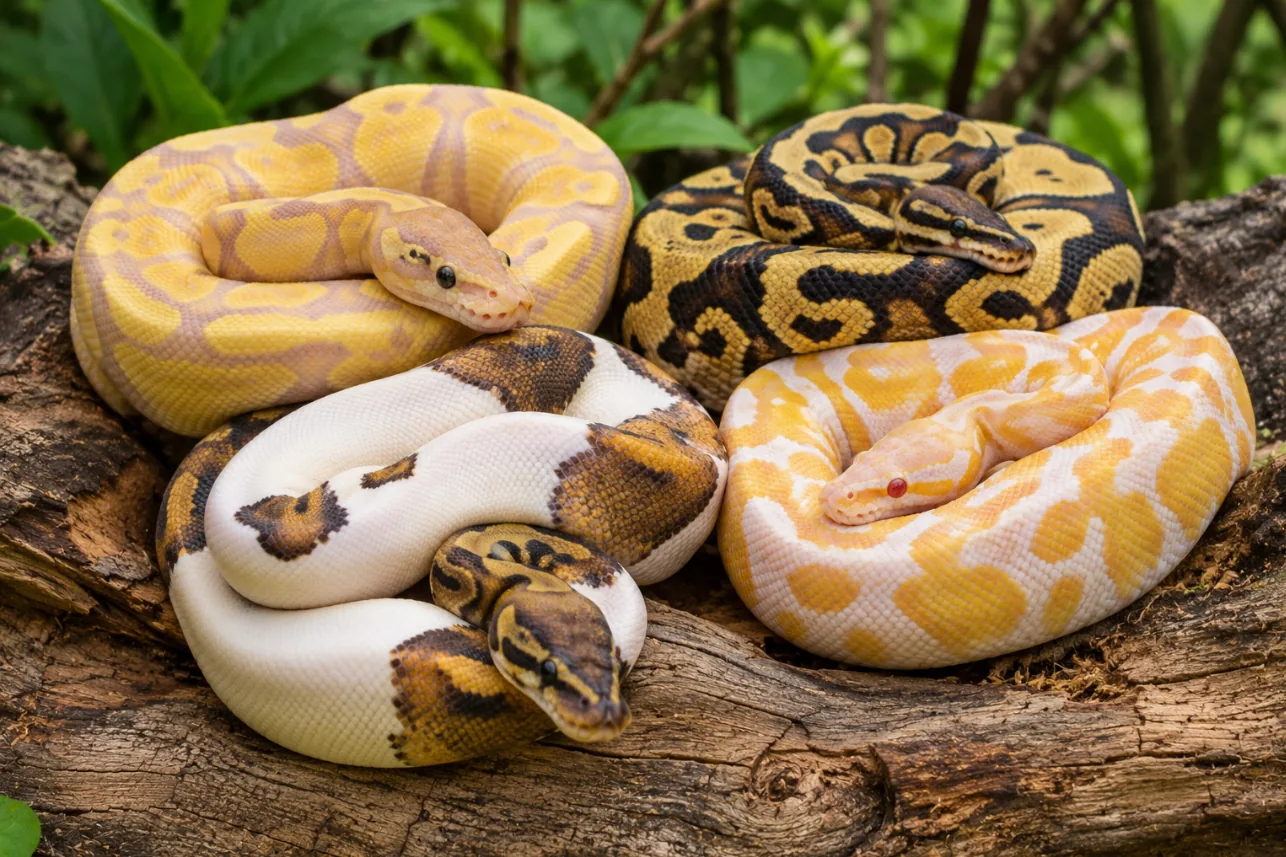
Ball pythons are one of the most popular pet snakes, and much of that popularity comes from their incredible variety of colors and patterns. These variations are called morphs. With thousands of combinations now available, ball python morphs can feel confusing at first.
This guide explains what morphs are, how basic morph genetics work and the most popular types you will see in 2026.
What Are Ball Python Morphs?
A morph is a snake whose color or pattern differs from the “normal” wild-type ball python. Normal ball pythons are brown and black with lighter sides. Morphs come from genetic changes that breeders have identified and combined.
Most morphs care for exactly like a normal ball python. A few, however, are linked to health concerns, which we cover below.
How Ball Python Morph Genetics Work
There are three main inheritance types:
| Type | How it works | Examples |
|---|---|---|
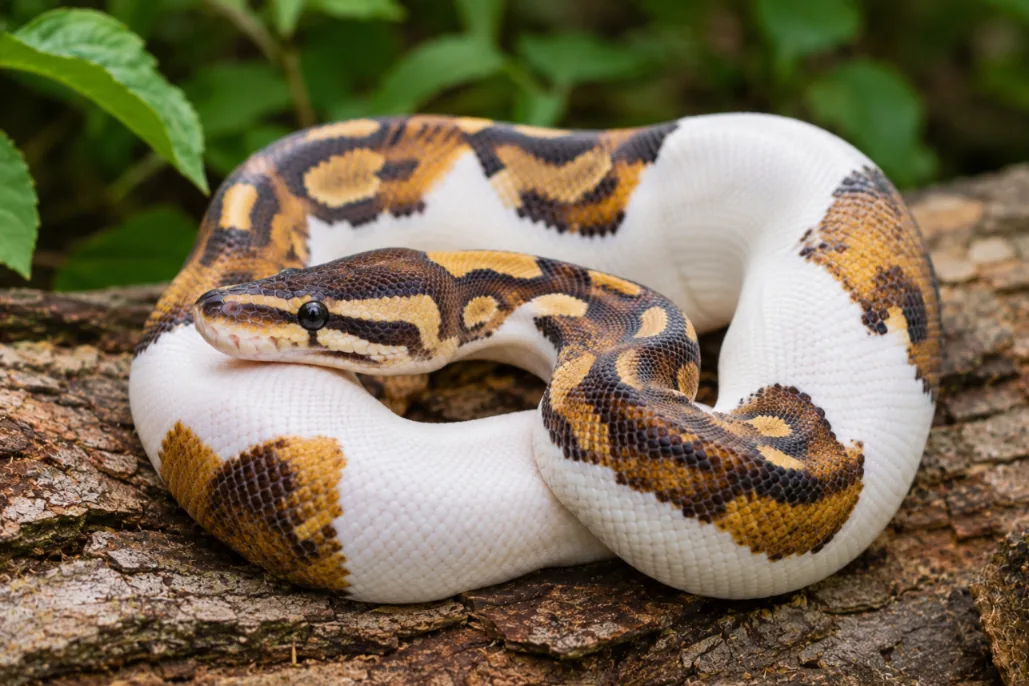
| Recessive | Shows only when a snake inherits two copies of the gene | Albino, Piebald, Clown |
| Incomplete dominant (often called co-dominant) | One copy shows; two copies create a “super” form | Pastel, Mojave, Lesser, Enchi |
| Dominant | One copy shows, and two copies look similar | Spider, Pinstripe |
A snake that carries one copy of a recessive gene without showing it is called “het” (heterozygous). For example, a “het albino” looks normal but can produce albinos when bred with another albino carrier.
Most Popular Ball Python Morphs in 2026
Pastel
One of the classic ball python morphs. Pastels have brighter yellow coloring and often lighter heads. Two copies create a “Super Pastel” with even brighter colors.
Albino
Albinos lack black pigment, giving them white and bright yellow patterns with pink or red eyes. They are recessive and remain very popular.
Piebald
Piebalds have patches of pure white skin mixed with normal patterned areas. Every piebald’s pattern is unique, which makes them a favorite.
Clown
Clowns have reduced, unusual patterns and often a distinctive head stripe. They are recessive.
Mojave and Lesser
These incomplete dominant morphs lighten and soften patterns. Combining two copies, or certain combinations of them, can produce a Blue-Eyed Leucistic (BEL): a white snake with blue eyes.
Banana (Coral Glow)
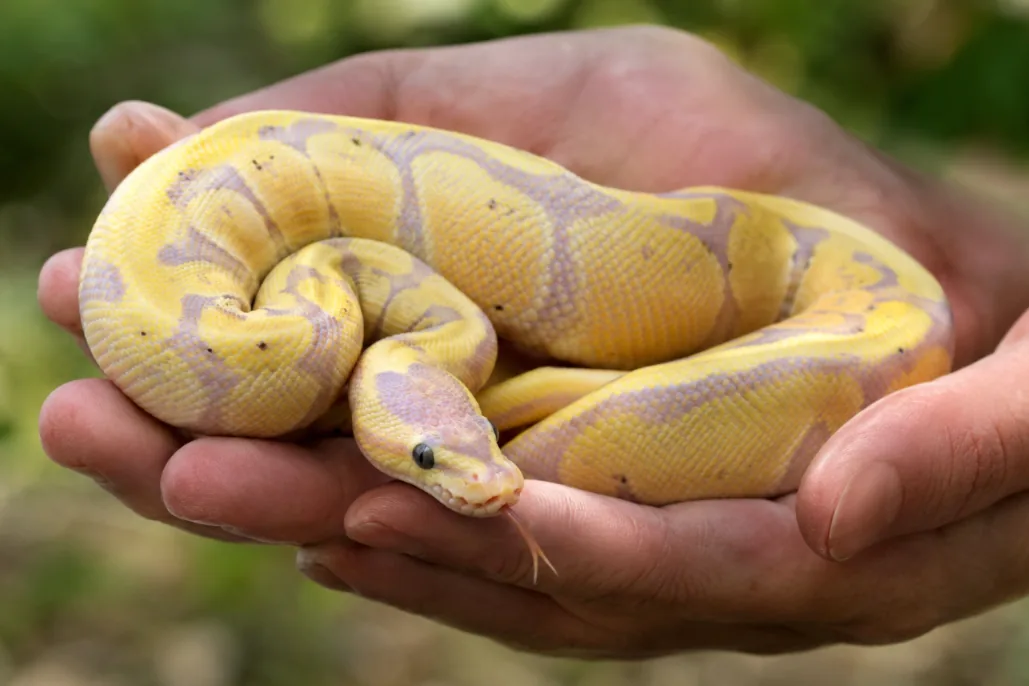
Bananas have a yellow and lavender look with small dark speckles that may appear over time.
Enchi
Enchis have brighter, more orange-toned coloring and a reduced pattern on the sides.
Spider
Spiders have a thin, web-like pattern on a lighter background. However, the Spider gene is linked to a neurological condition often called “wobble,” which can cause head tremors and poor coordination. Because of this, many keepers and breeders avoid breeding it.
Ball Python Morphs With Known Health Concerns
When choosing among types of ball python morphs, research health first. Several morphs, including the Spider and some related genes, are associated with neurological issues. Some “super” forms of certain genes may also be linked to health or physical problems. Ask breeders openly and choose healthy, well-established lines.
Rare Ball Python Morphs and Designer Combinations
Breeders now combine several genes in one snake to create “designer” ball python morphs. Combinations of genes such as Pastel, Enchi, Clown and Piebald can produce striking colors and patterns. New combinations appear every year, and rare ones can be expensive. Before paying a premium, confirm the genetics with the breeder, ask for photos of the parents and make sure none of the genes involved carry known health problems.
Choosing a Morph: Beginners vs Collectors
For beginners, care matters far more than color. Choose a healthy, captive-bred snake that is eating well. Pastel, Albino, Enchi and normal ball pythons are all great choices.
For collectors and breeders, understanding genetics is essential. Use a morph calculator, keep careful records and learn about health risks before pairing genes.
Ball Python Care Basics (For Every Morph)
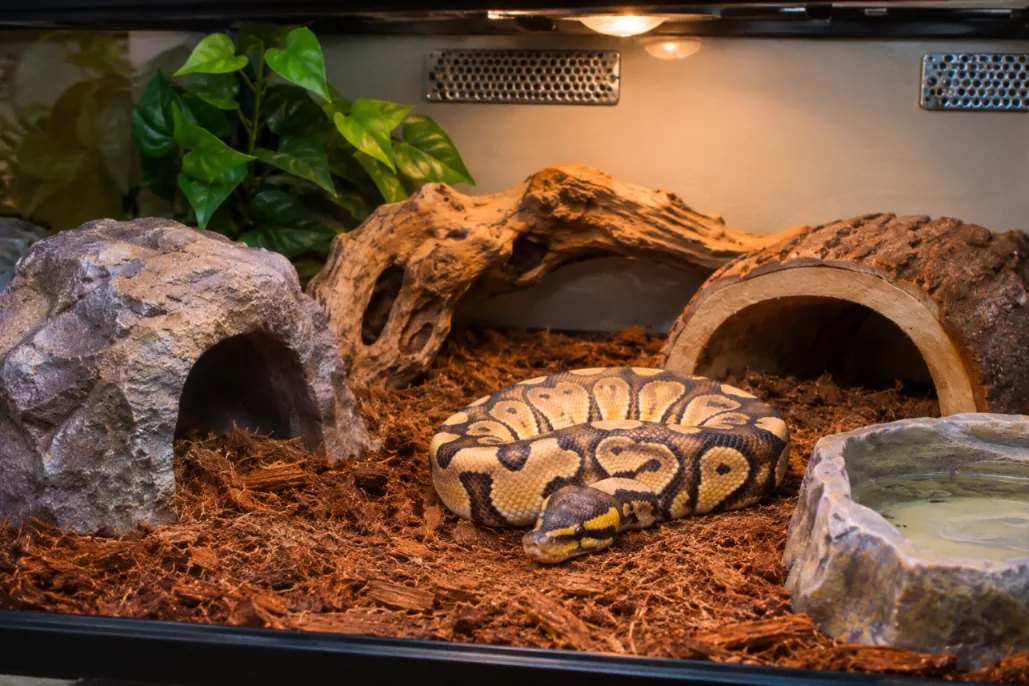
- A secure enclosure sized for an adult ball python
- A warm side and a cooler side, with a thermostat-controlled heat source
- Humidity suitable for the species, with a humid hide for shedding
- At least two hides, one on each side
- Fresh water in a bowl big enough to soak in
- Appropriately sized prey, usually frozen-thawed rodents
- A reptile vet for checkups
If you are new to reptiles, see our guide to the best pet lizards for beginners for setup tips that also apply to snakes.
How to Buy a Healthy Ball Python
- Buy captive-bred snakes from reputable breeders or reptile expos.
- Ask for feeding records and shed history.
- Check for clear eyes, clean nostrils and no wheezing.
- Look for smooth skin without stuck shed or mites.
- Ask about the morph’s genetics and any health concerns.
Helpful Resources
More guides from Pet Guide Nest:
- Pastel Ball Python Guide
- Albino Ball Python Care
- Piebald Ball Python Care
- Spider Ball Python: Facts, Wobble and Ethics
Trusted outside sources:
Frequently Asked Questions
What is the most popular ball python morph?
Pastel, Albino and Piebald are among the most popular ball python morphs because of their striking looks and widespread availability.
Do different morphs need different care?
Most morphs need exactly the same care as a normal ball python. Snakes with neurological issues may need extra support.
What does “het” mean for ball pythons?
“Het” means the snake carries one copy of a recessive gene without showing it, so it can pass the gene to its offspring.
Why do some breeders avoid the Spider morph?
The Spider gene is linked to a neurological condition called wobble, which affects coordination. Many breeders avoid it for welfare reasons.
Final Thoughts
Ball python morphs offer an amazing range of colors and patterns, from Pastels and Albinos to Piebalds and Bananas. Learn the basics of recessive and incomplete dominant genes, research any health concerns and always put good care first. A healthy, well-kept snake is more rewarding than any rare color.

Maren Ashcroft
Maren Ashcroft writes the care guides at Pet Guide Nest. She has grown up around dogs, cats, and rabbits and loves learning about the more unusual pets too. She turns vet and animal welfare research into simple, practical advice for everyday pet owners.


