

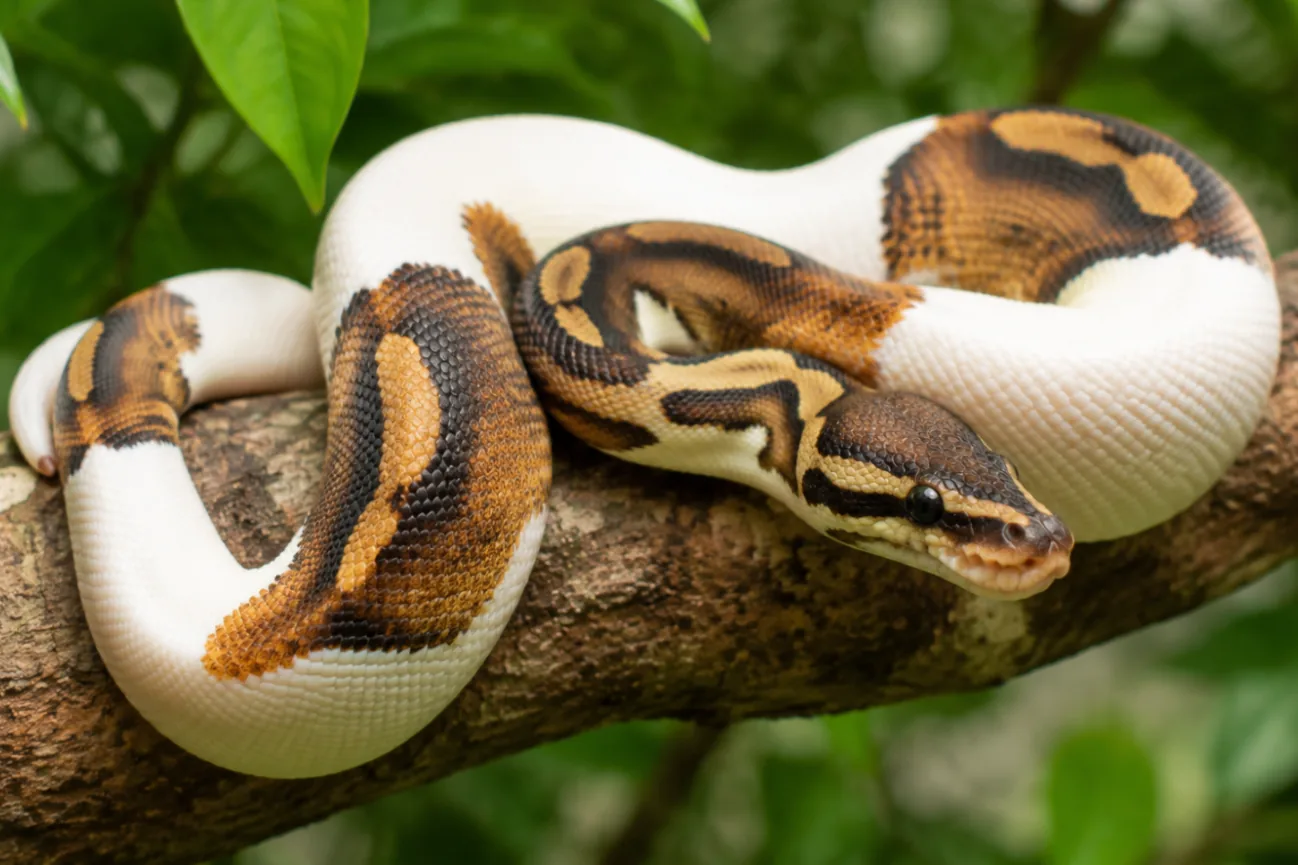
Every piebald ball python has a one-of-a-kind pattern, with patches of bright white skin breaking up normal ball python coloring. These snakes are calm, beautiful and a favorite among keepers. The good news is that piebald ball python care is the same as caring for any ball python, so they are great for beginners.
This guide covers what makes a piebald, plus enclosure setup, feeding, handling and health.
What Is a Piebald Ball Python?
A piebald (often shortened to “pied”) ball python has areas of pure white skin with no pigment, mixed with normally patterned areas. The amount of white varies from snake to snake:
- Low white: mostly patterned with small white areas
- Medium white: about half and half
- High white: mostly white with small patterned areas
The piebald gene is recessive. A snake needs two copies to show the pied pattern. Snakes with one copy look normal and are called “het piebald.”
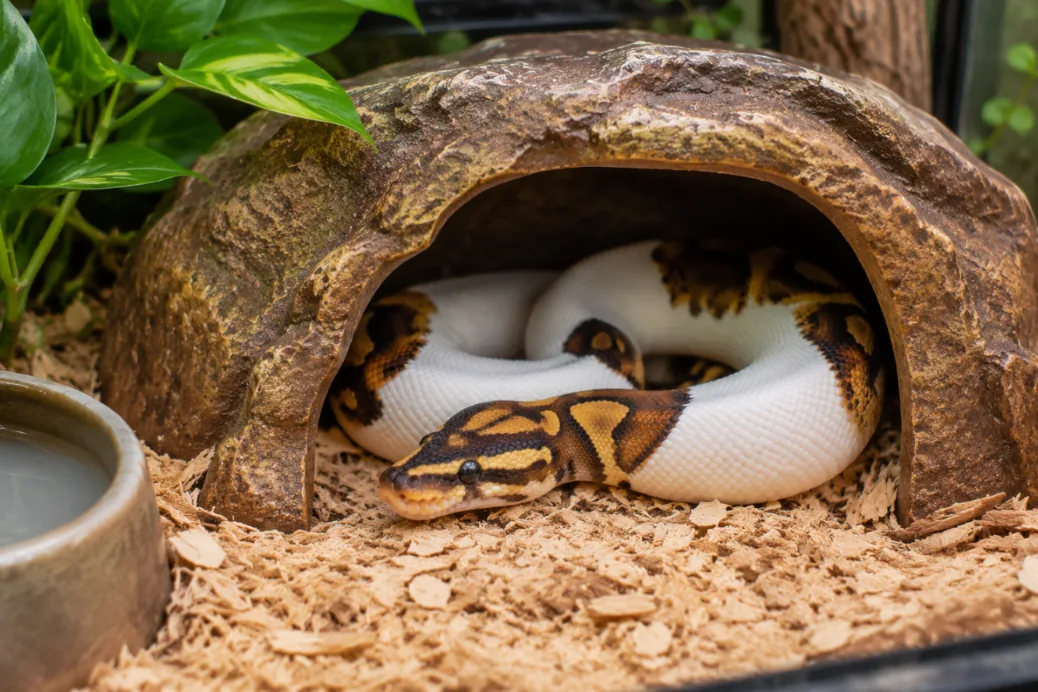
Piebald Ball Python Care for Beginners
Piebalds have the same easygoing temperament as normal ball pythons. With good setup and handling, they are usually calm and easy to manage.
Enclosure Setup
- Secure enclosure: Choose an enclosure suitable for an adult ball python, with a locking lid.
- Two hides: One on the warm side and one on the cool side.
- Substrate: Cypress mulch, coconut husk or another humidity-holding substrate. Avoid cedar.
- Water bowl: Large and heavy enough for soaking without tipping.
- Cover: Branches, plants and cork bark help your snake feel secure.
Heat and Humidity
| Need | How to provide it |
|---|---|
| Warm side | A heat source controlled by a thermostat |
| Cool side | A cooler area for temperature regulation |
| Humidity | Moderate to high, monitored with a hygrometer |
| Shedding support | A humid hide with damp moss |
Never use a heat source without a thermostat. Check temperatures with digital thermometers on both sides.
Caring for a Piebald Ball Python: Feeding
- Offer frozen-thawed rodents about the width of your snake’s thickest point.
- Feed juveniles more often than adults; follow a trusted feeding schedule.
- Use feeding tongs.
- Avoid handling for a day or two after a meal.
- Expect occasional fasting, especially during cooler months or before shedding.
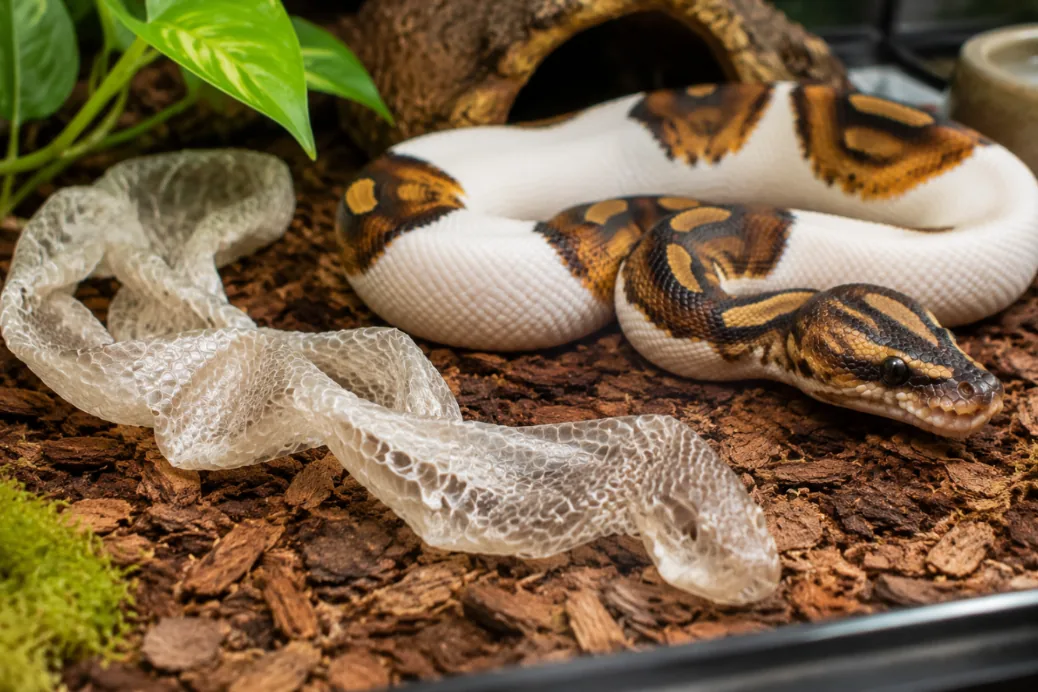
Shedding
Before shedding, the eyes go cloudy. White areas of a piebald may look dull or pinkish. Keep humidity steady and avoid handling. Check after each shed for stuck skin around the eyes and tail tip.
Handling a Piebald Ball Python
- Wait about a week after bringing your snake home.
- Approach calmly from the side.
- Support the whole body.
- Keep first sessions to a few minutes.
- Stop if your snake hisses, strikes or tries hard to escape.
Read our step-by-step guide on how to pet a ball python.
Piebald Ball Python Maintenance Routine
| Task | How often |
|---|---|
| Check temperatures and humidity | Daily |
| Refresh water | Every day or two |
| Spot-clean waste | As needed |
| Full substrate change | Every few months, or as needed |
| Feeding | According to age and size |
| Health check during handling | Weekly |
Health Watch
See a reptile vet if you notice:
- Wheezing, bubbles at the nostrils or open-mouth breathing
- Mites around the eyes or chin
- Repeated stuck shed
- Weight loss
- Lumps, wounds or burns
White skin can make some problems, such as redness or blisters, easier to spot. Check your snake’s skin regularly.
Buying a Piebald Ball Python
- Buy captive-bred from reputable breeders.
- Ask for feeding and shedding records.
- Check for clear eyes, clean nostrils and smooth skin.
- Ask about any additional genes the snake carries.
Compare morphs in our guides to the pastel ball python, albino ball python care and ball python morphs.
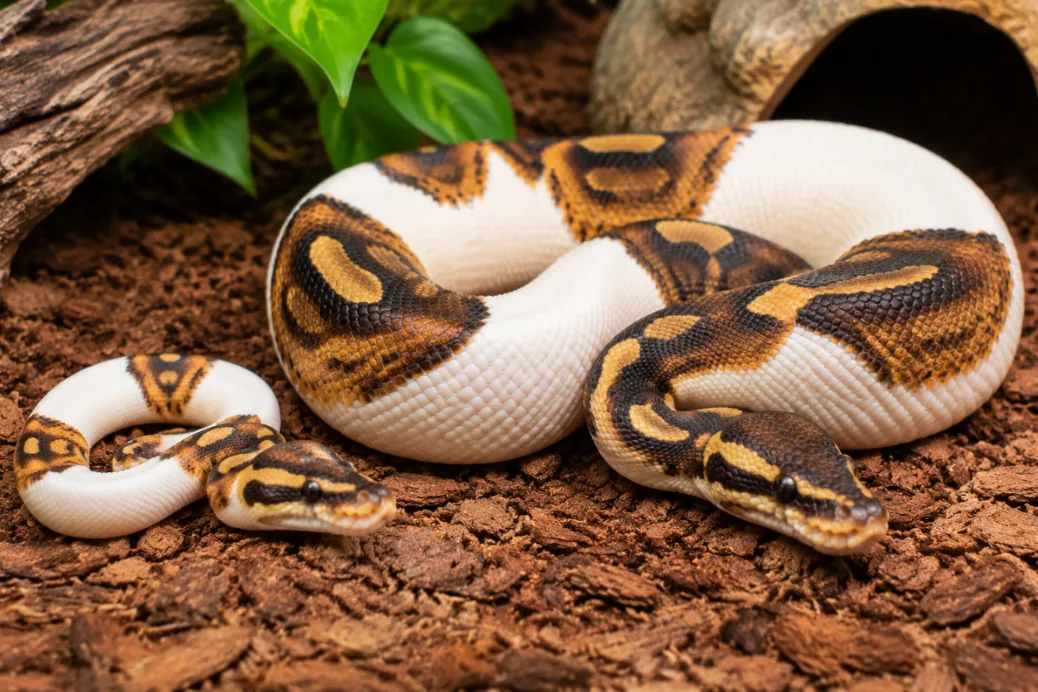
Caring for a Piebald Ball Python as It Grows
Hatchlings and Juveniles
Young snakes eat more often and grow quickly. Use smaller hides so they feel secure, and check that prey size matches their growth.
Adults
Adult piebald ball python care involves less frequent feeding, a larger enclosure and continued attention to humidity and temperature.
Weight Checks
Weigh your snake every month or so with a kitchen scale. Steady weight is a good sign of health. Sudden weight loss is a reason to see a reptile vet.
Enrichment
Rearranging decor occasionally, adding new climbing branches and offering supervised exploration time outside the enclosure can help keep your snake active.
Helpful Resources
More guides from Pet Guide Nest:
Trusted outside sources:
Frequently Asked Questions
Is piebald ball python care different from normal ball pythons?
No. Piebalds need the same enclosure, heat, humidity and diet as any ball python.
Do piebald ball pythons get more white as they grow?
The pattern stays the same, but colors may change slightly as the snake matures.
Are piebald ball pythons good for beginners?
Yes. They are usually calm and easy to handle, with the same care needs as normal ball pythons.
How long do piebald ball pythons live?
Ball pythons often live 20 to 30 years with good care.
Final Thoughts
Piebald ball python care is simple once your setup is right: a secure enclosure, thermostat-controlled heat, steady humidity, snug hides and appropriately sized prey. Handle gently, keep up a simple maintenance routine and watch for signs of illness. Your pied can be a stunning, long-lived companion. For more guides like this, explore our Snakes articles.

Maren Ashcroft
Maren Ashcroft writes the care guides at Pet Guide Nest. She has grown up around dogs, cats, and rabbits and loves learning about the more unusual pets too. She turns vet and animal welfare research into simple, practical advice for everyday pet owners.


